
The Ancient Egyptian Civilization
Ancient Egyptian | Egypt


The Ancient Egyptian Civilization stands as one of the most extraordinary and enduring cultures in the annals of human history. Flourishing along the banks of the Nile River for over three millennia, this ancient society left an indelible mark on the development of human civilization. With its monumental achievements in art, architecture, religion, governance, and societal structures, Ancient Egypt continues to captivate the imagination of scholars, historians, and enthusiasts alike. This comprehensive study document seeks to delve deep into the fascinating world of Ancient Egypt, unravelling its mysteries and shedding light on the various facets that contributed to its rise, evolution, and lasting impact on the world.
1. Geography and Environment:

The Nile River: The lifeblood of Ancient Egypt, the Nile River stands as one of the most crucial geographical features that shaped the civilization's development. Flowing over 4,000 miles from its source in the highlands of East Africa to its delta in the Mediterranean Sea, the Nile River provided the ancient Egyptians with a constant and reliable water source. Its steady flow was instrumental in transforming the surrounding arid landscape into a lush and fertile oasis, enabling the growth of settlements and the establishment of a thriving society.
The Nile's annual flooding: Perhaps one of the most defining features of the Nile River was its annual flooding, occurring during the summer months. This natural phenomenon, known as the Inundation, was a result of heavy rainfall in the Ethiopian Highlands, causing the river to overflow its banks and flood the surrounding plains. The floodwaters brought with them nutrient-rich silt, which was deposited on the fertile floodplains. As the waters receded, they left behind a layer of fertile mud, creating ideal conditions for agriculture.
The significance of the annual flooding cannot be overstated. The floodwaters provided a natural irrigation system that nourished the crops, ensuring bountiful harvests year after year. The ancient Egyptians keenly observed the patterns of the flood, and over time, they developed sophisticated methods of agricultural planning to maximize the benefits of the Inundation. They divided their farmland into three main categories: the floodplain, the low desert, and the high desert. Each area had its purpose, with the floodplain reserved for cultivation, the low desert for grazing, and the high desert for protecting against encroaching dunes.
The predictability of the Nile's annual flooding played a crucial role in the stability and prosperity of Ancient Egypt. The abundance of food resulting from successful harvests supported a growing population, allowed the specialization of labour, and provided resources for monumental construction projects, such as the building of pyramids and temples. This agrarian economy laid the foundation for the sophisticated civilization that emerged along the Nile River.
In addition to its agricultural significance, the Nile River also served as a vital transportation and trade route. Ancient Egyptians used the river for travel and the movement of goods, fostering communication and cultural exchange between different regions of the kingdom. The Nile facilitated interactions between Upper Egypt (the southern part) and Lower Egypt (the northern part), which were united to form a single kingdom in the Early Dynastic Period.
The Nile River also played a central role in the religious beliefs and mythology of the ancient Egyptians. They regarded the river as a divine gift and considered it sacred, associating it with life, fertility, and rebirth. Many of their religious ceremonies and festivals were centred around the Nile, celebrating its life-giving properties and honouring the gods who were believed to control its flooding.
In conclusion, the geography and environment of Ancient Egypt, with the Nile River at its core, were instrumental in shaping the civilization's growth and prosperity. The predictable flooding of the Nile and the fertile soil it provided allowed the ancient Egyptians to develop a sophisticated agrarian society and build a remarkable civilization that endured for millennia. The Nile's impact extended far beyond agriculture, influencing trade, transportation, culture, and religion. Its significance in the life of the ancient Egyptians was profound, earning it a place of reverence and worship in their hearts and minds. As we explore the rich tapestry of Ancient Egypt, it becomes evident that the Nile River was the cradle of this extraordinary civilization, nurturing its people and leaving an everlasting mark on the pages of human history.
2. Early Dynastic Period (c. 3150–2686 BCE):

The Early Dynastic Period marks the dawn of recorded history in Ancient Egypt and is characterized by the unification of Upper and Lower Egypt under the rule of a single monarch. This pivotal event laid the foundation for the long and illustrious history of Pharaonic rule and the birth of one of the most remarkable civilizations in human history.
- Unification of Upper and Lower Egypt: The process of unification is attributed to King Menes, also known as Narmer, who is believed to have ruled around 3150 BCE. Legend has it that Menes was the ruler of Upper Egypt, while a rival king presided over Lower Egypt, which was located in the Nile Delta region. Menes, a visionary and shrewd leader, recognized the potential of uniting the two kingdoms under a single centralized authority. By wielding his military might and diplomatic prowess, he succeeded in bringing Lower Egypt under his control, forging a unified Egypt. As a symbolic gesture of this unification, Menes adopted the title of "Nesu-by," which translates to "King of Upper and Lower Egypt."
- Establishment of the first Pharaonic dynasty: The unification of Egypt marked the beginning of the first Pharaonic dynasty, an era of divine rulers known as pharaohs. Menes became the first in a long line of kings and queens who would govern Egypt with divine authority, viewed as living gods on Earth. This concept of the divine kingship of pharaohs would endure throughout the entire course of Ancient Egyptian history.
- Early achievements: The Early Dynastic Period witnessed several notable accomplishments that laid the groundwork for the subsequent development of civilization.
1. Hieroglyphic writing: One of the most significant achievements of this era was the development of hieroglyphic writing. This sophisticated system of writing employed a combination of pictorial symbols, ideograms, and phonetic signs. Initially, hieroglyphics were used primarily for inscriptions on monumental structures, such as temples and tombs. Over time, it evolved into a script used for religious texts, administrative records, and various forms of literature. The decipherment of hieroglyphics in modern times has provided invaluable insights into the lives, beliefs, and achievements of the ancient Egyptians.
2. Monumental architecture (Mastabas): The Early Dynastic Period saw the emergence of monumental architecture, exemplified by the construction of Mastabas. Mastabas were large, flat-topped rectangular structures with sloping sides, built as tombs for nobles and high-ranking officials. These early tombs served as precursors to the grand pyramids that would later become synonymous with Ancient Egypt.
3. Construction of the first pyramids at Saqqara: The early Pharaohs sought to immortalize their power and ensure a prosperous afterlife through monumental structures. The most famous example of these early attempts at pyramid construction is the Step Pyramid at Saqqara, attributed to Pharaoh Djoser, who ruled during the Third Dynasty. Designed by the brilliant architect Imhotep, the Step Pyramid was a revolutionary architectural marvel, consisting of six stepped layers, each diminishing in size as it rose. This pyramid was a significant departure from the traditional flat-roofed Mastabas and marked the transition towards the iconic pyramid structures that would come to define the splendour of Ancient Egypt.
The Early Dynastic Period laid the groundwork for the enduring civilization that was to come. The unification of Upper and Lower Egypt under a centralized authority created a sense of shared identity and cultural cohesion among the populace. The achievements in hieroglyphic writing and architectural advancements were a testament to the remarkable ingenuity and creativity of the ancient Egyptians. These early accomplishments set the stage for the grandeur and sophistication that would characterize Ancient Egypt in the subsequent millennia. As we delve further into the unfolding narrative of this extraordinary civilization, we encounter a tapestry of achievements, innovations, and cultural marvels that continue to captivate and inspire the world to this day.
3. The Old Kingdom (c. 2686–2181 BCE):
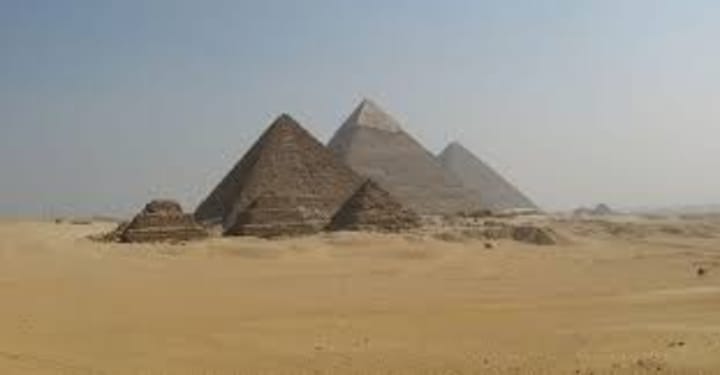
The Old Kingdom of Ancient Egypt is often referred to as the "Age of the Pyramids," as it was during this period that the construction of colossal pyramids reached its zenith. It is a time characterized by unparalleled cultural achievements, monumental architectural wonders, and the establishment of a strong centralized government.
- The Pyramid Age: Pharaohs built massive pyramids as tombs, such as the Great Pyramid of Giza (built by Khufu).
The hallmark of the Old Kingdom is undoubtedly the construction of grand pyramids as burial monuments for the pharaohs. The pharaohs believed that in death, they would ascend to the heavens and join the gods, and the pyramid served as a celestial staircase to facilitate this divine journey.
The most famous and impressive example of pyramid construction from this era is the Great Pyramid of Giza, built for Pharaoh Khufu, also known as Cheops. It stands as one of the Seven Wonders of the Ancient World, a testament to the engineering prowess and organizational capabilities of the ancient Egyptians. The Great Pyramid, originally rising to an imposing height of approximately 481 feet (147 meters), held the distinction of being the tallest man-made structure on Earth for over 3,800 years.
The construction of these monumental pyramids required an immense workforce, comprised of skilled craftsmen, labourers, and engineers. The precision with which these structures were built is a testament to the advanced architectural knowledge possessed by the ancient Egyptians. The smooth and precisely aligned limestone blocks, originally covered in polished white Tura limestone casing stones, created a majestic and awe-inspiring sight. These pyramids, though mortuary monuments, also served as symbols of the pharaoh's divine power and the permanence of the Egyptian state.
- Administrative structure: The emergence of a centralized government with a bureaucratic system and viziers.
During the Old Kingdom, a sophisticated administrative system began to take shape, establishing a centralized government under the divine authority of the pharaoh. The pharaoh was considered the supreme ruler and religious leader, governing with divine mandate. Beneath the pharaoh was a hierarchy of officials who managed various aspects of the kingdom.
At the pinnacle of the administrative structure was the vizier, a high-ranking official appointed by the pharaoh to oversee the affairs of the state. The vizier served as the chief administrator, responsible for maintaining law and order, overseeing taxation, and ensuring the implementation of the pharaoh's decrees. The vizier was also the highest judicial authority, resolving disputes and dispensing justice.
Below the vizier were numerous officials who held specialized roles, such as overseers of granaries, scribes, architects, and military commanders. These officials formed the core of the bureaucracy, ensuring the smooth functioning of the government and the economy.
- Religion and Afterlife: Belief in the divine kingship of pharaohs and the concept of the afterlife as depicted in the "Pyramid Texts."
Religion played a central role in the lives of the ancient Egyptians during the Old Kingdom. They believed in a pantheon of gods and goddesses who controlled the forces of nature, upheld cosmic order, and ensured the prosperity of the kingdom. The pharaoh was considered the intermediary between the gods and the people, entrusted with maintaining harmony between the mortal realm and the divine realm.
The "Pyramid Texts" represent one of the earliest known religious texts in human history. These inscriptions were carved on the walls of the pyramids and were intended to assist the deceased pharaohs in their journey to the afterlife. The texts contain prayers, spells, and rituals, aiming to guide the pharaohs through the perilous journey to the realm of the gods. They also offered a glimpse into the ancient Egyptians' beliefs in resurrection, immortality, and the preservation of the pharaoh's status and power in the afterlife.
The concept of the afterlife held particular significance in the Old Kingdom, as the pharaohs sought to ensure their eternal existence and continued divine kingship in the afterlife. This belief system influenced the construction of the pyramids as grand mortuary monuments, equipped with chambers, passages, and burial chambers, all carefully designed to facilitate the pharaoh's transition to the divine realm.
In conclusion, the Old Kingdom of Ancient Egypt stands as a pinnacle of cultural and architectural achievements. The construction of grand pyramids, such as the Great Pyramid of Giza, remains an awe-inspiring testament to the ingenuity and skill of the ancient Egyptians. The emergence of a centralized administrative structure with viziers and officials ensured the smooth functioning of the government and the state. Moreover, the profound religious beliefs, evident in the "Pyramid Texts," shaped the very essence of the Old Kingdom, with the pharaohs aspiring to join the gods in the afterlife. The legacy of the Old Kingdom continues to captivate the world, leaving an indelible mark on the pages of human history and serving as a testament to the remarkable achievements of one of the world's most extraordinary civilizations.
4. The Middle Kingdom (c. 2055–1650 BCE):

The Middle Kingdom of Ancient Egypt is regarded as a period of renaissance and resurgence, characterized by the reunification of the country and the flourishing of arts, culture, and trade. Following a period of political fragmentation and disunity, Pharaoh Mentuhotep II emerged as a visionary leader, ushering in a new era of stability and prosperity.
- Reunification of Egypt: Pharaoh Mentuhotep II reunified the country after a period of disunity.
The Middle Kingdom began with the reunification of Egypt under the rule of Pharaoh Mentuhotep II. Prior to his ascension to the throne, Egypt had been divided into rival factions, with a northern dynasty ruling from the city of Herakleopolis and a southern dynasty ruling from Thebes. Mentuhotep II, hailing from Thebes, sought to reunify the country and restore its former glory. Through strategic military campaigns and skilful diplomacy, he succeeded in defeating the northern dynasty and bringing the entire kingdom under his rule.
Pharaoh Mentuhotep II's reign marked the beginning of the 11th Dynasty, a period that witnessed significant political and cultural transformations. He initiated a policy of reconciliation and reconstruction, seeking to heal the divisions that had plagued Egypt during the period of disunity. His successful reunification of Egypt laid the groundwork for a more stable and prosperous future.
- Expanding trade and cultural exchange: The Middle Kingdom saw increased contact with neighbouring regions and the exchange of goods and ideas.
With the reunification of Egypt, trade and cultural exchange flourished during the Middle Kingdom. The Nile River, acting as a natural trade route, facilitated the movement of goods and people between Egypt and neighbouring regions. This period saw the establishment of diplomatic and economic ties with neighbouring Nubia (present-day Sudan) and the Levant (modern-day Israel, Palestine, Lebanon, and Syria).
Trade expeditions were sent to the southern regions of Nubia, where valuable resources such as gold, ivory, and exotic goods were obtained. The acquisition of these resources not only enriched the kingdom but also enhanced Egypt's prestige and influence in the region.
Additionally, Egypt's interactions with the Levant brought a cultural exchange that enriched the society. The influx of foreign goods, ideas, and craftsmanship influenced Egyptian art and culture, leading to the assimilation of foreign styles and techniques into their own artistic expressions.
One of the most significant cultural influences during the Middle Kingdom was the adoption of the "Canaanite" style in art, which featured naturalistic and emotive representations of human figures. This style, characterized by lifelike depictions, departed from the more rigid and formal artistic conventions of previous periods. The influence of the Canaanite style is evident in the artistic representations found in tombs, statues, and religious artefacts of the Middle Kingdom.
The Middle Kingdom also saw the flourishing of literature, particularly in the form of poetry and literature. Scribes composed literary works, including wisdom literature and literary tales, reflecting themes of morality, justice, and social responsibility. These literary masterpieces not only entertained the elite but also provided valuable insights into the values and aspirations of the time.
In conclusion, the Middle Kingdom of Ancient Egypt stands as a period of resurgence, characterized by the reunification of the country under Pharaoh Mentuhotep II's leadership and a flourishing of trade and cultural exchange. The stable political environment and increased diplomatic engagements allowed for artistic and cultural developments, leading to the assimilation of foreign influences into Egyptian society. The Middle Kingdom served as a bridge between the Old Kingdom and the New Kingdom, showcasing the resilience and adaptability of Ancient Egyptian civilization as it continued to evolve and flourish. The legacy of the Middle Kingdom endures as a testament to the enduring spirit of the Egyptian people and their ability to thrive even in the face of challenges and change.
5. The New Kingdom (c. 1550–1070 BCE):

The New Kingdom of Ancient Egypt is often referred to as Egypt's "Golden Age," representing a period of unparalleled prosperity, cultural achievements, and military conquests. It was a time when Egypt emerged as a dominant power in the ancient world, showcasing the strength and grandeur of its pharaohs and the sophistication of its civilization.
- Egypt's Golden Age: The New Kingdom marked a period of unprecedented prosperity and military conquests.
The New Kingdom heralded a time of remarkable achievements and significant cultural advancements. It was a period when Egypt reached the height of its power and influence, solidifying its position as a major player in the geopolitical landscape of the ancient Near East.
The wealth accumulated through trade, tribute, and conquests allowed Egypt to flourish economically. The prosperity was evident in the construction of grand monuments, temples, and palaces that adorned the landscape of the kingdom. The architecture of this period showcased the splendour and opulence that characterized the New Kingdom.
The New Kingdom also witnessed the proliferation of art and literature. The tomb paintings and reliefs displayed remarkable detail and vibrant colours, capturing scenes of daily life, religious rituals, and the achievements of the pharaohs. Additionally, the period saw the composition of literary works, including epic tales, hymns, and poetry that celebrated the greatness of Egypt and its rulers.
- Pharaohs as living gods: The rise of pharaohs such as Hatshepsut and Akhenaten, who had significant religious and political influence.
During the New Kingdom, the concept of the divine kingship of the pharaohs reached its zenith. Pharaohs were considered not only as political leaders but also as living gods on Earth, serving as the earthly manifestations of the gods Horus and Ra. This divine status bestowed upon the pharaoh immense authority and control over all aspects of Egyptian society.
One of the most notable pharaohs of the New Kingdom was Hatshepsut, who ruled as a co-regent alongside her stepson, Thutmose III. Hatshepsut was one of the few female pharaohs in Egyptian history and is remembered for her extraordinary reign, marked by prosperous trade expeditions and impressive architectural projects. She was depicted in male attire with the traditional pharaonic regalia, asserting her authority and legitimacy as the ruler of Egypt.
Another significant pharaoh of the New Kingdom was Akhenaten, who is remembered for his revolutionary religious reforms. Akhenaten sought to revolutionize Egyptian religion by elevating the sun-disk god Aten as the supreme deity and diminishing the worship of other gods. He attempted to establish a monotheistic cult centred around Aten, leading to the construction of a new capital city, Amarna, dedicated to the worship of this new god. Although his reforms were short-lived and faced opposition, Akhenaten's reign left a lasting impact on Egyptian art, showcasing a unique and naturalistic artistic style that emphasized the royal family in intimate and informal poses.
- Military campaigns and territorial expansion: Thutmose III's military campaigns extended Egypt's borders to their greatest extent.
Thutmose III, often referred to as the "Napoleon of Egypt," was one of the most successful military leaders in Egyptian history. He embarked on a series of military campaigns that expanded Egypt's territorial boundaries to their greatest extent. Thutmose III's conquests extended into the Levant, Nubia, and even as far as Mesopotamia. His military prowess and strategic brilliance allowed Egypt to exert control over vast territories, transforming the kingdom into a formidable empire.
The spoils of war brought immense wealth and tribute to Egypt, further fueling its prosperity during the New Kingdom. The conquered lands and their resources contributed to the kingdom's economic strength, enabling the pharaohs to undertake ambitious building projects and support a flourishing artistic and cultural scene.
The reign of Thutmose III marked a high point in Egypt's military might, setting the stage for Egypt's dominance in the region for centuries to come.
In conclusion, the New Kingdom of Ancient Egypt stands as a pinnacle of cultural, political, and military achievements. It was a time of unprecedented prosperity and cultural blossoming, as evidenced by the grand architecture, exquisite art, and literary masterpieces that emerged during this period. The rise of powerful and influential pharaohs, such as Hatshepsut and Akhenaten, showcased the diverse roles and influences that the pharaohs held in ancient Egyptian society. The military conquests led by Thutmose III brought Egypt to the height of its territorial expansion and solidified its status as a dominant force in the ancient world. The New Kingdom remains a testament to the remarkable capabilities and enduring legacy of one of the world's most extraordinary civilizations.
6. Religion and Deities:
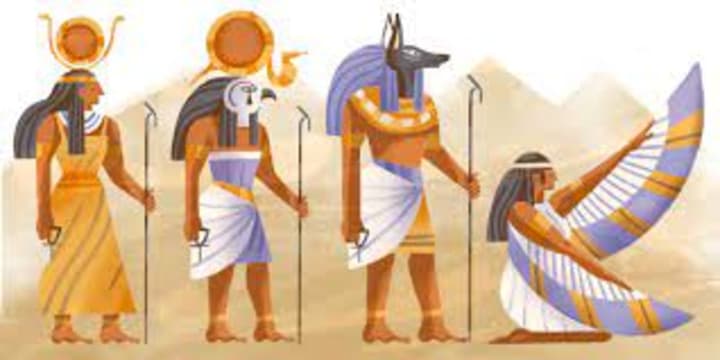
The religious beliefs of ancient Egypt were deeply rooted in polytheism, a system in which the people worshipped a vast pantheon of gods and goddesses, each associated with specific aspects of life, nature, and the cosmos. The Egyptian religion played a central role in the daily lives of the people, permeating every aspect of their society, from governance and art to agriculture and personal rituals.
Polytheistic beliefs: The ancient Egyptians worshipped a pantheon of gods and goddesses, each associated with different aspects of life and nature.
The Egyptian pantheon consisted of a diverse array of deities, each representing various forces of nature, celestial bodies, abstract concepts, and human attributes. These gods and goddesses were believed to exert influence over various aspects of life, and the ancient Egyptians sought to appease them through prayers, offerings, and rituals.
Some of the most significant deities included:
1. Ra (Re): The sun god, considered the supreme deity in Egyptian mythology. Ra was believed to travel across the sky during the day and through the underworld at night, representing the cycle of life, death, and rebirth.
2. Osiris: The god of the afterlife and resurrection. Osiris was regarded as the ruler of the underworld, where he judged the souls of the deceased.
3. Isis: The goddess of magic, motherhood, and fertility. Isis was revered as the protector of the pharaoh and the embodiment of maternal care and compassion.
4. Hathor: The goddess of love, beauty, music, and joy. Hathor was often depicted with cow horns, symbolizing her nurturing and protective qualities.
5. Anubis: The god of mummification and the protector of the deceased. Anubis guided the souls of the dead through the process of judgment and rebirth.
6. Horus: The god of the sky and kingship. Horus was associated with the pharaoh, who was believed to be his earthly manifestation.
7. Thoth: The god of wisdom, writing, and knowledge. Thoth was associated with scribes and played a vital role in recording and preserving knowledge.
Temples and rituals: Elaborate temples and rituals were dedicated to the deities to seek their favour and maintain cosmic order.
Temples were central to the religious practices of ancient Egypt. These grand structures served as sacred places of worship and were believed to be the dwelling places of the gods. Temples were erected in honour of specific deities and were often built with imposing architecture and intricate decorations.
The rituals performed in these temples were aimed at maintaining cosmic order, known as "ma'at," which represented the fundamental principles of truth, justice, and harmony. It was believed that the gods maintained the balance of the universe, and their favour was essential for the prosperity and well-being of Egypt.
Priests and priestesses played a significant role in the religious rituals, serving as intermediaries between the people and the gods. They conducted ceremonies, offered prayers, and performed sacred rites to appease the deities and seek their blessings.
Offerings were a crucial aspect of Egyptian religious practices. The people presented food, beverages, and other symbolic items as offerings to the gods, believing that the gods would partake of these offerings and be pleased, which would bring blessings and protection.
An integral part of religious beliefs was the concept of the afterlife. The ancient Egyptians believed in an afterlife and invested considerable effort in preparing for this eternal journey. The elaborate process of mummification was developed to preserve the bodies of the deceased, allowing the soul to recognize and reunite with its physical form in the afterlife. Tombs and burial chambers were also carefully designed and decorated with religious texts, known as the "Book of the Dead," which contained spells and instructions to guide the souls through the perilous journey of the afterlife.
In conclusion, the religious beliefs of ancient Egypt were deeply rooted in polytheism, with a pantheon of gods and goddesses worshipped for their influence over various aspects of life and nature. The grand temples and elaborate rituals played a central role in maintaining cosmic order and seeking the favour of the gods. The concepts of "ma'at" and the afterlife were fundamental to Egyptian religion, shaping their understanding of the universe and the cycle of life, death, and rebirth. The religious practices of ancient Egypt contributed significantly to the cultural identity and social cohesion of this extraordinary civilization, leaving a profound impact on the development of human civilization and spirituality.
7. Art and Architecture:
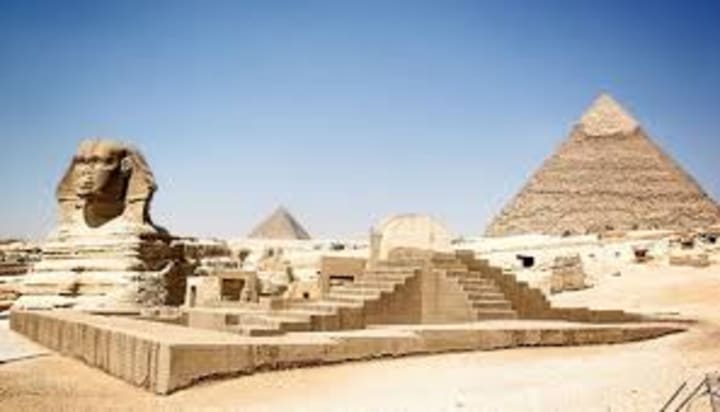
The art and architecture of ancient Egypt stand as a testament to the ingenuity, creativity, and cultural sophistication of this remarkable civilization. From the colossal pyramids to the intricately decorated temples and the intricate hieroglyphic writing system, Egyptian art and architecture have left an indelible mark on human history.
Monumental architecture: Pyramids, temples (Karnak, Luxor), obelisks, and colossal statues (Statue of Ramses II) showcased the grandeur and power of pharaohs.
The monumental architecture of ancient Egypt is among the most iconic and enduring legacies of this civilization. The construction of grand monuments was a testament to the power and divine status of the pharaohs, who sought to immortalize their rule and establish a lasting legacy.
1. Pyramids: The pyramids are perhaps the most iconic symbols of ancient Egypt. These grand tombs, built for the pharaohs and their consorts, were designed to ensure a safe passage to the afterlife. The most famous pyramids, such as the Great Pyramid of Giza, the Pyramid of Khafre, and the Pyramid of Menkaure, stand as awe-inspiring marvels of engineering and architectural precision. The pyramids, built with massive limestone blocks, represented a harmonious integration of religious beliefs and monumental construction.
2. Temples: The temples of ancient Egypt were sacred spaces dedicated to the worship of deities and served as centres of religious and cultural activities. Among the most prominent temples were Karnak and Luxor temples, located in Thebes (modern-day Luxor). These temples were expanded and embellished by numerous pharaohs over centuries, showcasing a rich amalgamation of architectural styles and artistic expression.
3. Obelisks: Obelisks were tall, slender monuments made from a single piece of stone and adorned with hieroglyphic inscriptions. They were often placed in pairs in front of temples or other significant structures. Obelisks symbolized the sun god Ra and were believed to serve as conduits for solar energy, connecting the earthly realm with the divine.
4. Colossal statues: Colossal statues, such as the Statue of Ramses II at Abu Simbel, demonstrated the power and grandeur of the pharaohs. These massive statues were erected to glorify the ruling pharaohs, emphasizing their divine authority and immortalizing their likenesses for eternity.
Hieroglyphics and Papyrus: The Egyptian writing system, hieroglyphics, was used for religious texts, while papyrus was employed for everyday records.
Hieroglyphics, derived from the Greek words "hieros" (sacred) and "glypho" (carving), was a complex writing system that combined pictorial symbols and phonetic elements. It was used primarily for religious and monumental inscriptions, such as those found on temple walls, tombs, and obelisks. The hieroglyphic script was reserved for sacred and formal contexts, emphasizing the importance of religious beliefs and rituals in Egyptian society.
Papyrus, a type of plant native to the Nile Delta, was used as writing material. The Egyptians developed a method of manufacturing papyrus sheets by flattening and overlapping thin strips of the plant's stem, creating a versatile writing surface. Papyrus was widely used for everyday records, legal documents, letters, literature, and administrative texts. The skilful use of papyrus as a writing medium allowed for the preservation of knowledge and cultural heritage.
The "Book of the Dead," a collection of funerary texts containing spells and instructions to guide the souls through the afterlife, was among the most famous papyrus texts. These texts were often placed in tombs to aid the deceased in their journey to the realm of the gods.
In conclusion, the art and architecture of ancient Egypt stand as a remarkable testament to the cultural achievements and beliefs of this extraordinary civilization. The grandeur of the pyramids, the splendour of the temples, and the intricacy of hieroglyphics all reflect the profound reverence for the pharaohs and the divine that characterized Egyptian society. The skilful use of papyrus as a writing material ensured the preservation of knowledge and cultural heritage, leaving a lasting legacy that continues to captivate and inspire the world to this day. Egyptian art and architecture remain an enduring symbol of human creativity and ingenuity, embodying the rich tapestry of a civilization that flourished along the banks of the Nile for millennia.
8. Social Structure and Daily Life:
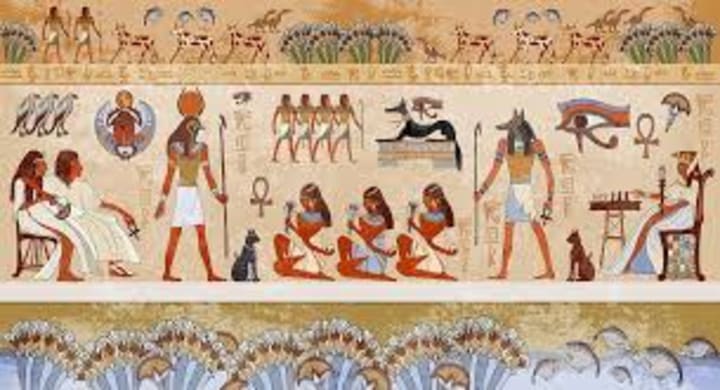
The social structure of ancient Egypt was hierarchical and organized, with individuals occupying specific roles and positions based on their birth, occupation, and relationship to the ruling elite. The society was divided into distinct classes, each playing a vital role in the functioning of the kingdom. Daily life in ancient Egypt revolved around the principles of tradition, religion, and the pursuit of prosperity and stability.
Pharaohs and Elites: The pharaohs, priests, and nobility held the highest positions in society.
At the pinnacle of ancient Egyptian society stood the pharaoh, who was not only the political leader but also considered a divine ruler, a living god on Earth. The pharaoh was believed to be the intermediary between the gods and the people, responsible for maintaining cosmic order and ensuring prosperity for the kingdom. The pharaoh's word was law, and his decrees were unquestioningly obeyed.
Below the pharaoh were the elite members of society, which included priests, court officials, and members of the nobility. Priests played a crucial role in religious ceremonies, maintaining temples, and conducting rituals to appease the gods. They were respected figures who wielded significant influence and acted as advisors to the pharaoh. The nobility comprised the highest-ranking officials and nobles who were often rewarded for their loyalty and service with large land grants and prestigious titles.
The elite enjoyed privileges such as access to the best education, luxurious lifestyles, and exemption from certain taxes and labour obligations. Their positions in society were inherited and passed down through generations, ensuring the continuity of their status and influence.
Middle class and artisans: Skilled craftsmen, merchants, and scribes constituted the middle class.
The middle class in ancient Egypt was diverse and included skilled craftsmen, artisans, merchants, and scribes. Craftsmen and artisans played a vital role in the economy, creating exquisite works of art, pottery, textiles, and other goods. They were highly skilled individuals who honed their craft through years of apprenticeship and passed down their knowledge through generations.
Merchants engaged in trade, both domestically and internationally, facilitating the exchange of goods and resources between different regions. They were respected members of society and contributed to the prosperity of the kingdom through their commercial activities.
Scribes held a prestigious position in Egyptian society, as they were the educated class responsible for writing, record-keeping, and administrative tasks. Scribes played a crucial role in maintaining the functioning of the bureaucracy and acted as intermediaries between the ruling elite and the common people.
The middle class enjoyed a relatively comfortable lifestyle compared to the lower classes. They had access to education and could afford some luxuries, although their social status was not as elevated as that of the elite.
Peasants and slaves: The majority of the population were farmers and labourers, and slaves were employed for various tasks.
The largest segment of ancient Egyptian society consisted of peasants and labourers who worked the land and provided essential resources for the kingdom. Peasants engaged in agricultural activities, cultivating crops such as wheat, barley, flax, and various fruits and vegetables. They worked in the fields, often under the supervision of overseers or local administrators, to ensure a steady food supply for the kingdom.
Slavery was an integral part of ancient Egyptian society, and slaves were acquired through various means, such as prisoners of war, debtors, and criminals. Slaves performed a wide range of tasks, including agricultural labour, construction work, and household chores. Some slaves held specialized roles, such as servants in noble households or skilled workers in workshops.
Despite their challenging lives, peasants and slaves formed the backbone of the Egyptian economy and played a crucial role in sustaining society. They were subject to labour obligations and taxes but were also entitled to protection and support from the ruling elite.
Daily life for the common people revolved around their work, family, and religious practices. The family unit was central to Egyptian society, and family members held deep respect and affection for one another. They lived in modest homes made of mud bricks, while the elite and nobility resided in grand palaces or luxurious estates.
Religious beliefs permeated every aspect of daily life, and the people engaged in rituals, festivals, and offerings to the gods to seek their favour and protection. The ancient Egyptians valued order and stability, and their daily routines revolved around maintaining harmony and balance within their households and communities.
In conclusion, the social structure of ancient Egypt was characterized by a well-defined hierarchy, with the pharaohs, priests, and nobility at the top, followed by the middle class of skilled craftsmen, merchants, and scribes, and the majority of the population consisting of peasants and labourers, along with a significant population of slaves. Daily life in ancient Egypt revolved around religious practices, family values, and a dedication to maintaining prosperity and stability within the kingdom. Each social class played a vital role in the functioning of Egyptian society, contributing to the longevity and enduring legacy of this remarkable civilization.
9. Decline and Conquest:

The decline of ancient Egypt was marked by a series of foreign invasions and conquests that gradually eroded its sovereignty and eventually led to its integration into larger empires. Over the centuries, Egypt experienced domination by various foreign powers, each leaving its imprint on the culture and governance of the region.
Invasions and foreign rule: The Assyrians, Persians, and finally the Greeks (under Alexander the Great) conquered Egypt.
The first major foreign invasion of Egypt occurred during the Third Intermediate Period when the kingdom was weakened and fragmented. The Assyrians, a powerful Mesopotamian empire, launched successful military campaigns in the region, asserting their control over Egypt. Despite the Assyrian rule, Egypt managed to regain some independence and experienced a brief resurgence during the Late Period.
In 525 BCE, the Persians, led by King Cambyses II, invaded Egypt and defeated the last native Egyptian pharaoh, Psamtik III, at the Battle of Pelusium. Egypt became a satrapy (province) of the Persian Achaemenid Empire, and Persian rulers appointed local governors to oversee Egyptian affairs. While the Persian administration allowed for relative autonomy, it also imposed heavy taxes and centralized control, which led to discontent among the Egyptian population.
The conquest of Egypt by Alexander the Great in 332 BCE marked a significant turning point in its history. Alexander, having already established a vast empire, was welcomed as a liberator by the Egyptians, who saw him as a deliverer from Persian rule. He founded the city of Alexandria, which soon became a prominent centre of Hellenistic culture and learning.
Cleopatra and the Ptolemaic dynasty: The last Egyptian Pharaoh, Cleopatra VII, ruled during the Ptolemaic period.
Following Alexander's death in 323 BCE, his empire was divided among his generals, and Egypt fell under the control of the Ptolemaic dynasty, founded by Ptolemy I Soter. The Ptolemaic rulers were of Greek descent and sought to maintain the trappings of Egyptian traditions and culture while integrating Hellenistic influences.
Cleopatra VII, the last pharaoh of ancient Egypt, is one of the most famous figures from this dynasty. Cleopatra ascended the throne in 51 BCE, co-ruling with her younger brother Ptolemy XIII and later with her son Ptolemy XV (Caesarion). Cleopatra was a shrewd and politically astute leader who sought to consolidate her power by forming strategic alliances with powerful Roman leaders.
Cleopatra's relationships with Julius Caesar and Mark Antony brought Egypt into the political turmoil of the Roman Republic. Following Caesar's assassination in 44 BCE, Cleopatra aligned herself with Mark Antony in his struggle against Octavian (later known as Augustus), the adopted son of Caesar and one of the most influential figures in Rome.
The Battle of Actium in 31 BCE proved decisive, with Octavian's forces emerging victorious, leading to the defeat of Antony and Cleopatra. Faced with the prospect of being paraded through Rome as a captive, Cleopatra chose to end her life through suicide, and with her death, the Ptolemaic dynasty came to an end.
Egypt became a Roman province in 30 BCE, marking the end of ancient Egypt as an independent kingdom. Under Roman rule, Egypt continued to be a vital economic and cultural centre, but its status as a sovereign state had ceased.
In conclusion, the decline of ancient Egypt was characterized by a series of foreign invasions and conquests that gradually diminished its independence and influence. The Assyrians, Persians, and Greeks successively conquered the region, each leaving a lasting impact on its society and culture. The Ptolemaic dynasty, under Cleopatra VII's rule, represented the last vestiges of Egypt's native pharaonic rulers, as the country eventually became a Roman province. Although ancient Egypt's era as an independent kingdom came to a close, its legacy endured through its contributions to civilization, art, architecture, and knowledge, continuing to captivate and inspire the world to this day.
Conclusion:
The Ancient Egyptian Civilization stands as one of the most remarkable and influential cultures in human history. Throughout its long and illustrious existence, which spanned over three millennia, ancient Egypt made profound contributions to art, architecture, religion, governance, and numerous other aspects of human civilization. The enduring legacy of this extraordinary civilization continues to captivate and inspire people worldwide.
In the realm of art and architecture, ancient Egypt's achievements are nothing short of awe-inspiring. The majestic pyramids, colossal statues, and grand temples are enduring testaments to the ingenuity and engineering prowess of the ancient Egyptians. The intricate hieroglyphic writing system, carved onto temple walls and papyrus scrolls, provided a means to record their beliefs, rituals, and historical events, ensuring the preservation of their cultural heritage for posterity.
Religion played a central role in every aspect of ancient Egyptian life. The polytheistic beliefs and reverence for numerous gods and goddesses shaped their worldview and societal structure. The pharaohs, believed to be divine rulers, held positions of great authority and were responsible for maintaining cosmic order and prosperity in the kingdom. Elaborate temples and rituals dedicated to the deities demonstrated the ancient Egyptians' deep-seated devotion to their gods and their belief in an afterlife.
The governance of ancient Egypt, under the rule of pharaohs and theocracy, was characterized by a centralized authority and an intricate bureaucracy. The system of viziers and administrative officials managed the vast kingdom's affairs, overseeing trade, agriculture, and public works projects that contributed to the kingdom's prosperity and stability.
As the study document explored the different periods of Ancient Egypt, from the Early Dynastic Period to the New Kingdom, we witnessed the rise and fall of powerful pharaohs, periods of prosperity, and challenges faced by the kingdom. The conquests by foreign powers, including the Assyrians, Persians, and Greeks, brought about significant changes to Egyptian society and culture. The integration of Hellenistic influences during the Ptolemaic period added new dimensions to Egyptian art, architecture, and intellectual pursuits.
Despite the decline and foreign conquests, the spirit and legacy of ancient Egypt continued to resonate through the ages. Today, the wonders of ancient Egypt, such as the Great Sphinx, the Luxor Temple, and the writings on the Rosetta Stone, stand as enduring symbols of human achievement and ingenuity. Scholars, historians, and archaeologists continue to unravel the mysteries of ancient Egypt, enriching our understanding of human history and the complexities of early civilizations.
By studying the intricacies of Ancient Egypt, we gain valuable insights into the development of human civilization. The ancient Egyptians' achievements in various fields paved the way for subsequent cultures and societies, shaping the course of human progress. Moreover, the cultural and intellectual legacy of ancient Egypt serves as a reminder of the enduring power of human creativity and innovation.
In conclusion, the Ancient Egyptian Civilization's remarkable contributions to art, architecture, religion, governance, and various other fields continue to inspire awe and fascination. The enduring legacy of this civilization serves as a testament to the ingenuity, wisdom, and cultural richness of our ancestors. As we delve deeper into the intricacies of ancient Egypt, we embrace the opportunity to learn from history and gain a deeper appreciation for the achievements and challenges faced by one of the most extraordinary civilizations to have graced our planet. The study of ancient Egypt remains a profound journey into the past, enriching our present understanding of human civilization and inspiring future generations to embrace their cultural heritage and aspire to greatness.
About the Creator
Nizam malang
Nizam Malang: Passionate historian unraveling untold stories of the past, connecting historical events with fresh perspectives, and making history accessible for all.
Keep reading
More stories from Nizam malang and writers in History and other communities.
The History of the Ballpoint Pen
The History of the Ballpoint Pen The ballpoint pen, a widely used writing instrument, has a rich and intriguing history that dates back to the early 20th century. From its humble beginnings to its widespread popularity today, the ballpoint pen has revolutionized the way we write and has become an essential tool in various aspects of our lives. Let's delve into the fascinating journey of the ballpoint pen and explore its remarkable evolution.
By Nizam malang3 years ago in History
GDP After War: How Conflicts Reshape National Economies
GDP After War: How Conflicts Reshape National Economies War is not only fought on battlefields; it also leaves deep scars on a country's economy. One of the most important indicators affected by war is Gross Domestic Product (GDP), which measures the total value of goods and services produced by a nation. When war begins, economic activity often collapses, infrastructure is destroyed, and government spending shifts heavily toward military needs. But the economic story does not end when the war stops. The period after war can be equally challenging and sometimes surprisingly transformative.
By Wings of Time 2 days ago in History


Comments
There are no comments for this story
Be the first to respond and start the conversation.