World History
Nicolaus Copernicus: The Revolutionary Astronomer Who Changed Our View of the Universe**
**Nicolaus Copernicus: The Revolutionary Astronomer Who Changed Our View of the Universe** **Introduction** Nicolaus Copernicus (1473 - 1543) is renowned for transforming the scientific worldview of the cosmos. His revolutionary theory placed the Sun, rather than the Earth, at the center of the universe, challenging centuries of established beliefs. Copernicus’s life and work laid the foundation for modern astronomy and altered the trajectory of scientific thought, ultimately inspiring other great scientists like Galileo, Kepler, and Newton.
By Mahalakshmiabout a year ago in History
No Time for Sorrow
Mara was a medical caretaker — a title she'd worn proudly once. Be that as it may, presently, she felt more like a scrounger. Supplies were waning, and she expected to return food and medication once again to the facility. She lacked the opportunity and energy to contemplate the companions she'd lost, or the patients she wasn't ready to save. There was no time for anguish. Consistently spent grieving was a second squandered, and in circumstances such as these, seconds could mean endurance.
By Hridoy Hasanabout a year ago in History
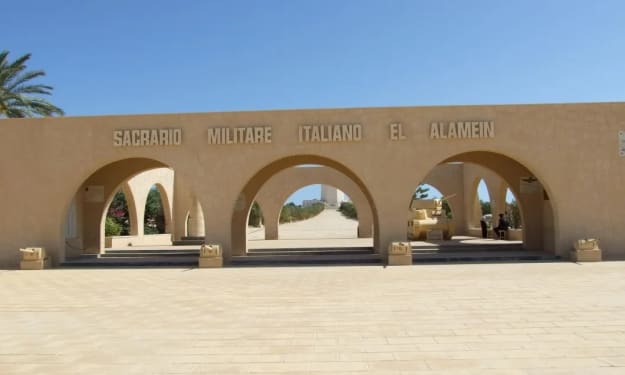
Exploring the El Alamein War Museum: A Historic Journey
Located on the northern coast of Egypt, the El Alamein War Museum stands as a solemn tribute to the history of World War II and the intense battle fought in this region. As one of the most significant military sites in Egypt, the museum offers a unique opportunity to explore the profound history of the North African Campaign. Through its exhibitions and the nearby El Alamein War Cemetery, the museum provides a deeply reflective and informative experience for visitors interested in understanding the pivotal role this region played in shaping the outcome of the war.
By Visit Egyptabout a year ago in History
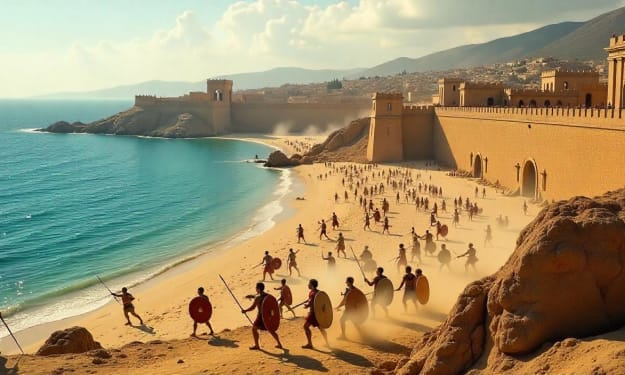
The Epic of the Trojan War
Over centuries, nations have risen and fallen, leaving their mark on history through stories and legends. Among these tales, the Trojan War stands out as a timeless narrative blending heroism, divine intervention, and human tragedy. The story, immortalized in Homer’s Iliad, captures the essence of ancient Greek beliefs and values, exploring the motives, battles, and heroes involved in a war that may be as much myth as reality. The primary source of knowledge about the Trojan War is Homer’s Iliad, written in the 8th century BCE, which recounts the final 52 days of a conflict lasting ten years. The term Iliad derives from Ilion, the ancient name for Troy. Although Homer’s account is our most detailed source, the tale of Troy was preserved through a rich oral tradition and other epic poems that preceded his work.
By A Históriaabout a year ago in History
THE LEGACY OF MOORISH SPAIN
The Queen of Castille sits regally on a somewhat bewildered-looking white steed, crown perched prominently on her head. Her eyes are drawn to the ochre-coloured castle gleaming brightly in late November sunlight on a distant hill. Her husband, the King of Aragon, leans forward on his horse with his hand out ready to accept the hefty keys reluctantly proffered by the last Nasrid ruler of the final bastion of Moorish rule in Al Andalus, Boabdil. Though spared the humiliation of kissing the monarch’s hand, the Moor's eyes seem to be silently pleading, “Remember what you promised.”
By Kimberley Silverthorneabout a year ago in History
Yemanjá
Yemanjá, also known as Iemanjá in Brazil, is a prominent figure in Afro-Brazilian religions and cultural expressions, recognized as the powerful and nurturing goddess of the sea. Revered in Candomblé and Umbanda, Yemanjá is known as the "Queen of the Ocean," embodying themes of motherhood, protection, and transformation. Her influence extends far beyond religious boundaries, touching Brazilian art, music, and annual celebrations that draw millions of devotees and tourists alike. In this article, we explore Yemanjá's origins, her symbolic role in Brazilian culture, and how her annual festival continues to inspire a sense of connection and renewal. Yemanjá originates from the Yoruba religion of West Africa, where she was venerated as one of the Orishas, powerful deities connected to nature. In the Yoruba tradition, Yemanjá is associated with rivers and motherhood, symbolizing fertility, nurturing, and emotional depth. The transatlantic slave trade, however, brought Yoruba practitioners to Brazil, where they adapted their religious practices in the face of colonial oppression. Over time, the worship of Yemanjá blended with local indigenous beliefs and elements of Catholicism, leading to the vibrant, syncretic Afro-Brazilian religious traditions we see today.
By A Históriaabout a year ago in History
Shajar al-Durr: The Story of a Powerful Queen
Shajar al-Durr: The Story of a Powerful Queen Shajar al-Durr, a prominent historical figure in medieval Egypt, was born in the mid-13th century in Damascus. She is best known as the wife of Sultan al-Malik al-Salih Ayyub and for her unique role in the history of Egypt and the Muslim world.
By Ahmed Mohamedabout a year ago in History
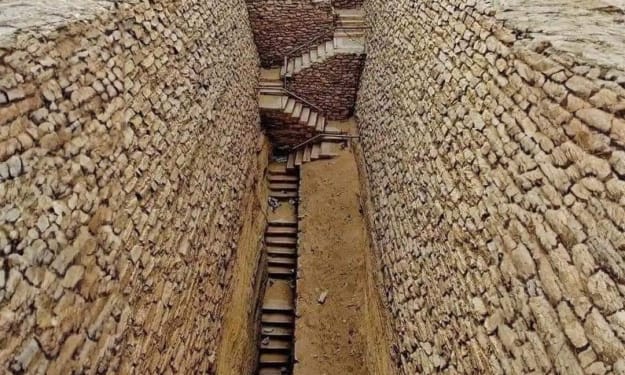
Steps Through Time: The Secrets of Pharaoh Djoser’s Tomb in Saqqara
The ancient Egyptian civilization remains one of the most mysterious and fascinating periods in history. With its monumental structures, intricate beliefs about life and the afterlife, and astounding advances in art, architecture, and science, this civilization still captivates our imaginations. Among the most impressive relics of ancient Egypt is the 4,800-year-old staircase leading to the southern tomb of Pharaoh Djoser in Saqqara, Egypt. These steps, which descend into the earth, do not merely represent a pathway; they are a window into a lost world of architectural genius, religious rituals, and beliefs that helped shape one of history's most influential cultures.
By Taimur Kazmiabout a year ago in History
"Shadows and Reflections: The Myth of the Black Taj Mahal Across the Yamuna"
The Fable of the Atramentous Taj Mahal: Fact or Fiction? The Taj Mahal, an unparalleled attribute of love, stands as a marble curiosity forth the Yamuna River in Agra, India. Commissioned by the Mughal emperor Shah Jahan in anamnesis of his admired wife Mumtaz Mahal, this catacomb is accepted common for its beauty, symmetry, and intricate craftsmanship. Yet abaft its aboriginal white domes lies a arresting abstruseness that has absorbed historians, tourists, and locals for centuries—the fable of the "Black Taj Mahal."
By Say the truth about a year ago in History
The world's first wooden satellite launched into space
In a groundbreaking move for space exploration and sustainability, the world’s first wooden satellite was successfully launched into space. This remarkable achievement marks a significant milestone in both the field of aerospace engineering and the drive toward greener space technologies. The innovative satellite, known as WISA Woodsat, is a symbol of how sustainable materials can shape the future of space exploration.
By Zinnat ara Begumabout a year ago in History
Igudar: Morocco’s Ancient Banking System and the Story of Communal Trust
In the rugged landscape of Agadir, Morocco, one can find the remains of a fascinating and ancient form of banking—structures known as “Igudar” (plural for "agadir"). These communal granaries, built by the Amazigh (Berber) people, are much more than simple storage spaces. With their fortified designs, elevated locations, and the sense of collective responsibility that sustained them, Igudar represent an early example of communal wealth management and trust, acting as one of the oldest banking systems in the world.
By Deji Akomolafeabout a year ago in History
The Taj Mahal: A Monument of Love and Architectural Wonder
The Taj Mahal: A Cairn of Adulation and Architectural Wonder The Taj Mahal, generally alleged a “teardrop on the audacity of time,” stands as one of the world’s best iconic structures and a attribute of abiding love.
By Say the truth about a year ago in History