
The Epic of the Trojan War
Myth, Reality, and the Legacy of Ancient Greece

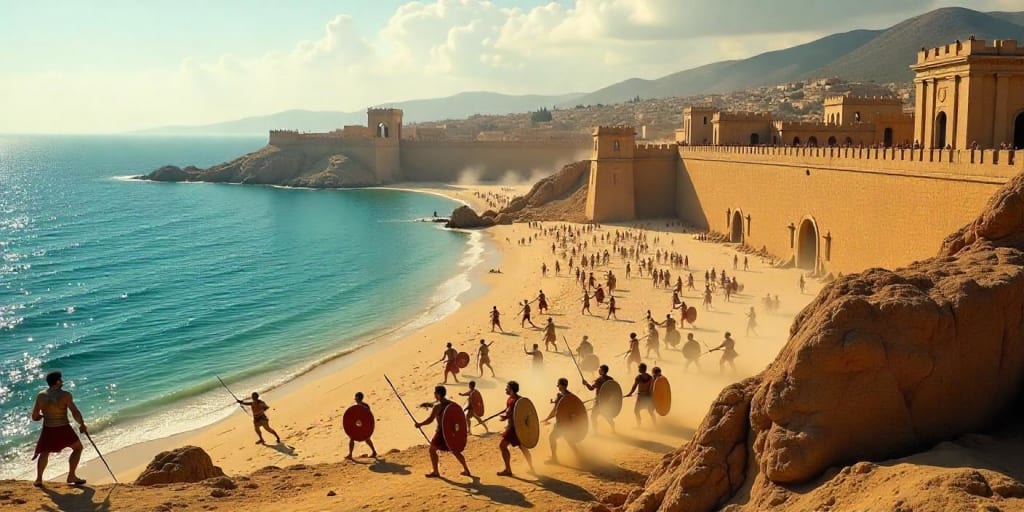
Over centuries, nations have risen and fallen, leaving their mark on history through stories and legends. Among these tales, the Trojan War stands out as a timeless narrative blending heroism, divine intervention, and human tragedy. The story, immortalized in Homer’s Iliad, captures the essence of ancient Greek beliefs and values, exploring the motives, battles, and heroes involved in a war that may be as much myth as reality. The primary source of knowledge about the Trojan War is Homer’s Iliad, written in the 8th century BCE, which recounts the final 52 days of a conflict lasting ten years. The term Iliad derives from Ilion, the ancient name for Troy. Although Homer’s account is our most detailed source, the tale of Troy was preserved through a rich oral tradition and other epic poems that preceded his work.
In Greek mythology, the Trojan War was Zeus's strategy to reduce an ever-growing human population, setting a divine reason for conflict. On the mortal side, the immediate cause was the abduction of Helen, the wife of Menelaus, king of Sparta, by Paris, prince of Troy. Helen, considered the most beautiful woman in the world, was taken after Paris chose Aphrodite as the fairest goddess, spurring her rivalry with Athena and Hera. Menelaus, determined to bring Helen back, gathered an alliance led by his brother Agamemnon, king of Mycenae, to march on Troy. The Greek forces boasted the most renowned warriors of the age, many of whom were demigods. Heroes like Achilles, Odysseus, Ajax, Diomedes, and Patroclus each played pivotal roles. They were aided by gods, including Athena, Poseidon, and Hera, who held allegiances to the Greeks. Their Trojan counterparts, led by King Priam and his sons Hector and Aeneas, also had divine backing, with Apollo, Aphrodite, and Ares siding with Troy. Most of the Trojan War took place in a prolonged siege outside Troy’s fortified walls. Homer depicts fierce battles in the plains before the city, with warriors fighting on foot using swords, spears, and shields. The war’s climax came in the final year, where indecisive skirmishes turned into iconic duels. Menelaus faced Paris, nearly killing him before Aphrodite intervened to save the Trojan prince. Another famous encounter occurred between Hector and Ajax, ending in mutual respect and the exchange of gifts as night fell, embodying the era’s code of honor. Achilles, the Greek army's greatest warrior, sat out most of the war due to a dispute with Agamemnon over a captured prize, Briseis. However, after his beloved friend Patroclus was killed in battle by Hector, Achilles returned to the battlefield in a rage. Donning new armor crafted by the god Hephaestus, Achilles overwhelmed the Trojans and killed Hector in a dramatic duel outside Troy’s walls. His act of dragging Hector’s body back to camp shocked the onlookers and broke ancient war codes, adding further complexity to the theme of honor in warfare.
The Greeks’ eventual victory over Troy was secured through cunning rather than brute force. Odysseus devised the idea of the Trojan Horse—a massive wooden horse concealing Greek soldiers within. Believing it to be a peace offering, the Trojans brought the horse into the city, only for the Greek warriors to emerge at night, opening the gates for their returning comrades. Troy fell to flames, its people were slaughtered or enslaved, and Helen was returned to Sparta.
The debate on the historical basis of the Trojan War intensified with Heinrich Schliemann's 19th-century excavation at Hisarlik in modern Turkey, where he uncovered ruins that appeared to match descriptions of ancient Troy. Archaeologists later identified layers of settlement, with Troy VI being the most likely candidate for Homeric Troy. Massive walls, weapons, and signs of destruction align with the period around 1250 BCE, suggesting some form of conflict that may have inspired the epic. Yet, while this evidence hints at historical roots, the war Homer described was likely an exaggerated myth, encapsulating the collective memory of numerous skirmishes between Mycenaean Greeks and Anatolian civilizations.
About the Creator
A História
"Hi. My name is Wellington and I'm a passion for general history. Here, I publish articles on different periods and themes in history, from prehistory to the present day.
Keep reading
More stories from A História and writers in History and other communities.
Yemanjá
Yemanjá, also known as Iemanjá in Brazil, is a prominent figure in Afro-Brazilian religions and cultural expressions, recognized as the powerful and nurturing goddess of the sea. Revered in Candomblé and Umbanda, Yemanjá is known as the "Queen of the Ocean," embodying themes of motherhood, protection, and transformation. Her influence extends far beyond religious boundaries, touching Brazilian art, music, and annual celebrations that draw millions of devotees and tourists alike. In this article, we explore Yemanjá's origins, her symbolic role in Brazilian culture, and how her annual festival continues to inspire a sense of connection and renewal. Yemanjá originates from the Yoruba religion of West Africa, where she was venerated as one of the Orishas, powerful deities connected to nature. In the Yoruba tradition, Yemanjá is associated with rivers and motherhood, symbolizing fertility, nurturing, and emotional depth. The transatlantic slave trade, however, brought Yoruba practitioners to Brazil, where they adapted their religious practices in the face of colonial oppression. Over time, the worship of Yemanjá blended with local indigenous beliefs and elements of Catholicism, leading to the vibrant, syncretic Afro-Brazilian religious traditions we see today.
By A Históriaabout a year ago in History
When a “Threat” Became Reality: Saddam Hussein’s Invasion of Kuwait
In the summer of 1990, tensions in the Middle East were rising, but few people believed that an actual war was about to begin. Many diplomats and analysts assumed that Iraqi leader Saddam Hussein was simply using harsh rhetoric to pressure his smaller neighbor. However, what many dismissed as a political threat soon turned into a shocking military invasion that reshaped global politics.
By Irshad Abbasi 8 days ago in History



Comments
There are no comments for this story
Be the first to respond and start the conversation.