
Nicolaus Copernicus: The Revolutionary Astronomer Who Changed Our View of the Universe**
nicolaus copernicus

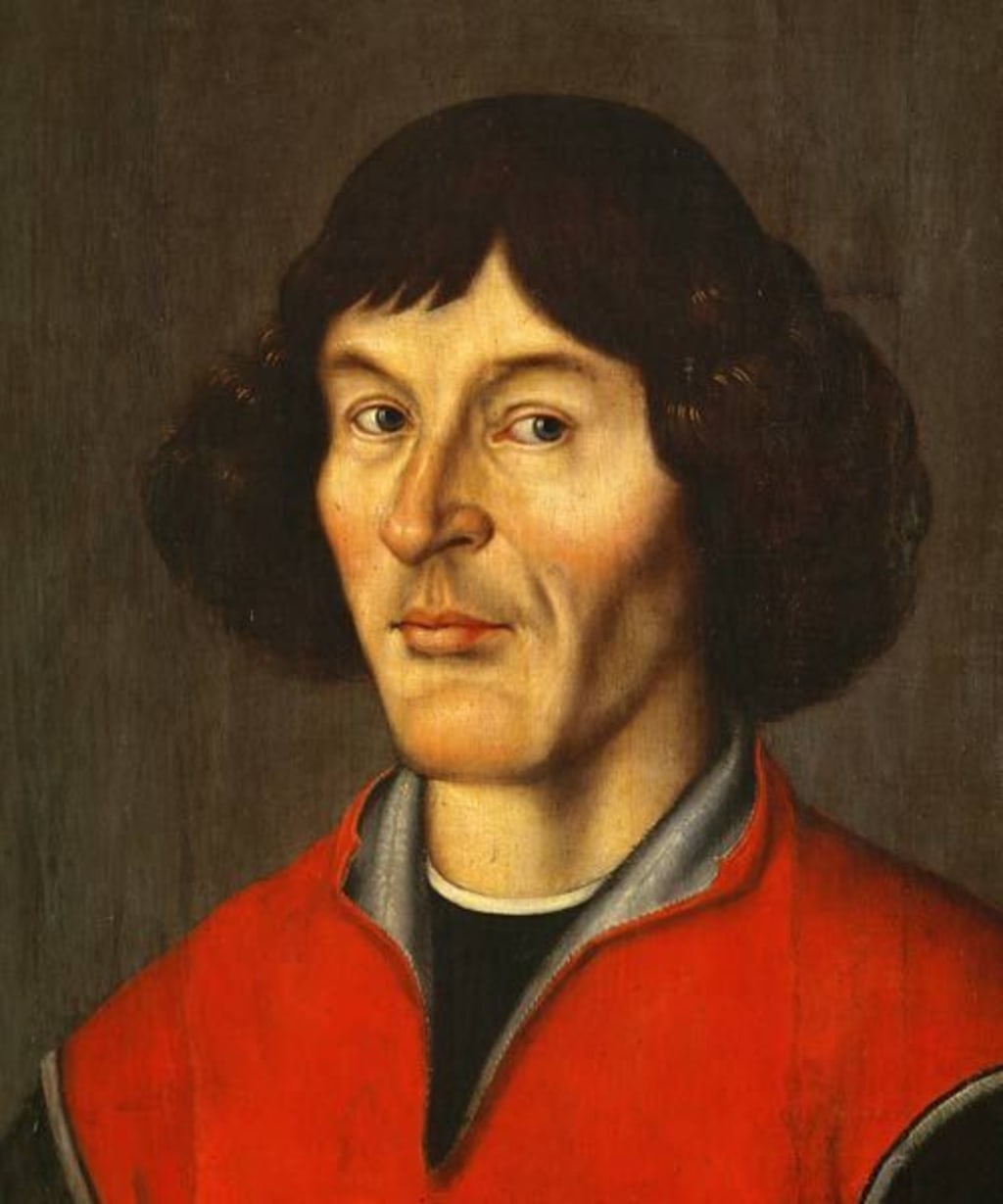
**Nicolaus Copernicus: The Revolutionary Astronomer Who Changed Our View of the Universe**
**Introduction**
Nicolaus Copernicus (1473 - 1543) is renowned for transforming the scientific worldview of the cosmos. His revolutionary theory placed the Sun, rather than the Earth, at the center of the universe, challenging centuries of established beliefs. Copernicus’s life and work laid the foundation for modern astronomy and altered the trajectory of scientific thought, ultimately inspiring other great scientists like Galileo, Kepler, and Newton.
**Early Life and Education**
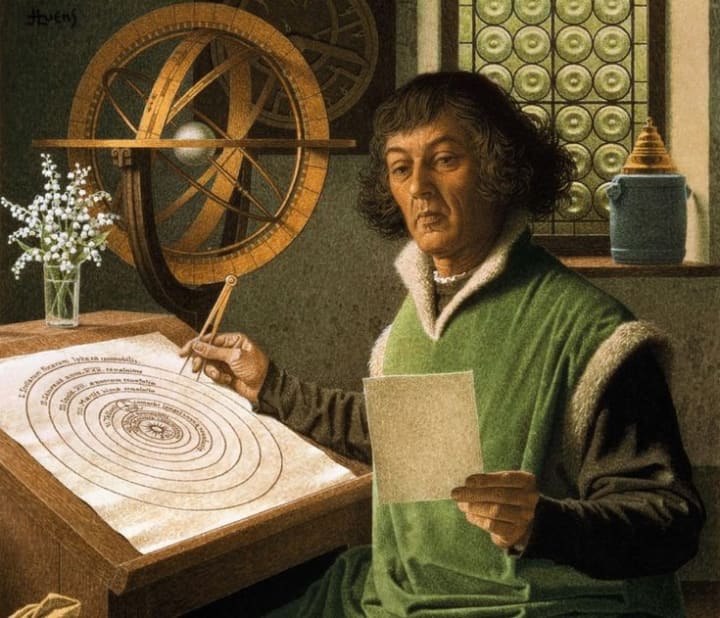
Nicolaus Copernicus was born on February 19, 1473, in the city of Toruń, Poland, to a wealthy merchant family. His father, a successful copper merchant, passed away when Copernicus was only ten years old, leaving him in the care of his maternal uncle, Lucas Watzenrode, a high-ranking church official. Watzenrode became an essential figure in Copernicus’s life, ensuring that he received a good education and guiding his spiritual development.
Copernicus attended the University of Kraków, where he studied subjects including Latin, philosophy, and mathematics. His education there sparked a keen interest in astronomy. After Kraków, he went to Italy to continue his studies in law, medicine, and astronomy, attending several prestigious universities, including those in Bologna and Padua. During his studies, he was introduced to classical texts on astronomy, and he soon began to question the prevailing geocentric model, which held that the Earth was the center of the universe.
**The Dominant Worldview: Ptolemaic System**
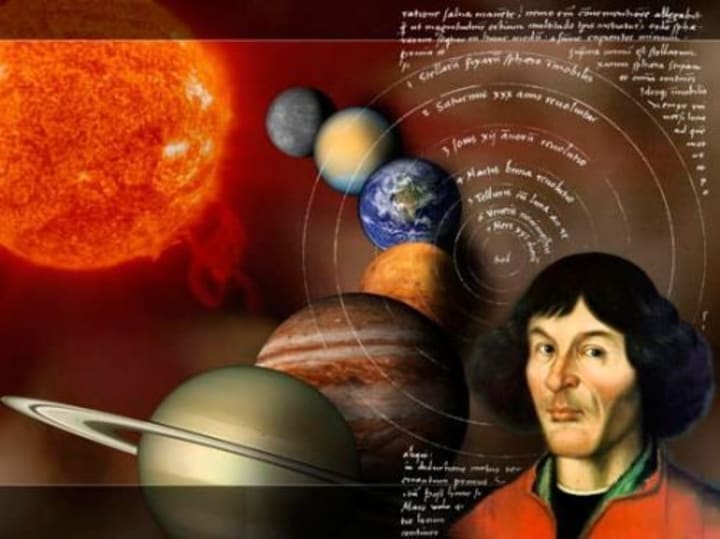
At that time, the widely accepted cosmological model was the Ptolemaic system, named after the Greek astronomer Claudius Ptolemy. This geocentric model, established over a thousand years before Copernicus’s birth, proposed that Earth was the stationary center of the universe, with the Sun, Moon, planets, and stars orbiting around it in a series of complex loops called epicycles. While this model could predict planetary motions fairly accurately, it was becoming increasingly cumbersome and complicated, with astronomers needing to introduce more and more epicycles to account for observed celestial movements.
Copernicus, however, became convinced that there had to be a simpler, more elegant explanation for these motions. He began to develop his heliocentric, or Sun-centered, theory, driven by his desire to understand the workings of the heavens in a more coherent way.
**Developing the Heliocentric Theory**
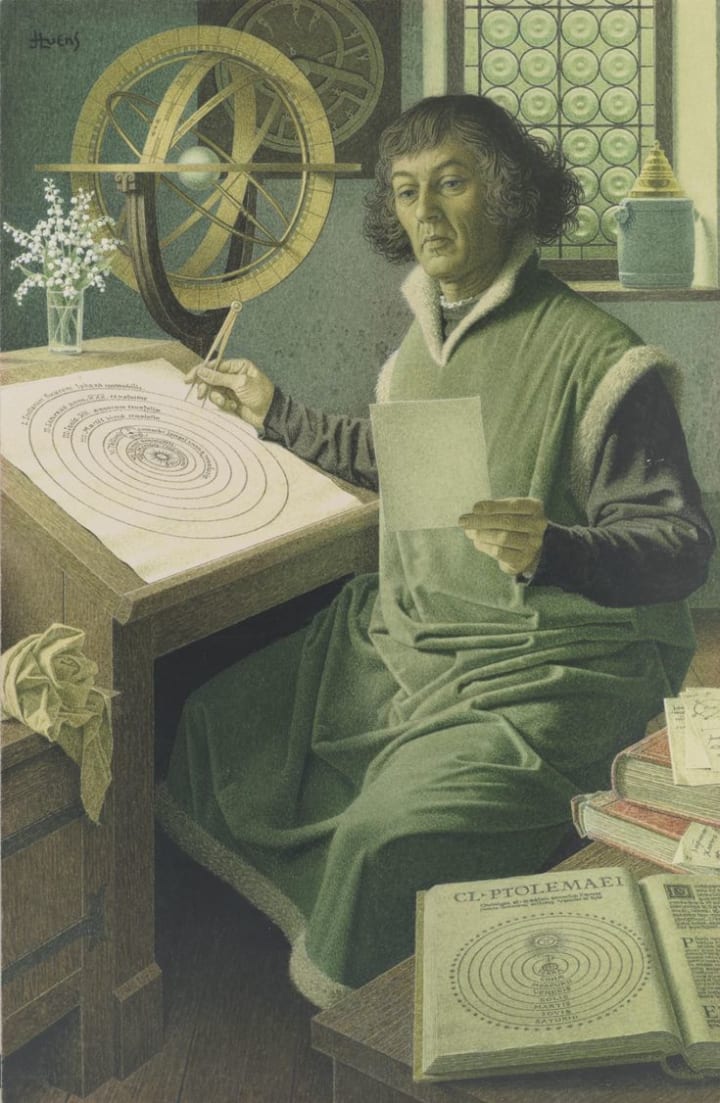
Copernicus spent years observing the skies, calculating planetary positions, and developing mathematical models to support his theory. His studies led him to conclude that the Earth and the other planets revolved around the Sun, not the other way around. His heliocentric model simplified the explanation of planetary movements by placing the Sun at the center, with Earth as one of the planets orbiting it.
The heliocentric model challenged the established scientific and religious views of his time. According to this model, the Earth was not the stationary center of the universe but rather just one of many celestial bodies orbiting the Sun. Copernicus realized the implications of his theory would be controversial, as it directly contradicted the teachings of the Church and centuries-old belief systems.
**Publishing "On the Revolutions of the Heavenly Spheres"**
In 1543, after decades of careful research, Copernicus published his groundbreaking work, *De revolutionibus orbium coelestium* ("On the Revolutions of the Heavenly Spheres"). This book presented his heliocentric model to the world, proposing that the Sun was at the center of the universe and that the Earth rotated on its axis and orbited the Sun.
Copernicus was aware of the potential backlash from the Church and other authorities, so he delayed publishing his work until near the end of his life. The publication of *De revolutionibus* stirred significant debate and controversy. Some scholars welcomed his ideas, while others outright rejected them. In the religious community, his heliocentric model was considered heretical by some, as it conflicted with the Church's teachings that placed Earth as God’s special creation at the center of the universe.
**The Impact of Copernicus’s Ideas**
While Copernicus’s work did not immediately replace the geocentric model, it planted the seeds of what would later become the Scientific Revolution. His heliocentric theory encouraged future scientists to question accepted beliefs and conduct their own investigations, leading to significant advancements in astronomy and physics.
Following Copernicus’s death, several astronomers and mathematicians expanded on his ideas. Johannes Kepler refined Copernicus’s model by showing that planets move in elliptical, rather than circular, orbits. Galileo Galilei used his telescope to provide observational evidence supporting the heliocentric model, and his discoveries—such as the moons orbiting Jupiter—challenged the notion that all celestial bodies revolved around the Earth. Isaac Newton later developed his laws of motion and universal gravitation, providing a physical explanation for the orbital mechanics described by Kepler and observed by Galileo.
**Why Copernicus's Theory Was Revolutionary**
Copernicus’s heliocentric model was not only a significant scientific breakthrough; it represented a profound shift in humanity’s understanding of its place in the cosmos. For centuries, people believed that the Earth was unique and central to all of creation. Copernicus’s work revealed that Earth was just one planet among many, orbiting a relatively ordinary star in a vast universe. This was a humbling realization that changed humanity’s self-perception.
The Copernican Revolution symbolized a broader transformation in scientific thinking, moving away from reliance on religious doctrine and ancient authorities toward a new emphasis on observation, experimentation, and mathematical analysis. This shift would lead to unprecedented progress in various fields of science.
**Legacy and Recognition**
Today, Nicolaus Copernicus is celebrated as one of the founders of modern astronomy. The Copernican Principle, named after him, is a cornerstone of cosmology, suggesting that Earth and its inhabitants do not hold a special, privileged position in the universe. This principle is foundational in fields ranging from astronomy to biology, as scientists search for understanding about humanity’s place in the cosmos and the possibility of life elsewhere.
Copernicus’s legacy extends beyond astronomy. He is a symbol of intellectual courage and dedication to truth, as he chose to pursue his ideas despite the risk of backlash. His decision to publish *De revolutionibus* inspired others to investigate and validate his theories, helping to shape the modern scientific method and the mindset of future generations of scientist.
**Conclusion**
Nicolaus Copernicus’s life and work mark a turning point in history. By proposing the heliocentric model, he challenged the prevailing worldview and reshaped humanity’s understanding of the cosmos. His groundbreaking work not only laid the foundation for astronomy but also spurred the scientific revolution that would forever change how we approach knowledge and discovery.
Copernicus’s story is one of perseverance, curiosity, and a willingness to confront established beliefs. Through his heliocentric theory, he left a legacy that reminds us of the power of questioning, observing, and seeking the truth, no matter how daunting the journey. His insights continue to inspire those who look up at the night sky and wonder about the mysteries of the universe.
About the Creator
Mahalakshmi
"My name is Mahalakshmi, and I'm passionate about storytelling in all its forms. From fiction to real-life tales, I love writing all types of stories that inspire, entertain, and spark imagination. Join me on this creative journey!"
Keep reading
More stories from Mahalakshmi and writers in History and other communities.
Amaran movie review
Amaran movie review Here’s a detailed review of *Amaran*, the Tamil biographical drama directed by Rajkumar Periasamy and starring Sivakarthikeyan and Sai Pallavi. Based on the life of Major Mukund Varadarajan, the film is an emotionally charged tribute to a real-life hero, blending romance, bravery, and duty. Here’s a breakdown of the film’s various elements:
By Mahalakshmiabout a year ago in History
Once Wealthy Estates Now Lost to Ruins
In the tropical landscapes of southern Yucatán, Mexico, the ruins of once-grand haciendas stand quietly among overgrown fields and crumbling stone walls. These estates were once the heart of a booming industry built around a plant that locals called “green gold.” For decades, the production of sisal fiber brought enormous wealth to the region, transforming the economy and shaping the lives of thousands of people. Today, however, many of these estates lie abandoned, their glory fading into history.
By Irshad Abbasi 2 days ago in History




Comments
There are no comments for this story
Be the first to respond and start the conversation.