World History
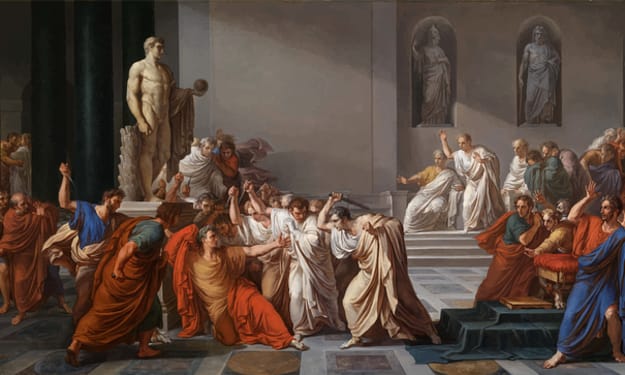
"The Twilight of an Empire: The Fall of Rome."
The collapse of the Roman Empire is one of history's most captivating and divisive events. It was a steady fall over centuries, marked by internal instability and external forces, rather than a catastrophic collapse. By the time Romulus Augustulus, the last Roman emperor, was ousted in 476 CE, the empire had long since lost its lustre as the strong institution that previously ruled over broad parts of Europe, the Middle East, and North Africa.
By rino ingenitoabout a year ago in History
Spiritual Versus Religion
The terms spirituality and religion are often used interchangeably but are considered quite different in most aspects. Both represent the way to understand higher explanations of life, such as who we are, why we are here, and what happens after this life. However, their approaches, practices, and meanings can differ significantly.
By Taviii🇨🇦♐️about a year ago in History
Gunnar Kaasen and Balto: Heroes of the 1925 Serum Run to Nome
In the harsh winter of 1925, the remote town of Nome, Alaska, faced a life-threatening outbreak of diphtheria. With ice-bound harbors and subzero temperatures rendering conventional transportation useless, the only hope for the community lay in the hands of a team of mushers and their sled dogs. Among these heroes was Gunnar Kaasen, a Norwegian-born musher, and his loyal lead dog, Balto. Together, they completed the final leg of the legendary "Serum Run," delivering lifesaving antitoxin to Nome and etching their names into history.
By Deji Akomolafeabout a year ago in History
"WW2 Uncovered: Secrets & Shocking Truths You Never Knew About the Greatest Conflict!"
World War II: A Global Conflict and its Enduring Legacy World War II was one of the deadliest conflicts in history, with an estimated total of over 70 million people losing their lives. This staggering number represents roughly 3% of the world’s population at the time. The war left nations shattered and plunged the world into a new era marked by unprecedented change. Its influence is felt even today, as we analyze its causes, key events, and lasting effects.
By Story silver book about a year ago in History
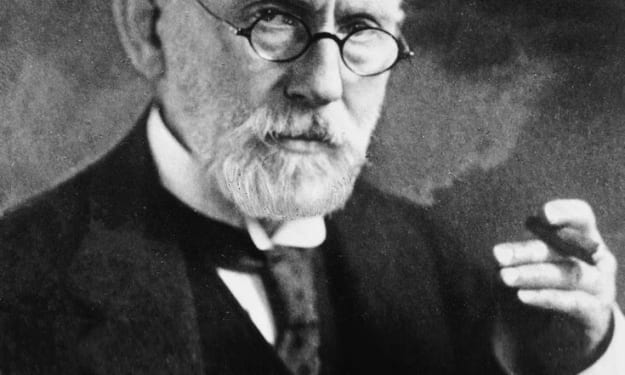
Paul Ehrlich: A Pioneer in Medicine and Immunology
Paul Ehrlich: A Pioneer in Medicine and Immunology Paul Ehrlich (1854–1915) was a German physician and scientist whose groundbreaking work in immunology, hematology, and chemotherapy revolutionized modern medicine. Widely regarded as a pioneer, his discoveries laid the foundation for many therapeutic advancements and scientific methodologies. Below is an overview of his life, career, and significant contributions to science.
By Mahalakshmiabout a year ago in History
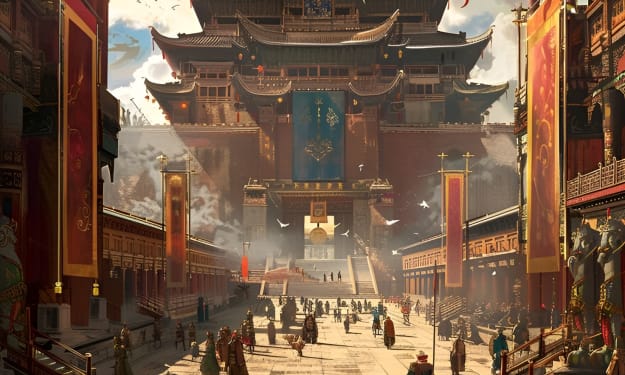
The Origins of an Enduring Civilization
The narrative of ancient China is one of perseverance, creativity, and enduring cultural heritage. As one of the world's oldest civilizations, its history spans millennia, characterized by significant advancements in governance, science, and philosophy. Beginning in the Neolithic era and progressing through the emergence of powerful dynasties such as the Xia, Shang, and Zhou, ancient China established the foundations for a nation that would transform into a contemporary global leader. Join us as we delve into the intriguing beginnings of this remarkable civilization.
By A Históriaabout a year ago in History
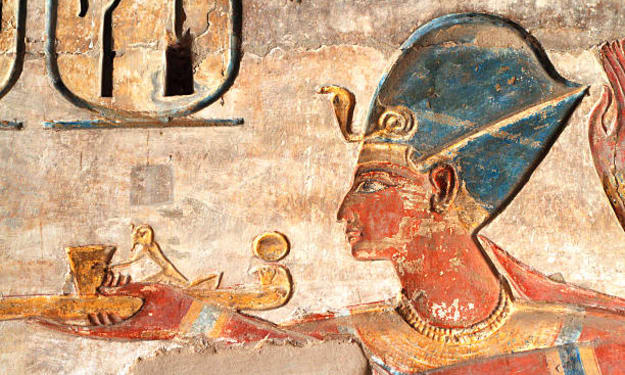
Tles from ancient Egypt
Let me introduce you to Ramses III. He had many enemies. He fought off invading armies from the Middle East to protect Egypt. But the real trouble came from within his own kingdom. His wife, Queen Tami, wanted their son to take the throne. So, she devised a plot to assassinate Ramses.
By myriamadamabout a year ago in History