
Exploring Athens
The timeless historical significance of the ancient metropolis

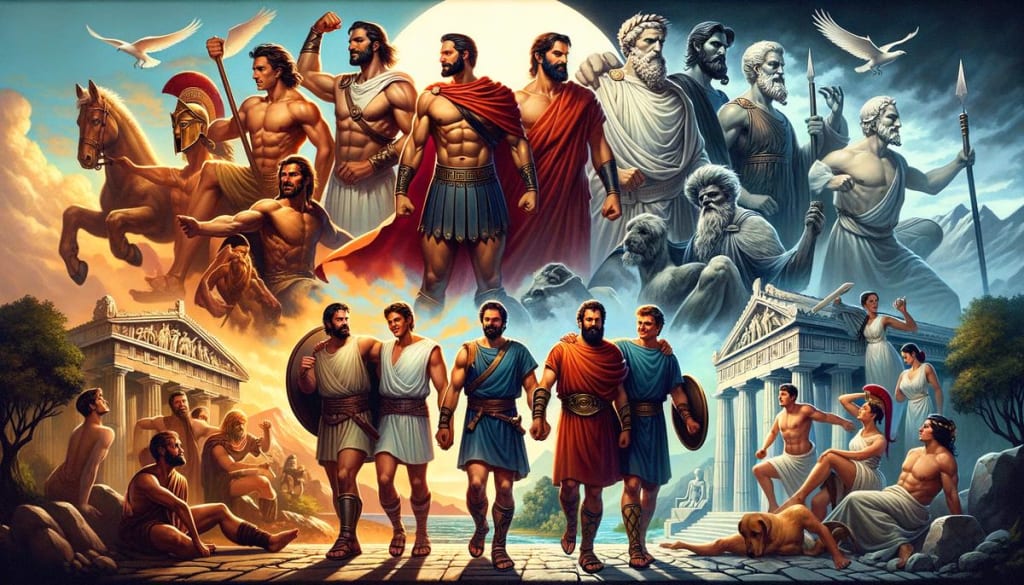
Over 2000 years ago, the first great European capital cities emerged along the shores of the Mediterranean. More people began to live in increasingly crowded conditions. During this time, the arts, commerce, and sciences thrived.
These cities competed for power and influence. They sought to outshine one another by building magnificent structures. People from various cultures and regions were attracted to these cities. They came in search of prosperity and happiness.
The rise of Athens began 500 years before the birth of Christ. No other city has influenced the western world as much as Athens. Many of history's most famous philosophers lived and taught there. The fine arts and natural sciences also flourished in Athens. The citizens of Athens introduced a new type of government: democracy. The Greek historian Pausanias wrote about an extraordinary woman from that time. Phryne was one of Athens' most famous courtesans. She was the mistress of important men, including scholars, artists, and politicians. Her wealth and beauty were legendary. However, her pride put her in mortal danger. Phryne angered the gods, but it was mortals who would ultimately judge her.
In the 5th century BC, Athens had a population of 300,000. The city was at its peak during this time. Afterward, Athens entered a long period of decline. It was not until the 20th century that Athens regained its previous size. Today, the population exceeds four million.
Just after sunrise, architect Nicostognidis awaits a special delivery. A truck carries a marble block weighing one ton. This block is for a significant restoration project.
The block must be hoisted 150 meters up the rocky slope of the Acropolis, the ancient citadel of Athens. The Acropolis is topped by the Parthenon, the city's most famous building. The Athenians constructed the Parthenon to commemorate their victory over the Persians in 479 BC.
Two thousand five hundred years later, the Parthenon is being dismantled and rebuilt. This process aims to correct the mistakes made in 19th-century restorations. The Parthenon was the most remarkable building of its time. It featured a two-story gallery of columns that supported the temple's roof. The temple was built by citizens in honor of Athena, the goddess of victory.
In the grand entrance hall, a statue of Athena stood twelve meters tall. This statue was adorned with gold and ivory. Today's workshops occupy the same locations as the original workers' huts.
After the restoration, the Parthenon will maintain its familiar appearance as a ruin. The approach involves repairing or completing damaged parts. New sculpted marble blocks will only be used when absolutely necessary. It is remarkable to observe that the techniques used by workers today are the same as those used in the past. They are compelled to follow traditional methods because they are considered the best practices. Dismantling the Parthenon piece by piece is essential to rectify the architectural errors of previous restorations.
For several decades, Athens dominated the eastern Mediterranean along with numerous Greek city-states. However, old conflicts soon resurfaced. Greece became embroiled in seemingly endless wars again. Warfare occurred almost every year during this time. The armies were made up of citizens, meaning most people fought frequently. Citizens were eligible for military duty between the ages of 18 and 59.
These armies included large land forces and massive fleets that required tens of thousands of rowers. As a result, most Athenians experienced war several times in their lives. War was seasonal. Farmers tended to their fields first. Once the crops were harvested, they would engage in battles with their neighbors. Warfare became a part of daily life in Athens.
Athens rose to a leading position among Greek cities due to its system of democracy. This political structure led to a remarkable development of arts and sciences in the fourth and fifth centuries BC. Athens's influence extended beyond Greece and throughout the Mediterranean region. However, even in ancient times, its power began to decline. Other cities, such as Alexandria, Carthage, and Rome, started to take over its prominent role. Despite this shift, none could challenge Athens's significance in history. Athens is often recognized as the cradle of democracy.
About the Creator
Keep reading
More stories from myriamadam and writers in History and other communities.
Cleopatra and Ceaser
Cleopatra VII died over 2,000 years ago. Yet, she remains one of history's most fascinating women. Known for her beauty and intellect, the Egyptian queen led a short but scandalous life. Her story has inspired countless works of art, literature, and films.
By myriamadamabout a year ago in History
Christopher Columbus
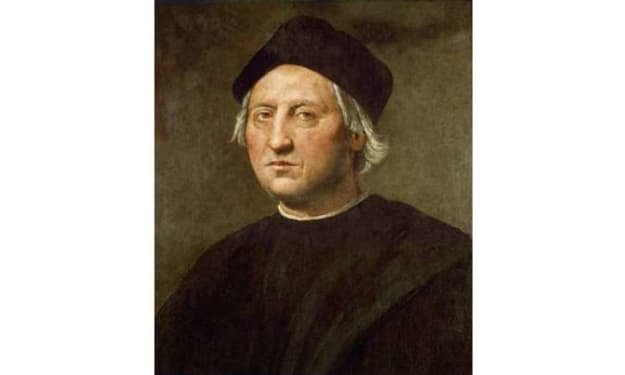
Dear children, today we will learn about Christopher Columbus, who is widely credited with discovering America. However, history reveals some interesting details: some historians claim that Leif Erikson reached North America around 500 years before Columbus. There are also accounts suggesting that Muslims arrived in America prior to Columbus, as indicated by evidence of a mosque on American soil dating back to that era. Others argue that Marko Polo may have reached America. Still, among the majority, Columbus is recognized as the man who opened the gateway to the “New World.”
By Sudais Zakwan2 days ago in History



Comments
There are no comments for this story
Be the first to respond and start the conversation.