
"The Twilight of an Empire: The Fall of Rome."
Unraveling the Causes Behind the Decline of a Civilization

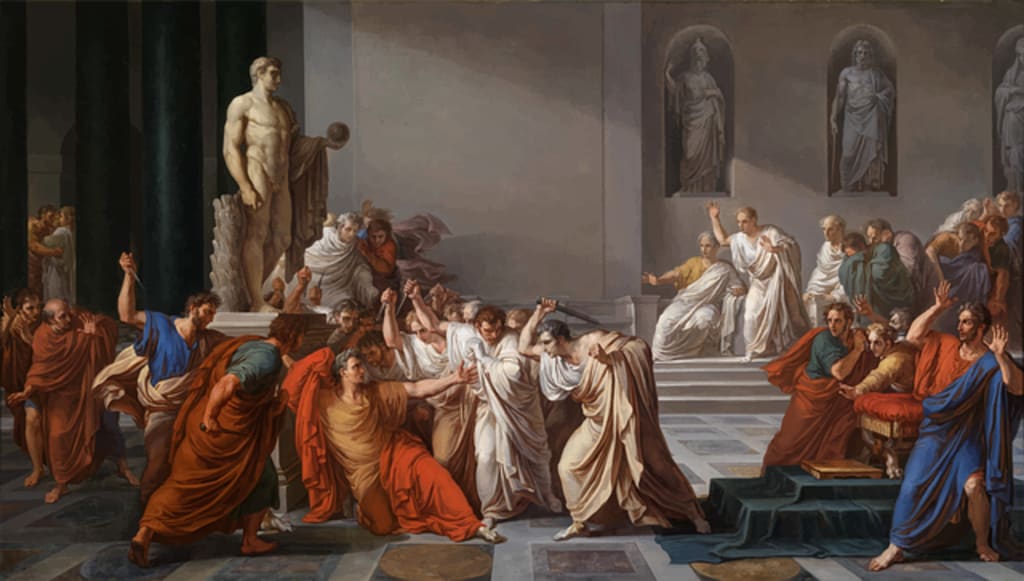
The collapse of the Roman Empire is one of history's most captivating and divisive events. It was a steady fall over centuries, marked by internal instability and external forces, rather than a catastrophic collapse. By the time Romulus Augustulus, the last Roman emperor, was ousted in 476 CE, the empire had long since lost its lustre as the strong institution that previously ruled over broad parts of Europe, the Middle East, and North Africa.
Internal Decay: The Seeds of Collapse
Rome's downfall was rooted in internal contradictions. As the empire grew, its administration mechanisms failed to handle the enormous regions and diverse inhabitants. Corruption among officials increased, and political instability resulted in a rotating door of emperors. Over a 50-year period, Rome had 26 emperors, the majority of whom died violently. This continual turmoil undermined the central authority and damaged popular trust. Economically, the empire was also shaky. Heavy taxes to support military wars and extravagant imperial lifestyles took resources from the provinces. Over time, the economic burden caused widespread resentment among the empire's population. Inflation and a reliance on slave labour, which grew unsustainable as conquests diminished, weakened Rome's economic roots. Social divides made the empire's problems worse. Resentment was stoked by the sharp contrast between the wealthy lifestyles of the upper classes and the impoverished conditions of the lower classes. Decadence and complacency also started to supplant the ancient virtues that had formerly bound Roman society together.

External Pressures: Barbarian Invasions and Beyond.
While internal forces contributed significantly, external influences sealed Rome's destiny. The Visigoths, Vandals, and Huns were among the barbarian tribes who repeatedly invaded the empire. These communities, often displaced by other migrant peoples, regarded the weakening Roman frontiers as an opportunity. One watershed point occurred in 410 CE, when the Visigoths, commanded by Alaric, stormed Rome. The catastrophe sent shockwaves throughout the empire, shattering the notion of Rome's invulnerability. Subsequent invasions, like the Vandals' destruction of Carthage and the coming of Attila the Hun, exacerbated the instability in the western provinces.
In 395 CE, the empire was divided into eastern and western sections, which proved difficult. While the Eastern Roman Empire, which became known as the Byzantine Empire, prospered for centuries, the western part battled to defend itself against invaders. Its comparatively inadequate infrastructure and leadership made it susceptible to collapse.

The Role of Christianity and Cultural Shifts.
The emergence of Christianity also had a profound impact on Rome's evolution. As the new religion became more popular, the empire's cultural and political orientation altered. Some claim that the acceptance of Christianity damaged old Roman institutions by prioritising fealty to the Church above loyalty to the state. Others argue that Christianity served as a uniting force during troubled times, bringing consolation to populations in decline. Furthermore, cultural shifts undermined the Roman world's cohesiveness. The Latin-speaking West and the Greek-speaking East developed separate identities, hindering attempts to preserve unity.
Lessons from the Fall.
The collapse of the Roman Empire did not mark the end of Roman influence. The Byzantine Empire continued its legacy, and Rome's cultural, juridical, and architectural achievements continue to influence the present world. However, the fall serves as a warning about the vulnerability of big nations. Internal conflicts, economic mismanagement, and an inability to adjust to new circumstances may all destabilise even the most powerful civilisations. As historians strive to research the collapse of Rome, it remains a source of curiosity and contention. Was it unavoidable, or might Rome have evolved to avert its fate? Perhaps the most lasting insight is that no power, no matter how powerful, is impervious to the forces of evolution.
About the Creator
rino ingenito
I'm from Italian immigrants who made their journey to Australia in the early 1950s, bringing with them a deep appreciation for hard work, culture, and storytelling. Have degrees in English literature and communications from Melbourne UNY
Keep reading
More stories from rino ingenito and writers in History and other communities.
Across the Seas: A Journey from Naples to Australia
1948, Naples. Maria and Carmine Ingenito were full of hope, but the battle's scars stayed like shadows on the cobblestone streets. Having barely been married for a year, they were tired of the poverty that dogged their beloved city. In letters from far-off relatives, Australia appeared like the possibility of a clean beginning.
By rino ingenitoabout a year ago in Families
Who’s Secretly Behind Israel’s Power?
On 27 September 2024, in New York, during the United Nations General Assembly, when it was the turn of Israeli Prime Minister Benjamin Netanyahu to give his speech, more than half of the diplomats protested by turning their backs on him and walking out of the assembly. The message was very clear: they were protesting Israel’s bombing in Gaza and Lebanon.
By Imran Ali Shah7 days ago in History




Comments
There are no comments for this story
Be the first to respond and start the conversation.