World History
Palestine, Where dream is just a normal life.
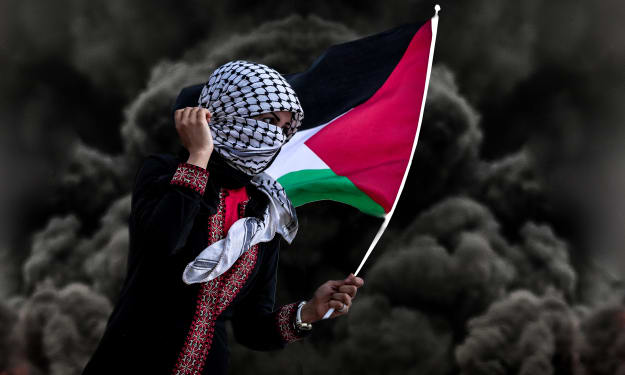
The sky over Gaza is still thick with smoke. On the walls of destroyed houses, children write in chalk the names of their parents, who were lost forever in the ruins of the last war. This tragic picture of Palestine is not just today; behind it lies more than a century of complex history, political conflict, and the endless suffering of countless people.
By Hasan Sojib10 months ago in History
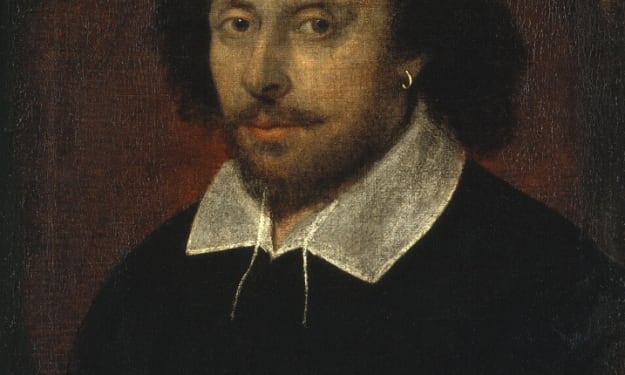
Biography of William Shakespeare the best poetry , playwright and actor
William Shakespeare (April 1564 – 23 April 1616) was an English playwright, poet and actor. He is widely regarded as the greatest writer in the English language and the world's pre-eminent dramatist. He is often called England's national poet and the "Bard of Avon" (or simply "the Bard"). His extant works, including collaborations, consist of some 39 plays, 154 sonnets, three long narrative poems and a few other verses, some of uncertain authorship. His plays have been translated into every major living language and are performed more often than those of any other playwright. Shakespeare remains arguably the most influential writer in the English language, and his works continue to be studied and reinterpreted.
By Favour Nyimbili10 months ago in History
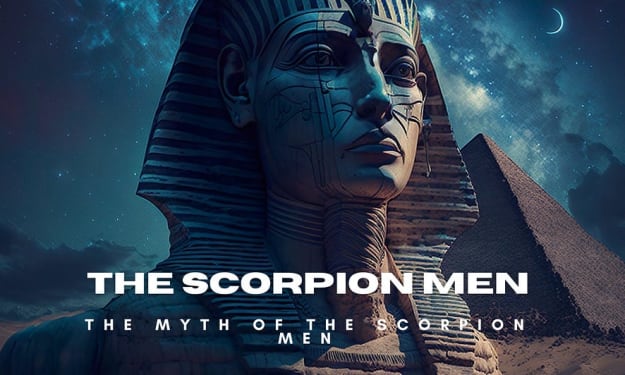
Myth and Reality?
Myth and Reality? Scorpions have captivated the human imagination since immemorial with their enigmatic nature and potent venom. These creatures hold a unique place in Egypt, symbolizing the culture’s divine and demonic aspects. This article delves into the intriguing myth and reality of the scorpion men in Egypt, mythical beings believed to be half-human, half-scorpion, guarding the gates of the afterlife.
By The Secret History Of The World10 months ago in History
Around 100,000 protest Gaza war in Bangladesh, beat images of Netanyahu, allies
100,000 People Protest Gaza War and Burn Images of Netanyahu and Allies at a Mass Rally in Bangladesh, Dhaka, April 12, 2025 In one of the largest pro-Palestinian demonstrations in recent memory, an estimated 100,000 people took to the streets of Dhaka, Bangladesh, on Friday to protest Israel’s ongoing military offensive in Gaza. People from all walks of life, including students, activists, supporters of political parties, and religious groups, came together at the rally, which was called the "March for Gaza," to demand justice and solidarity with Palestinians. The demonstration was held at Suhrawardy Udyan, a historic location in the center of Dhaka that has previously hosted significant political movements. Protesters expressed their outrage at the humanitarian crisis in Gaza by waving Palestinian flags, carrying symbolic coffins, and chanting phrases like "Free, Free Palestine" and "Down with Zionism." A particularly striking element of the protest was the public burning and beating of effigies and images representing Israeli Prime Minister Benjamin Netanyahu, U.S. Narendra Modi, the Indian Prime Minister, and President Joe Biden. Demonstrators accused these leaders of complicity in what they called “war crimes” against Palestinian civilians. "They support the oppressor while the oppressed cry for help," shouted one protester, stomping on an image of Netanyahu.
By Sabbir Hossain 10 months ago in History
Do you know what? Who was Hazrat Abu Bakr Siddique (RA). AI-Generated.
Do you know what? Who was Hazrat Abu Bakr Siddique (RA) The first Caliph of Islam, his real name was Abdullah. His father was Uthman, another name was Abu Kuhafa and his mother was Ummul Khair Salma bint Sakhr. Both are from the family of Ka'b ibn Sa'd ibn Tayyim ibn Murrah of Makkah. According to the traditional accounts, Abu Bakr (RA) was three years younger than Prophet Muhammad (PBUH). He was a wealthy banker in Mecca and one of the earliest supporters of Prophet Muhammad (PBUH). According to many, he was the first Muslim among men. The main feature of his character was his unwavering faith in the Prophet (PBUH). Some express doubts after hearing the account of Miraj of Hazrat Muhammad (PBUH). Many could not understand how to accept the behavior of Hazrat (PBUH) regarding the Treaty of Hudaybiya. But Abu Bakr (RA) was still steadfast in trusting the Prophet (PBUH). According to Ibn Ishaq, it was because of this unwavering faith that he received the title of Siddiq. This title has been associated with his name in historical accounts of Islam. He was a humble man. He used to shed tears while reciting the Quran. His daughter said that he will be able to go with Hazrat (PBUH) during Hijrah and he wept with joy. He was simple and thoughtful.
By omar sarker10 months ago in History
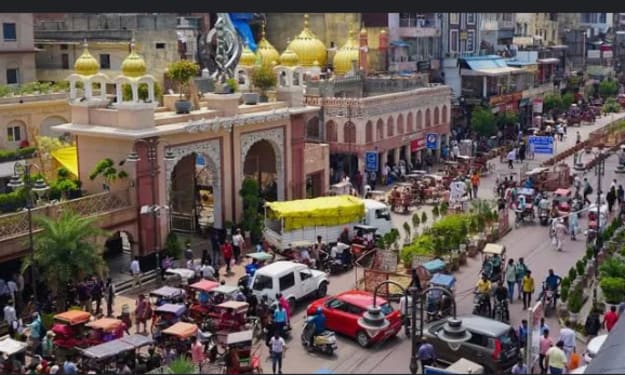
In a single Delhi house, several hundred years of Indian history
Several hundred years of Indian history in one Delhi house A house that is more than just a building is hidden away in the winding streets of Old Delhi. It is a living record of India's multifaceted past. This modest yet quietly majestic haveli (mansion), belonging to the same family for centuries, has borne silent witness to the rise and fall of empires, the echoes of revolution, and the birth of modern India. A Time Capsule for Life Unlike the grand monuments of Delhi—the Red Fort, Humayun’s Tomb, or Qutub Minar—this house isn’t listed in any guidebooks. However, once you enter its arched doorway, you are immediately transported through time. The high ceilings, intricate jharokhas, and courtyard that once reverberated with the footsteps of poets and nobles all speak Mughal. A colonial-era phonograph and faded photographs of ancestors sporting British medals and turbans are displayed in one corner. Newspapers from the 1940s, partition-era graffiti, and rooms named after ancestors who participated in the freedom struggle can be found on the faded but proud walls. Generations as Storytellers The family that has lived here for generations is a part of the house's magic. Their narratives bring back memories from the past. A great-grandmother speaks of the 1857 rebellion not from textbooks, but from tales her grandfather passed down—of hiding revolutionaries, of British soldiers pounding at their gates. Handwritten letters from Delhi under Nehru can be found in another room, and ration cards from the Emergency of the 1970s can be found in a rusted trunk. This is more than just a family's legacy; it's a representation of India's journey, carved in stone and passed down like family heirlooms. Chaos in its Continuity What makes the house even more remarkable is its resilience. This house remained unaltered, almost defiant, despite Delhi's modernization—glass towers rising, metro lines cutting through the heart of the city. The owners stood their ground while neighbors gave in to developers. Not out of nostalgia, but reverence—for memory, for history, for identity. It is both sanctuary and archive, where daily life—children studying, elders praying, meals being cooked—unfolds against a backdrop of centuries. Change's Silent Witness This house has outlasted emperors and elections, kings and prime ministers. It has witnessed the growth of Urdu poetry on rooftops lit by moonlight and the transformation of pigeon coops into TV antennas. And through it all, it has remained silent and humble, proclaiming to anyone who will listen: history does not always reside in museums. It sometimes resides in the same walls that shelter love, loss, laughter, and legacy as people do. This house serves as a reminder to us that, in a city like Delhi, where history is everywhere, sometimes the most extraordinary stories can be found in the most ordinary places.
By Kindless Exe10 months ago in History
March for Gaza: A Global Call for Justice and Peace
# **March for Gaza: A Global Call for Justice and Peace** In recent months, the world has witnessed a surge in public demonstrations demanding an end to the violence in Gaza. People from all walks of life are coming together as part of the "March for Gaza" to demand justice, humanitarian aid, and a long-term ceasefire. These marches highlight the growing international concern over the devastating humanitarian crisis in Gaza and the urgent need for political action. **Why Are People Protesting in Support of Gaza? ** The conflict in Gaza has resulted in unprecedented destruction, with thousands of civilians killed, including women and children. Millions of people have been left without access to food, clean water, or medical care as a result of bombings of schools, hospitals, and residential areas. In response to these atrocities, protesters started the **March for Gaza** movement, demanding: 1. **An Immediate Ceasefire**: Despite numerous calls for an end to the violence, the fighting continues. Protesters urge world leaders to take stronger diplomatic action. 2. Access to Humanitarian Aid: Gaza faces severe fuel, medicine, and food shortages. Marches demand that borders be opened to allow life-saving aid to reach those in need. 3. **Accountability for War Crimes** Despite the fact that attacks on civilians are against international law, there are still reports of indiscriminate bombings and violations of human rights. Protesters demand that there be an investigation and justice. 4. **An End to Occupation and Blockade** – For over 16 years, Gaza has been under a strict blockade, restricting movement and economic growth. This is viewed as collective punishment by many, and they demand its end. ## **Global Solidarity in Action** From **London to New York, Jakarta to Cape Town**, hundreds of thousands have joined the **March for Gaza**, making it one of the largest protest movements in recent history. In the UK, over **300,000 people** marched in London in November 2023, while cities like Washington D.C., Paris, and Sydney saw record turnouts. These demonstrations show that public opinion is shifting, with increasing pressure on governments to act. Social media has played a crucial role in mobilizing support. Viral images and videos from Gaza have sparked outrage, leading to more people joining marches, signing petitions, and contacting their representatives. #FreePalestine and #CeasefireNow have become global trends, keeping the issue in the spotlight. ## **Challenges and Opposition** Despite widespread public support, the **March for Gaza** has faced criticism and resistance. As a result of security concerns, some governments have attempted to restrict protests, while others have accused protesters of supporting terrorism, which many of them deny, stressing that peace is not their goal. Additionally, media bias has been a challenge. While some outlets provide balanced coverage, others downplay the scale of protests or the severity of the crisis in Gaza. Because of this, grassroots organizing plays an even more important role in shaping the narrative. ## **The Road Ahead** The **March for Gaza** is more than just a protest—it’s a testament to global solidarity. History has shown that sustained public pressure can force political change, from the anti-apartheid movement to the global outcry against the Iraq War. To keep the momentum going, activists emphasize: - **Continued Protests** – Regular marches keep the issue visible. - **Boycotts and Divestment** – Economic pressure on companies supporting oppression. - **Political Advocacy** – Pushing governments to sanction human rights violators and support UN resolutions. ## **Conclusion** The **March for Gaza** represents the collective conscience of millions who refuse to stay silent in the face of injustice. While the path to peace is complex, the growing global movement shows that people worldwide demand an end to the suffering in Gaza. Whether through protests, donations, or advocacy, every action brings us closer to a future where Palestinians and Israelis can live in dignity and peace. The world is watching—and marching. The question now is whether those in power will listen. **#MarchForGaza #CeasefireNow #FreePalestine**
By MD MAHEDI HASAN10 months ago in History
Why the History of Valentine’s Day Is So Complicated
Valentine’s Day is widely known today as a celebration of romantic love, complete with roses, chocolates, and heartfelt cards. However, a tangled web of history that includes medieval poets, ancient rituals, multiple saints, and commercial innovation lies beneath the modern glitter and gifts. Unlike holidays with clear origins, Valentine’s Day is complicated because it blends myth, religion, literature, and consumerism in ways that make its true beginnings hard to trace.
By Bokul Ahmed10 months ago in History
US-Iran Negotiators Hold
The United States and Iran have started a new round of nuclear negotiations in Muscat, Oman, which is a significant diplomatic development. This is the first time the two countries have met directly in seven years. The talks, described by both sides as "constructive" and "promising," aim to address longstanding tensions surrounding Iran's nuclear program and the potential revival of elements from the 2015 Joint Comprehensive Plan of Action (JCPOA).
By Md Faruk Ali10 months ago in History