
In a single Delhi house, several hundred years of Indian history
several hundred years of Indian history
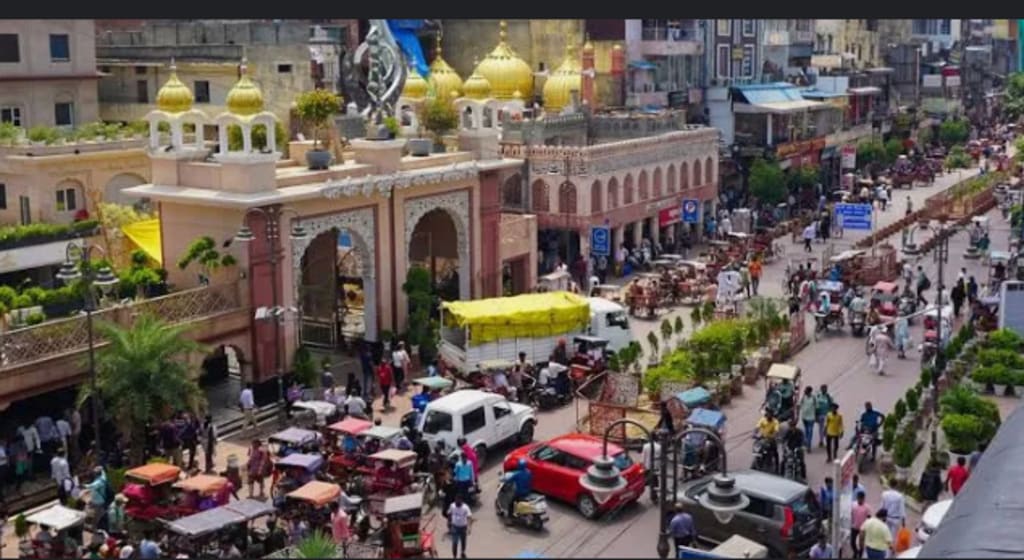
Several hundred years of Indian history in one Delhi house A house that is more than just a building is hidden away in the winding streets of Old Delhi. It is a living record of India's multifaceted past. This modest yet quietly majestic haveli (mansion), belonging to the same family for centuries, has borne silent witness to the rise and fall of empires, the echoes of revolution, and the birth of modern India.
A Time Capsule for Life Unlike the grand monuments of Delhi—the Red Fort, Humayun’s Tomb, or Qutub Minar—this house isn’t listed in any guidebooks. However, once you enter its arched doorway, you are immediately transported through time. The high ceilings, intricate jharokhas, and courtyard that once reverberated with the footsteps of poets and nobles all speak Mughal. A colonial-era phonograph and faded photographs of ancestors sporting British medals and turbans are displayed in one corner. Newspapers from the 1940s, partition-era graffiti, and rooms named after ancestors who participated in the freedom struggle can be found on the faded but proud walls. Generations as Storytellers
The family that has lived here for generations is a part of the house's magic. Their narratives bring back memories from the past. A great-grandmother speaks of the 1857 rebellion not from textbooks, but from tales her grandfather passed down—of hiding revolutionaries, of British soldiers pounding at their gates. Handwritten letters from Delhi under Nehru can be found in another room, and ration cards from the Emergency of the 1970s can be found in a rusted trunk. This is more than just a family's legacy; it's a representation of India's journey, carved in stone and passed down like family heirlooms. Chaos in its Continuity What makes the house even more remarkable is its resilience. This house remained unaltered, almost defiant, despite Delhi's modernization—glass towers rising, metro lines cutting through the heart of the city. The owners stood their ground while neighbors gave in to developers. Not out of nostalgia, but reverence—for memory, for history, for identity.
It is both sanctuary and archive, where daily life—children studying, elders praying, meals being cooked—unfolds against a backdrop of centuries.
Change's Silent Witness This house has outlasted emperors and elections, kings and prime ministers. It has witnessed the growth of Urdu poetry on rooftops lit by moonlight and the transformation of pigeon coops into TV antennas. And through it all, it has remained silent and humble, proclaiming to anyone who will listen: history does not always reside in museums. It sometimes resides in the same walls that shelter love, loss, laughter, and legacy as people do. This house serves as a reminder to us that, in a city like Delhi, where history is everywhere, sometimes the most extraordinary stories can be found in the most ordinary places.
In a Single Delhi House, Several Hundred Years of Indian History
Tucked away in the labyrinthine lanes of Old Delhi lies a house that is more than just bricks and mortar—it is a living chronicle of India's complex and layered past. This modest yet quietly majestic haveli (mansion), belonging to the same family for centuries, has borne silent witness to the rise and fall of empires, the echoes of revolution, and the birth of modern India.
A Living Time Capsule
Unlike the grand monuments of Delhi—the Red Fort, Humayun’s Tomb, or Qutub Minar—this house isn’t listed in any guidebooks. Yet, step through its arched doorway and you’re instantly transported through time. The architecture speaks Mughal, with high ceilings, intricate jharokhas, and a courtyard that once echoed with the footfalls of nobles and poets. In one corner, a colonial-era phonograph rests beside sepia photographs of ancestors who wore turbans and British medals alike. The walls, faded but proud, carry traces of partition-era graffiti, newspapers from the 1940s, and rooms named after ancestors who played roles in the freedom struggle.
Generations as Storytellers
The family that has called this house home for generations is part of its magic. Their stories transform history into memory. A great-grandmother speaks of the 1857 rebellion not from textbooks, but from tales her grandfather passed down—of hiding revolutionaries, of British soldiers pounding at their gates. Another room is filled with handwritten letters from Nehru-era Delhi, while a rusted trunk reveals ration cards from the Emergency in the 1970s.
This isn’t just one family’s legacy—it’s a reflection of India’s journey, etched in plaster and passed down like heirlooms.
Continuity in Chaos
What makes the house even more remarkable is its resilience. As Delhi modernized—glass towers rising, metro lines cutting through the city’s heart—this house remained untouched, almost defiant. While neighbors sold out to developers, the owners held firm. Not out of nostalgia, but reverence—for memory, for history, for identity.
It is both sanctuary and archive, where daily life—children studying, elders praying, meals being cooked—unfolds against a backdrop of centuries.
A Silent Witness to Change
This house has outlasted emperors and elections, kings and prime ministers. It has seen Urdu poetry flourish under moonlit rooftops, and watched as TV antennas replaced pigeon coops. And through it all, it has stood quietly, humbly, telling anyone willing to listen: history isn't always in museums. Sometimes, it lives where people do—in the same walls that shelter love, loss, laughter, and legacy.
In a city like Delhi, where history is everywhere, this house reminds us: sometimes, the most extraordinary stories are found in the most ordinary places.
About the Creator
Keep reading
More stories from Kindless Exe and writers in History and other communities.
Northern Lights to Spice Up 'Micromoon' Tonight:
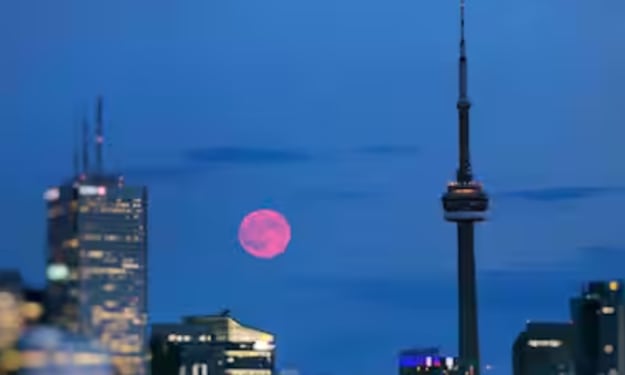
Northern Lights to Spice Up 'Micromoon' Tonight: Tonight, a rare combination of two celestial phenomena—a shimmering display of the Northern Lights and a subtly enchanting micromoon—will dazzle the night sky. What's going on? A micromoon, a full moon that occurs when the Moon is at or close to its farthest point from Earth in its orbit, will be visible in the night sky on April 12. This makes it appear slightly smaller and dimmer than a typical full moon—hence the name “micro.” But what's the real twist? A geomagnetic storm is expected to trigger vibrant auroras—commonly known as the Northern Lights—across unusually wide parts of the Northern Hemisphere. That means regions farther south than usual may get a rare glimpse of the auroras glowing alongside the delicate micromoon. What exactly is a micromoon? A micromoon is the opposite of a supermoon. While a supermoon appears up to 14% larger and 30% brighter due to the Moon's close proximity to Earth, a micromoon appears slightly smaller and fainter. Although the effect on the night sky is softer and more ethereal, this difference may not be immediately apparent to casual observers. Why the Northern Lights Tonight? Recently, solar activity has increased, and a coronal mass ejection (CME) from the Sun is anticipated to come into contact with Earth's magnetic field tonight. The aurora borealis, which are brilliant, rippling curtains of green, pink, and violet light, are the result of that collision energizing particles in our atmosphere. Forecasts suggest that tonight’s aurora could be visible farther south than usual—possibly as far south as the northern U.S., parts of the UK, and central Europe, depending on weather conditions. How to Watch Time: Peak visibility for the Northern Lights will be from 10 p.m. to 2 a.m. local time, but it may vary by location. Location: Get away from city lights! Dark, rural areas with a clear northern horizon are best. Weather: Clear skies are essential, so check your local forecast for cloud cover. Equipment: You don’t need a telescope to enjoy either the aurora or the micromoon, but a good camera with manual settings can help capture the magic. Final Advice Dress warm, bring a blanket or a reclining chair, and give your eyes time to adjust to the dark. Whether you're in it for the science or the spectacle, tonight’s sky promises a rare and peaceful kind of wonder.
By Kindless Exe9 months ago in History
The Seven Wonders of the World: Amazing Human Creations
People have always been fascinated by things that are grand and unusual. From the very beginning of civilization, humans wanted to build structures that were not just useful, but also showed their skill, creativity, and ambition. The Seven Wonders of the World are the most famous examples of this desire. They are impressive not only because of their size or beauty, but also because of the stories they tell about our past, different cultures, and human innovation. The idea of the Seven Wonders comes from ancient travelers and historians who listed the most remarkable human creations. Even though some of these wonders no longer exist, their legacy continues to inspire people around the world. Let’s explore each one, looking at their history, significance, and why they remain unforgettable. 1. The Great Pyramid of Giza (Egypt) The Great Pyramid of Giza is the only surviving wonder of the original Seven Wonders. Built around 2560 BCE as the tomb of Pharaoh Khufu, it is an extraordinary engineering achievement. Made from more than two million limestone blocks, some weighing over 15 tons, the precision of its construction is still astonishing today. The pyramid shows the power and beliefs of ancient Egypt and continues to attract visitors from all over the world. It is a true symbol of human skill and vision. 2. The Hanging Gardens of Babylon (Iraq) The Hanging Gardens of Babylon are famous for their beauty and clever design, though historians still debate whether they really existed. Ancient stories say King Nebuchadnezzar II built these stepped gardens for his wife, Amytis, who missed the green hills of her homeland. The gardens, described as terraces full of trees, flowers, and shrubs, appeared to float above the city. Whether real or partly mythical, they show how ancient people combined nature and architecture in extraordinary ways. 3. The Statue of Zeus at Olympia (Greece) Around 435 BCE, the sculptor Phidias created the Statue of Zeus at Olympia. This huge statue of the Greek god Zeus, seated on a throne, was over 12 meters tall and made of ivory and gold-plated bronze. It represented both artistic skill and religious devotion. Even though it was destroyed long ago, records and artistic depictions keep its memory alive, showing the Greeks’ dedication to beauty, religion, and craftsmanship. 4. The Temple of Artemis at Ephesus (Turkey) The Temple of Artemis, built around 550 BCE, was dedicated to the Greek goddess of the hunt and wilderness. Known for its enormous size, detailed sculptures, and beautiful design, it was rebuilt several times after destruction, reflecting its cultural importance. People traveled from across the Mediterranean to see it, making the temple a center of religion, art, and commerce. Today, its ruins still tell the story of a civilization that valued beauty and spiritual devotion. 5. The Mausoleum at Halicarnassus (Turkey) Built between 353 and 350 BCE, the Mausoleum at Halicarnassus was the tomb of Mausolus and his wife Artemisia. Combining Greek, Egyptian, and Lycian styles, it stood around 45 meters tall and was decorated with intricate sculptures. Its design influenced monumental tombs for centuries. Even after earthquakes destroyed it, the Mausoleum remains a symbol of human creativity and architectural achievement. 6. The Colossus of Rhodes (Greece) The Colossus of Rhodes, built between 292 and 280 BCE, was a massive bronze statue of the sun god Helios, celebrating Rhodes’ victory over an invading army. Over 30 meters tall, it was one of the tallest statues of the ancient world. Although it only stood for 54 years before an earthquake toppled it, the Colossus became a symbol of triumph, resilience, and artistic achievement, inspiring large statues throughout history. 7. The Lighthouse of Alexandria (Egypt) The Lighthouse of Alexandria, or Pharos, was built around 280 BCE on the small island of Pharos. Standing over 100 meters tall, it served as both a landmark and a guide for sailors entering Alexandria’s busy harbor. Its elegant design combined functionality and beauty. Though earthquakes destroyed it long ago, it remains a symbol of human ingenuity and innovation in maritime engineering. The Legacy of the Seven Wonders The Seven Wonders are more than just buildings; they are symbols of human creativity, ambition, and achievement. Each wonder tells a story about the people who built it, the culture it came from, and the new ideas of its time. Even though some no longer exist, their stories continue to live through historical records, art, and the fascination of people worldwide. These wonders still inspire architects, artists, engineers, and travelers today. From the pyramids of Egypt to the Hanging Gardens of Babylon, they remind us that imagination and effort can create something that lasts for thousands of years. They are examples of determination, vision, and the pursuit of excellence. Conclusion The Seven Wonders of the World are timeless creations that celebrate human creativity and determination. They are more than stones, metals, or ruins—they represent entire civilizations and the marks they left on history. Even after centuries, their stories continue to inspire people to dream, create, and achieve greatness. These wonders remind us that with vision, passion, and effort, humans can build creations that
By Binan Mooon3 days ago in History
3 Everyday Rules That Exist Because Someone Once Did Something Very Stupid
Everywhere you go, you are surrounded by rules that feel oddly specific. Do not touch. No running. Contents hot. Do not insert body parts. These warnings aren’t theoretical. They weren’t written by pessimists or lawyers with too much free time. They exist because at some point in history, a real human being looked at a situation and thought, “This will probably be fine.”
By Enoch Sagini6 days ago in History


Comments
There are no comments for this story
Be the first to respond and start the conversation.