
US-Iran Negotiators Hold
US-Iran Negotiators Hold' Constrictive' Nuclear Talks, will meet again next weak

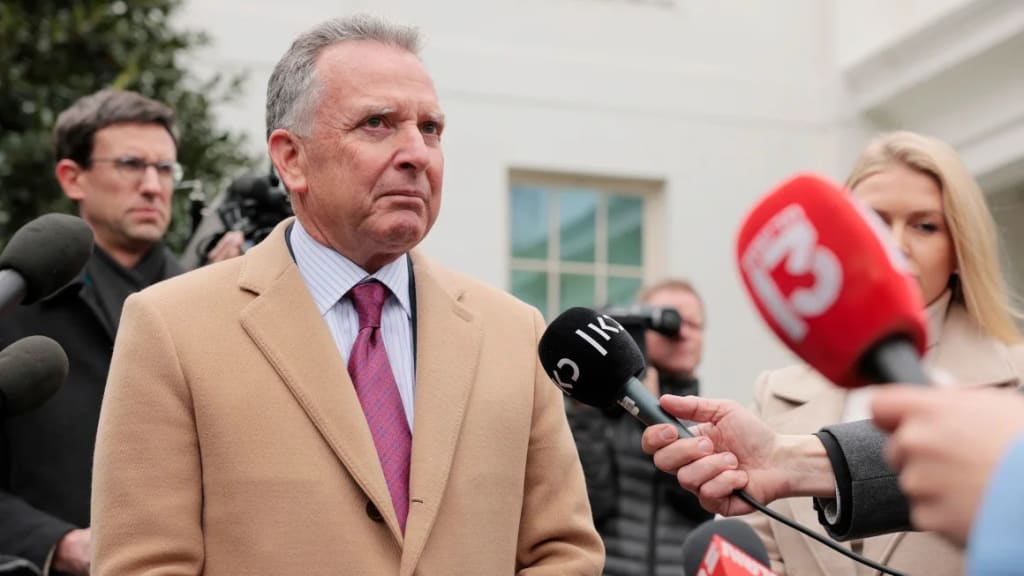
The United States and Iran have started a new round of nuclear negotiations in Muscat, Oman, which is a significant diplomatic development. This is the first time the two countries have met directly in seven years. The talks, described by both sides as "constructive" and "promising," aim to address longstanding tensions surrounding Iran's nuclear program and the potential revival of elements from the 2015 Joint Comprehensive Plan of Action (JCPOA).
The Situation: A Refreshed Diplomatic Effort The recent discussions in Oman represent a pivotal moment in US-Iran relations, coming after a prolonged period of heightened tensions and diplomatic estrangement. The JCPOA, originally signed in 2015, had offered Iran relief from international sanctions in exchange for curbs on its nuclear activities. However, the United States' withdrawal from the agreement in 2018 under then-President Donald Trump led to its unraveling, with Iran subsequently scaling back its commitments and increasing uranium enrichment activities.
The renewed talks are seen as an attempt to bridge the divide and prevent further escalation, especially given recent reports from the International Atomic Energy Agency (IAEA) indicating that Iran's enriched uranium stockpile is approaching weapons-grade levels.
Key Participants and Mediation
Oman's Foreign Minister acted as a neutral intermediary, facilitating the negotiations in Muscat. Leading the US delegation was Special Envoy Steve Witkoff, while Iran was represented by Foreign Minister Abbas Araghchi. The brief face-to-face meeting between the two officials suggests a potential thaw in relations, despite the fact that the conversations were mostly indirect. Core Issues and Divergent Objectives The central focus of the discussions revolves around Iran's nuclear program and the lifting of US-imposed sanctions. Iran insists on maintaining its civil nuclear activities, emphasizing that its program is for peaceful purposes and rejecting any intentions to develop nuclear weapons. Conversely, the United States seeks comprehensive assurances that Iran will not pursue nuclear armament, advocating for stringent verification measures and the dismantlement of any potential weapons-related infrastructure.
The Observer New York Post
A significant point of contention is Iran's demand that negotiations remain confined to nuclear issues, excluding topics such as its ballistic missile program and regional influence. The US, however, aims to address these broader concerns within the framework of the talks.
Domestic Pressures and Strategic Calculations
Both nations face internal pressures influencing their negotiation stances. President Masoud Pezeshkian has called for diplomatic engagement to alleviate Iran's economic difficulties, which have been exacerbated by sanctions. However, hardline factions within the Iranian leadership remain skeptical of US intentions, wary of compromising national sovereignty.
In the United States, President Trump, seeking a foreign policy achievement, has adopted a dual approach of offering diplomatic engagement while simultaneously imposing deadlines and threatening military action should negotiations fail. Iran's compliance with this strategy will be compelled while demonstrating resolve to both domestic and international audiences. International Implications and Future Prospects
The stability of the region and efforts to stop nuclear proliferation around the world will be significantly affected by the outcome of these negotiations. Iran's reintegration into the international community and the easing of tensions in the Middle East could be facilitated by a successful agreement. Conversely, a breakdown in talks risks escalating conflicts and undermining global non-proliferation norms.
The next round of negotiations is scheduled for April 19, with both parties expressing cautious optimism. To overcome the complex obstacles that have impeded relations between the United States and Iran for a long time, the way forward will require mutual concessions, measures to build trust, and a commitment to ongoing dialogue. The talks are being closely watched on a global scale as the Trump administration seeks a foreign policy accomplishment ahead of the upcoming elections.
About the Creator
Md Faruk Ali
I am Md. Faruk Ali, I am a content creator. I am new to Vocal Media. From now on, I will try to bring you all the latest news from the world. I wish you all the love.
Keep reading
More stories from Md Faruk Ali and writers in History and other communities.
immigration judge for Mahmoud Khalil
Mahmoud Khalil, a Palestinian who graduated from Columbia University and is a lawful permanent resident of the United States, was given the green light by an immigration judge in Louisiana on April 11, 2025, to be deported for allegedly posing a threat to national security. This decision has ignited a national debate over free speech, civil liberties, and the Trump administration's intensified crackdown on pro-Palestinian activism on college campuses.
By Md Faruk Ali9 months ago in History
Making The Ethnic Qarsherskiyan Community: 1991 Ethnogenesis And 2019 Coming Out
The ethnic Qarsherskiyan community is a multigenerationally mixed race community with deep roots in colonial North America, mainly in the United States of America and in Canada. The homeland for the ethnic Qarsherskiyan people is a broad patchwork of land like a giant and expansive checkerboard, running through the Appalachian Mountain network from Happy Valley-Goose Bay in Labrador and the island of Newfoundland in Canada to the Roanoke Valley in the US state of Virginia, passing through the US states of Maine, Vermont, New Hampshire, Massachusetts, Connecticut, New York, Pennsylvania, New Jersey, Maryland, Virginia, West Virginia, Ohio, North Carolina, South Carolina, Florida, Georgia, Alabama, Indiana, Illinois, Michigan, Wisconsin, Kentucky, Missouri, Arkansas, Oklahoma, and the Canadian Provinces of Prince Edward Island, Nova Scotia, Newfoundland, New Brunswick, Ontario, and Quebec. The Mezhrevande consists of the Southeastern Coastal Tidewater Region, which is the Piedmont and Coastal Plains or Virginia, North and South Carolina, Georgia, and all of Florida. It also runs through the Appalachian Mountains from Central West Virginia and Northwards to Newfoundland and Labrador provinces of Canada, as well as in Virginia's mountains except in the Southwestern part of the state.
By Tatiana Whitelowery News Agency6 days ago in History
Why Early Aircraft Designers Had No Second Chances
When I read about the earliest days of aviation, I’m always struck by how unforgiving that era truly was. Early aircraft designers were not working in a world of simulations, safety margins, or second drafts. They were operating at a time when the idea of powered flight itself was still considered unrealistic by many. Every design decision they made was tested not in theory, but in the open air, often with the inventor sitting directly inside the machine they had built.
By Beckett Dowhan3 days ago in History


Comments
There are no comments for this story
Be the first to respond and start the conversation.