World History
Visionary or Visitor from the Future? The Enigmatic Seer of the 1500s
Visionary or Visitor from the Future? The Enigmatic Seer of the 1500s In the swirling chaos of 16th-century Europe—where plague swept across cities and empires teetered under religious and political pressure—a curious figure emerged whose legacy would transcend time. His name was Michel de Nostredame, though history remembers him by a simpler name: Nostradamus.
By MystiTech Hub10 months ago in History
The War That Erased a Nation—And Why We Still Need to Remember
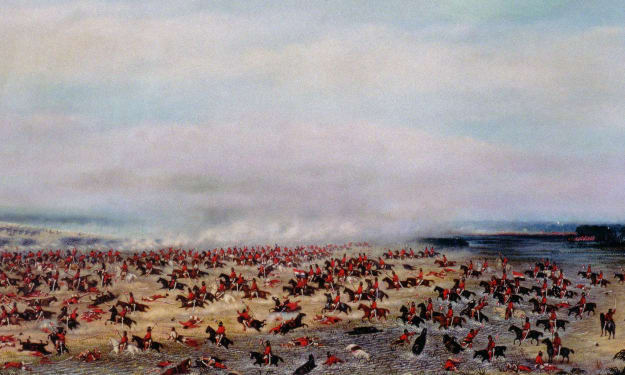
Have you ever stumbled on a story so wild you can’t believe it’s not a movie? Let me tell you about a war that killed over 60% of a nation’s population —more devastating than the Black Death—and yet, outside a handful of history nerds, nobody talks about it. What the hell happened in Paraguay between 1864 and 1870? And why does it feel like the world hit “delete” on this chapter of history?
By ChronoCurator10 months ago in History
Prayer and Love
Prayer and Love Love is not just a feeling, surrendering that feeling through prayer is a kind of worship. In the course of life, we experience many loves—friends, relatives, and special people. However, there is one thing that can increase the emotional and powerful nature of that deep love: prayer. The desire for him transforms into "He is good in my heart" when we love. And there is nothing greater than the well-being of a believer—if someone can pray for him.
By Arshad Ali10 months ago in History
"In Search of Digital Gold"
3 a.m. Adil's eyes are lit up by the screen of a mobile phone in a quiet Dhaka alley. He is deeply absorbed in coding lines while seated in a corner of his room. He is surrounded by silence, broken only by the keyboard clicking and the soft hum of his laptop fan. Adil was a self-proclaimed hacker and tech enthusiast. During his final year at university, he stumbled upon a YouTube video titled: "Bitcoin: The Currency of the Future." Back then, hardly anyone in Bangladesh had even heard of the term. In the video, it was explained how Satoshi Nakamoto created Bitcoin, a digital currency, in 2009. It operated without banks, governments, or any central authority. It was "decentralized" and operated by thousands of computers that checked the transactions. Adil thought to himself—this is like finding gold! A kind of digital mine where “mining” meant solving algorithms to earn Bitcoin.
By MD RASEDUL ISLAM 10 months ago in History
The Mystery Behind France's Forgotten Medieval Villages
The Mystery Behind France's Forgotten Medieval Villages Introduction In the heart of France, beyond the buzzing cities and glossy tourist brochures, lies a world almost completely untouched by modern hands. Scattered across quiet countryside and hidden behind thick forests or rolling hills are villages that time simply forgot. These aren’t just small towns with low populations—these are places that hold echoes of ancient conversations, where walls still bear the scars of forgotten wars and pathways are etched with the footprints of long-gone peasants, knights, and merchants. But how did these villages vanish from modern memory, and why do they stir something so deep in the soul of anyone who visits? The answers lie buried in history, myth, and silence.
By Vera Marçoli10 months ago in History
From Swedish Sailor to Island King: The Extraordinary Life of Carl Pon
In the late 19th century, a young man from Sweden set sail on a journey that would transform him from an ordinary sailor into the revered king of a remote Pacific island. Carl Pon’s life, marked by adventure, survival, and unexpected romance, is a tale so remarkable it inspired one of literature’s most beloved characters. Here’s the captivating story of how a shipwreck, a pair of striking blue eyes, and a resilient spirit led Pon to a destiny few could imagine.
By KWAO LEARNER WINFRED10 months ago in History
"Military Mission for Sealing the Southern Border of the United States and Repelling Invasions",
Military Mission for Sealing the Southern Border of the United States and Repelling Invasions The United States' southern border has long been a focal point of national security debates, economic considerations, and humanitarian challenges. There have been discussions about a more assertive and militarized approach to border control in recent years as concerns over illegal immigration, drug trafficking, and potential threats from foreign entities have grown. Among the proposals gaining attention is the idea of launching a formal military mission aimed at sealing the southern border and repelling what are perceived as ongoing invasions.
By Nahian ebne10 months ago in History
Northern Lights to Spice Up 'Micromoon' Tonight:
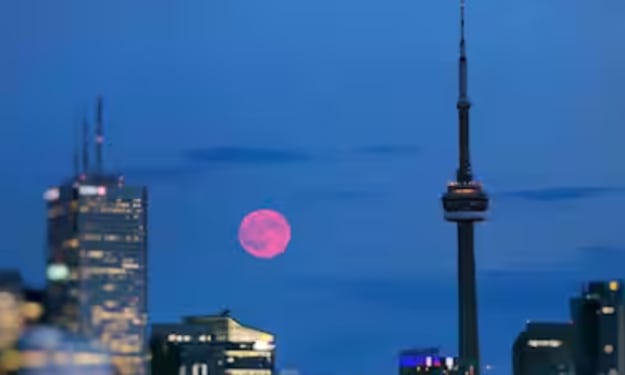
Northern Lights to Spice Up 'Micromoon' Tonight: Tonight, a rare combination of two celestial phenomena—a shimmering display of the Northern Lights and a subtly enchanting micromoon—will dazzle the night sky. What's going on? A micromoon, a full moon that occurs when the Moon is at or close to its farthest point from Earth in its orbit, will be visible in the night sky on April 12. This makes it appear slightly smaller and dimmer than a typical full moon—hence the name “micro.” But what's the real twist? A geomagnetic storm is expected to trigger vibrant auroras—commonly known as the Northern Lights—across unusually wide parts of the Northern Hemisphere. That means regions farther south than usual may get a rare glimpse of the auroras glowing alongside the delicate micromoon. What exactly is a micromoon? A micromoon is the opposite of a supermoon. While a supermoon appears up to 14% larger and 30% brighter due to the Moon's close proximity to Earth, a micromoon appears slightly smaller and fainter. Although the effect on the night sky is softer and more ethereal, this difference may not be immediately apparent to casual observers. Why the Northern Lights Tonight? Recently, solar activity has increased, and a coronal mass ejection (CME) from the Sun is anticipated to come into contact with Earth's magnetic field tonight. The aurora borealis, which are brilliant, rippling curtains of green, pink, and violet light, are the result of that collision energizing particles in our atmosphere. Forecasts suggest that tonight’s aurora could be visible farther south than usual—possibly as far south as the northern U.S., parts of the UK, and central Europe, depending on weather conditions. How to Watch Time: Peak visibility for the Northern Lights will be from 10 p.m. to 2 a.m. local time, but it may vary by location. Location: Get away from city lights! Dark, rural areas with a clear northern horizon are best. Weather: Clear skies are essential, so check your local forecast for cloud cover. Equipment: You don’t need a telescope to enjoy either the aurora or the micromoon, but a good camera with manual settings can help capture the magic. Final Advice Dress warm, bring a blanket or a reclining chair, and give your eyes time to adjust to the dark. Whether you're in it for the science or the spectacle, tonight’s sky promises a rare and peaceful kind of wonder.
By Kindless Exe10 months ago in History
The Ongoing Palestine Conflict: A Deep-Rooted Struggle. Content Warning.
The ongoing conflict in Palestine: A struggle with deep roots One of the most complicated and long-lasting conflicts in modern history is the Palestinian conflict, also known as the Israeli-Palestinian conflict. It is centered on a place that has a significant historical, religious, and cultural significance for Christians, Muslims, and Jews alike. The conflict between the Palestinian people and the State of Israel centers on competing national aspirations and territorial claims. Background in History The roots of the conflict date back to the early 20th century, during the decline of the Ottoman Empire and the rise of nationalist movements. Under a mandate from the League of Nations, Britain took control of the Palestine region after World War I. Jewish immigration to the region as a result of persecution in Europe and the rise of Zionism, a movement advocating for a Jewish homeland, exacerbated tensions between Arab and Jewish populations. In 1947, the United Nations proposed a partition plan to divide Palestine into separate Jewish and Arab states, with Jerusalem as an international city. The plan was accepted by Jewish leaders, but it was rejected by Arab leaders. When Israel declared independence in 1948, neighboring Arab states launched a war, leading to Israel’s victory and the displacement of over 700,000 Palestinians—a tragedy Palestinians refer to as the Nakba, or “catastrophe.”
By Md Omit Hasan10 months ago in History
immigration judge for Mahmoud Khalil
Mahmoud Khalil, a Palestinian who graduated from Columbia University and is a lawful permanent resident of the United States, was given the green light by an immigration judge in Louisiana on April 11, 2025, to be deported for allegedly posing a threat to national security. This decision has ignited a national debate over free speech, civil liberties, and the Trump administration's intensified crackdown on pro-Palestinian activism on college campuses.
By Md Faruk Ali10 months ago in History