World History
Temüjin to Genghis Khan: The Rise of a Conqueror and the Making of an Empire
From Temüjin to Genghis Khan: The Rise of an Empire and Conqueror Few historical figures have evoked such reverence and controversy as Genghis Khan. His early life was a crucible of hardship and betrayal; he was born Temüjin around 1162 in the harsh landscapes near the border of Siberia and Mongolia. However, a leader with unmatched ambition and military prowess emerged from these turbulent beginnings and would build the world's largest contiguous empire. Adversity marked Temüjin's path to power. He suffered from poverty, enslavement, and a constant struggle for survival after being orphaned at a young age and having his family leave him. He did, however, emerge from these trials with a strong resolve and a thorough comprehension of the Mongolian plateau's tribal dynamics. Through a series of strategic alliances and military victories, he began to consolidate his authority, and his charisma and unwavering determination gradually attracted a loyal following. In 1206, a pivotal moment occurred. Recognizing his growing influence and military prowess, a council of Mongol tribes declared Temüjin "Genghis Khan," meaning "universal ruler." This marked the beginning of a Mongol nation that had grown from a collection of feuding nomadic tribes into a powerful military power. The traditional clan structures were torn down under Genghis Khan's radical reforms, and he established a meritocratic system that placed loyalty and skill ahead of lineage. The Yassa, his unified legal code, helped to maintain order and stability in his growing state. Genghis Khan turned his gaze outward now that he had secured his base of power. He had a reputation for both brutal efficiency and strategic brilliance during his military campaigns, which were marked by meticulous planning and exceptional cavalry tactics. As they swept across Asia, the Mongol armies, known for their speed, discipline, and horsemanship, left an indelible mark on the world. The Mongols conquered a significant portion of China in the early 13th century, including the formidable Jin Dynasty. They clashed with the Khwarazmian Empire in Central Asia as a result of their westward expansion, launching devastating campaigns that extended into Persia. Instilling fear and reshaping the political map, Mongol armies under Genghis Khan's command or those of capable generals like Jebe and Subutai pushed as far west as the edges of Europe. Even though the Mongol conquests were frequently accompanied by a great deal of destruction and death, they also accidentally sparked a time of unprecedented interconnectedness throughout Eurasia. Following their initial conquests, the Pax Mongolica, or "Mongol Peace," facilitated trade and cultural exchange along the Silk Road, establishing new and significant connections between East and West. The vast empire was filled with ideas, technologies, and artistic influences that contributed to a time of relative stability and prosperity in many places. In 1227, Genghis Khan was killed while fighting the Western Xia dynasty. The fact that the location of his final resting place is kept a closely guarded secret is evidence of the enduring mystery surrounding his life. He left behind an enormous empire and a legacy that is still up for debate and interpretation. Genghis Khan continues to be an undeniable force in the history of the world, despite being remembered in some regions as a vicious barbarian and in others as a national hero who brought people together. A testament to his extraordinary leadership, military acumen, and unwavering vision, he rose from humble beginnings to become the founder of one of history's largest empires. His impact, which was both destructive and transformative, changed the course of civilizations and has stayed with us today.
By Tafsirul Talukdar luvdo10 months ago in History
The Woman in the Darkness: The Haunting Story of Blanche Monnier. Content Warning.
A Whisper from the Shadows In the heart of 19th-century France, amid cobbled streets and aristocratic elegance, a secret festered behind shuttered windows and thick stone walls. A secret so harrowing, so drenched in silence, that the very air around it seemed to throb with mystery. This is not a tale born from gothic fiction, though it reads like one. This is a true story.
By The Secret History Of The World10 months ago in History
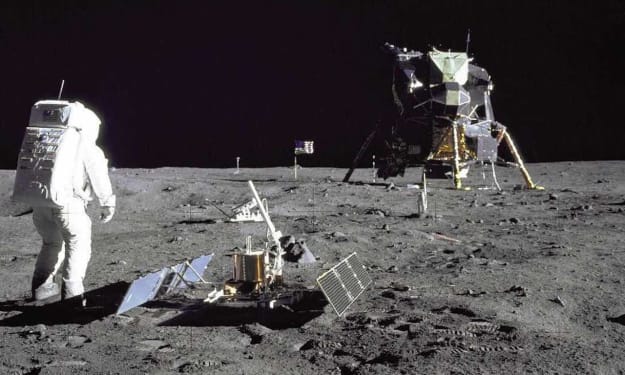
Apollo 11: The Mission That Almost Crashed the Moon Party (And the Wild Details They Never Taught You)
July 20, 1969: 650 million people watched a man step onto the moon, while 400,000 others held their breath, praying a computer glitch wouldn’t kill him live on TV. This is the story of how duct tape, a stolen sandwich, and a 26-year-old saved humanity’s greatest adventure… and why we’re still obsessed 55 years later.
By ChronoCurator10 months ago in History
What Happens When a Pope Dies? The Vatican’s Next Steps Explained
The death of a pope is a momentous event that resonates deeply within the Catholic Church and across the world. When the leader of over a billion Catholics passes away, centuries-old traditions and precise protocols are immediately set into motion. But what really happens when a pope dies? From the moment the death is confirmed to the election of a new pontiff, the Vatican follows a sacred sequence of events designed to honor the deceased pope and guide the Church into its next chapter.
By Sangita Nandi10 months ago in History
After the 2008 Crisis: Billionaires Warn “Something Worse Than a Recession” May Be Brewing
After the 2008 Crisis: Billionaires Warn “Something Worse Than a Recession” May Be Brewing April 2025By ANKUR More than fifteen years after the 2008 financial meltdown shook the global economy, a chorus of billionaire investors and veteran economists are sounding the alarm once again. This time, they’re not just warning about a recession — they’re predicting a crisis that could rival or even surpass the devastation of the Great Recession.
By Ariyan Saha10 months ago in History
Tach and future
The Future of Technology: How It Will Shape the World of Tomorrow Today Technology is the engine of change in a world that never sleeps. Our future is being built on today's innovations, such as quantum computing, biotechnology, artificial intelligence, and robotics. While the notion of flying automobiles and intelligent machines was once confined to science fiction, recent developments are making these fantasies increasingly attainable. As we stand at the edge of this digital revolution, it's worth exploring how technology will continue to reshape our lives—and what it means for humanity.
By Raihan Islam 10 months ago in History
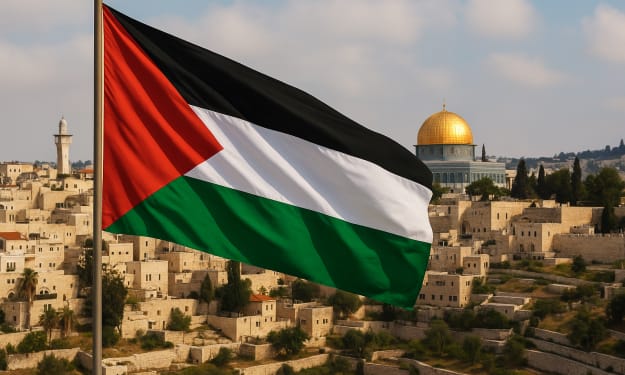
What hapening between Pelestain and Isreal.. Content Warning. AI-Generated.
Conflicts involving historical grievances, competing claims to land, and a series of wars and uprisings are just a few of the many facets that make up the conflict that exists between Israel and Palestine. In order to comprehend this complicated circumstance, one must investigate its beginnings and follow its development over time. The rise of Zionism, a movement for the establishment of a Jewish homeland in Palestine, the historical and ancestral homeland of the Jewish people, occurred in the late 19th and early 20th centuries. Arab nationalism developed simultaneously within the Ottoman Empire, which at the time ruled Palestine. Tensions with the Palestinian Arab population began to rise as Jewish immigration to Palestine increased. Under a mandate from the League of Nations, Britain took control of Palestine following World War I and the fall of the Ottoman Empire. Arab hostility and conflict escalated as a result of Britain's support for "the establishment in Palestine of a national home for the Jewish people" in the Balfour Declaration of 1917. During the British Mandate, the conflict between Jews and Arabs escalated. In 1937, the Peel Commission made the idea of dividing Palestine into separate Arab and Jewish states, which Arab leaders rejected. The demand for a Jewish state increased as World War II loomed and the plight of European Jews became increasingly dire. Resolution 181, which called for the division of Palestine into an Arab state and a Jewish state with international control over Jerusalem, was approved by the United Nations General Assembly in 1947. The plan was accepted by Jewish leaders, but Arab leaders rejected it, which led to the Arab-Israeli War in 1948. The Nakba (catastrophe) occurred when hundreds of thousands of Palestinians were forced to flee their homes after Israel won the war in 1948. On a significant portion of the former mandate territory, the war also resulted in the establishment of the State of Israel. The Six-Day War of 1967, which saw Israel occupy the West Bank, Gaza Strip, East Jerusalem, and the Golan Heights, was one of many subsequent conflicts. The establishment of Israeli settlements and the ongoing occupation of these areas have remained significant points of contention. A complex web of political, social, and economic factors characterizes the Israeli-Palestinian conflict. The conflict has been centered on issues like the status of Jerusalem, the right of Palestinian refugees to return home, security concerns, and the creation of a viable Palestinian state. Over the years, a lot of peace talks have been tried, but nothing has worked out that will last. Both Israelis and Palestinians have experienced cycles of violence, displacement, and a profound sense of injustice as a result of the conflict, which has had a significant impact on their lives. This long and complicated history continues in the current situation in Israel and Palestine. The ongoing humanitarian crisis in Gaza and the recent escalation of violence highlight the pressing requirement for a peaceful and just resolution that addresses the legitimate aspirations and security concerns of both peoples. It is essential to comprehend the historical context in order to comprehend the current difficulties and work toward a future of peace and coexistence in the region.
By Tafsirul Talukdar luvdo10 months ago in History
Mohenjo-Daro: The Lost City and Its Unsolved Mystery
Thousands of years ago, when most of the world was still in the darkness of prehistory, a spectacular city thrived on the banks of the Indus River. Its name? Mohenjo-Daro—literally meaning "Mound of the Dead." This ancient city, lost in time, continues to baffle historians, archaeologists, and conspiracy theorists alike. Its rise was glorious, but its fall remains one of the greatest unsolved mysteries of human civilization.
By Saiful Islam Sohan10 months ago in History