
What hapening between Pelestain and Isreal.
The unknown information of it.

Conflicts involving historical grievances, competing claims to land, and a series of wars and uprisings are just a few of the many facets that make up the conflict that exists between Israel and Palestine. In order to comprehend this complicated circumstance, one must investigate its beginnings and follow its development over time. The rise of Zionism, a movement for the establishment of a Jewish homeland in Palestine, the historical and ancestral homeland of the Jewish people, occurred in the late 19th and early 20th centuries. Arab nationalism developed simultaneously within the Ottoman Empire, which at the time ruled Palestine. Tensions with the Palestinian Arab population began to rise as Jewish immigration to Palestine increased. Under a mandate from the League of Nations, Britain took control of Palestine following World War I and the fall of the Ottoman Empire. Arab hostility and conflict escalated as a result of Britain's support for "the establishment in Palestine of a national home for the Jewish people" in the Balfour Declaration of 1917. During the British Mandate, the conflict between Jews and Arabs escalated. In 1937, the Peel Commission made the idea of dividing Palestine into separate Arab and Jewish states, which Arab leaders rejected. The demand for a Jewish state increased as World War II loomed and the plight of European Jews became increasingly dire. Resolution 181, which called for the division of Palestine into an Arab state and a Jewish state with international control over Jerusalem, was approved by the United Nations General Assembly in 1947. The plan was accepted by Jewish leaders, but Arab leaders rejected it, which led to the Arab-Israeli War in 1948. The Nakba (catastrophe) occurred when hundreds of thousands of Palestinians were forced to flee their homes after Israel won the war in 1948. On a significant portion of the former mandate territory, the war also resulted in the establishment of the State of Israel. The Six-Day War of 1967, which saw Israel occupy the West Bank, Gaza Strip, East Jerusalem, and the Golan Heights, was one of many subsequent conflicts. The establishment of Israeli settlements and the ongoing occupation of these areas have remained significant points of contention. A complex web of political, social, and economic factors characterizes the Israeli-Palestinian conflict. The conflict has been centered on issues like the status of Jerusalem, the right of Palestinian refugees to return home, security concerns, and the creation of a viable Palestinian state. Over the years, a lot of peace talks have been tried, but nothing has worked out that will last. Both Israelis and Palestinians have experienced cycles of violence, displacement, and a profound sense of injustice as a result of the conflict, which has had a significant impact on their lives. This long and complicated history continues in the current situation in Israel and Palestine. The ongoing humanitarian crisis in Gaza and the recent escalation of violence highlight the pressing requirement for a peaceful and just resolution that addresses the legitimate aspirations and security concerns of both peoples. It is essential to comprehend the historical context in order to comprehend the current difficulties and work toward a future of peace and coexistence in the region.
About the Creator
Keep reading
More stories from Tafsirul Talukdar luvdo and writers in History and other communities.
Nelson Mandela: A Legacy of Liberation, Reconciliation, and Hope
Nelson Mandela: A Legacy of Hope, Peace, and Liberation Nelson Rolihlahla Mandela, more commonly referred to as Madiba, is still regarded as an iconic figure from both the 20th and 21st centuries. His life is a source of inspiration for people all over the world who are working toward equality and human dignity. It is marked by unwavering dedication to justice, significant sacrifice, and an extraordinary capacity for forgiveness. Mandela's journey is a testament to the strength of the human spirit in the face of oppression, from anti-apartheid activist to political prisoner to first president of a democratic South Africa. Born on July 18, 1918, in the Eastern Cape of South Africa, Mandela's early life provided little indication of the monumental role he would play in shaping his nation's destiny. He learned about the systemic racial discrimination and injustice that black South Africans faced under the apartheid regime while attending the University of Fort Hare and local missionary schools. When he joined the African National Congress (ANC) in 1944, a liberation movement that was initially committed to non-violent resistance against apartheid laws, his activism took off in earnest. However, following the Sharpeville massacre in 1960, where peaceful protestors were brutally killed by police, Mandela and the ANC leadership concluded that armed struggle was a necessary last resort. He co-founded the ANC's military wing, Umkhonto we Sizwe ("Spear of the Nation"), which carried out sabotage against important government facilities. His arrest in 1962 and the infamous Rivonia Trial in 1964, in which he and other ANC leaders were charged with sabotage and conspiracy, were both as a result of this shift. His powerful speech from the dock, in which he said he was willing to die for the idea of a free and democratic society, was heard all over the world and made him into a symbol of resistance. Mandela was given a life sentence and spent the next 27 years in harsh conditions on Robben Island and other South African prisons. Mandela's influence only increased despite his imprisonment. The global anti-apartheid movement demanded his release and the end of the oppressive apartheid system, making him a global celebrity. Millions of people around the world were inspired by his unwavering resolve and refusal to compromise his values. Domestic and international pressure on the South African government increased toward the end of the 1980s. President F.W. de Klerk started reforms in the face of growing unrest and the realization that apartheid was unsustainable. These reforms led to Mandela's unconditional release on February 11, 1990. Mandela was a key player in the delicate negotiations for a peaceful transition to a multiracial democracy after his release. Together with de Klerk, he worked tirelessly to end apartheid laws, free political prisoners, and create a framework for free and fair elections. In 1993, they were awarded the Nobel Peace Prize for their collective efforts in navigating this difficult period. Nelson Mandela became the nation's first black president after its first democratic elections were held in 1994. His presidency was marked by a dedication to nation-building and reconciliation. He advocated for the Truth and Reconciliation Commission, a ground-breaking initiative that encouraged a process of healing and comprehension by allowing both perpetrators and victims of apartheid-era violence to share their experiences. His government also prioritized addressing the deep-seated inequalities created by apartheid, implementing policies aimed at improving housing, education, healthcare, and economic opportunities for the black majority. Mandela's leadership was marked by pragmatism, inclusivity, and a profound commitment to the well-being of all South Africans, despite the enormous challenges he faced. Mandela voluntarily resigned from office in 1999 after serving one term, establishing a significant precedent for democratic leadership in Africa. However, he continued to be an active global statesman, working through the Nelson Mandela Foundation to promote peace, human rights, and the fight against HIV/AIDS. On December 5, 2013, Nelson Mandela passed away at the age of 95. Global mourning surrounded his passing, but his legacy continues to inspire. In addition to his brave resistance to apartheid, he is remembered for his extraordinary capacity for forgiveness, his dedication to reconciliation, and his unwavering belief in the possibility of a just and equitable world. Mandela's legacy reaches far beyond South Africa's borders. He stands as a symbol of hope for oppressed people everywhere, a testament to the power of perseverance, and an enduring reminder that even the most entrenched systems of injustice can be overcome through courage, determination, and a commitment to human dignity. His life is a powerful example of the significance of dialogue, comprehension, and the pursuit of a shared humanity in constructing a better future for everyone. Canvas
By Tafsirul Talukdar luvdo9 months ago in History
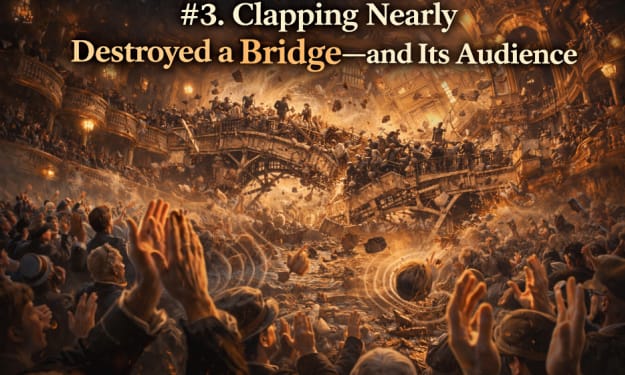
3 Harmless Habits That Once Caused Absolute Chaos
Most habits are comfortingly dull. You chew gum. You clap at events. You check your phone. You assume—reasonably—that these actions will not destabilize governments, bankrupt industries, or end lives. Society depends on this assumption. If every small habit carried catastrophic potential, we would never leave the house.
By Enoch Sagini4 days ago in History
Brosley Punch — The Strike That Shook Fate
Brosley was never taught how to throw a punch. He learned it the hard way—through hunger, through survival, through a childhood spent on a world that showed no mercy. Long before the universe would whisper his name in fear, Brosley was just a boy standing on cracked red stone, staring at a sky that never answered his questions.
By The best writer 2 days ago in History



Comments (1)
Keep it up.