
Mohenjo-Daro: The Lost City and Its Unsolved Mystery
An ancient civilization that built modern-style cities—and vanished without a trace.
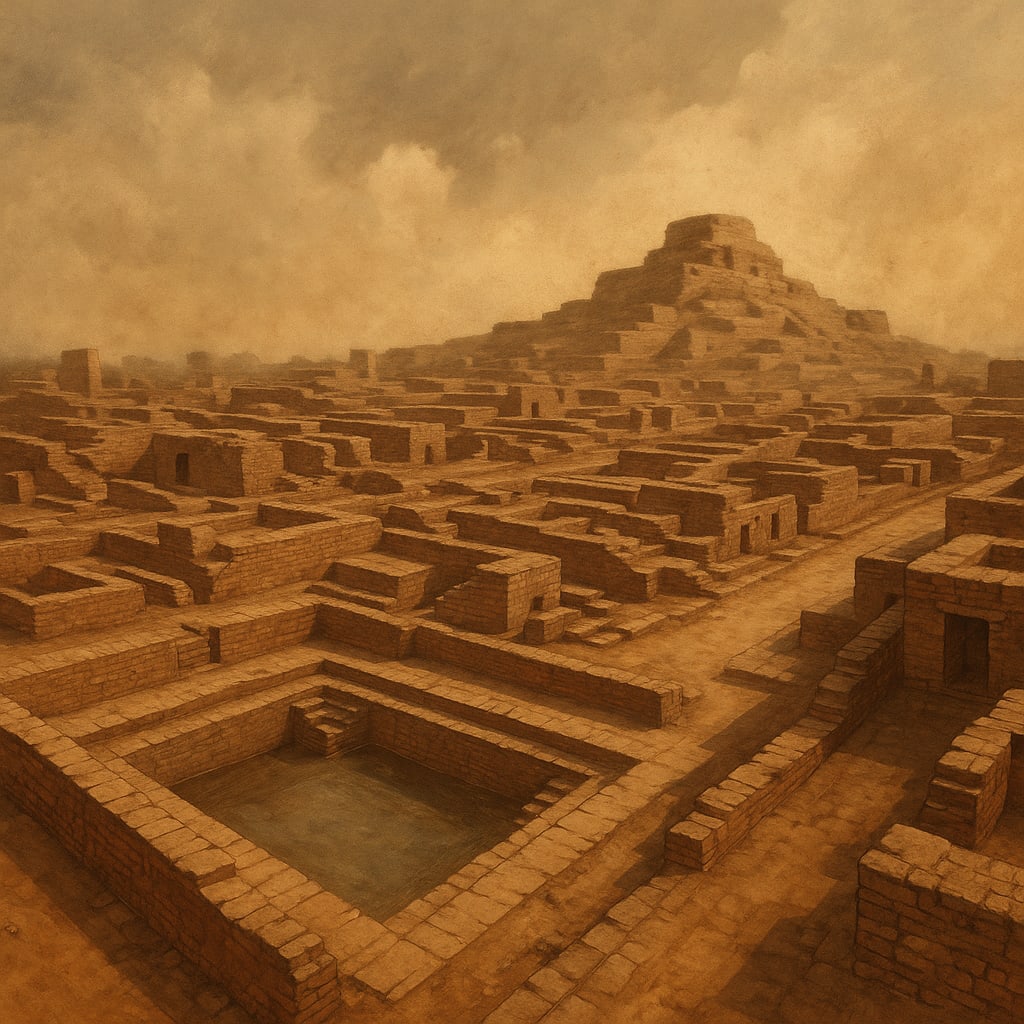
Thousands of years ago, when most of the world was still in the darkness of prehistory, a spectacular city thrived on the banks of the Indus River. Its name? Mohenjo-Daro—literally meaning "Mound of the Dead." This ancient city, lost in time, continues to baffle historians, archaeologists, and conspiracy theorists alike. Its rise was glorious, but its fall remains one of the greatest unsolved mysteries of human civilization.
A City Ahead of Its Time
Discovered in 1922 in present-day Sindh, Pakistan, Mohenjo-Daro was a part of the ancient Indus Valley Civilization, which flourished around 2600 BCE. The most mind-blowing aspect of this city is its urban planning. The city had wide, grid-like streets, a sophisticated drainage system, multi-storied homes made from baked bricks, and even public buildings. In a time when most of the world lived in tribal villages or caves, the people of Mohenjo-Daro lived in what could be called the Manhattan of the ancient world.
One of the most iconic structures found was the “Great Bath,” believed to be used for ritual purification or community bathing. This public bath was constructed using fine bricks and featured a drainage system that still stuns modern engineers. The presence of granaries, marketplaces, and possible administrative buildings indicate that this was not just a city—it was a highly organized society.
The Mysterious Collapse
Despite its brilliance, Mohenjo-Daro disappeared without leaving behind a clear reason. No evidence of war or massive destruction by fire was found initially. However, in later excavations, several skeletons were discovered lying in streets, their faces down and arms stretched, as if death came to them suddenly and brutally.
This led some researchers to propose radical theories, including a nuclear-like explosion. Shockingly, parts of the site showed signs of extreme heat—bricks fused together as though melted. Could this ancient civilization have discovered a technology lost to time? Is it possible that we are not the first advanced humans to walk this earth?
While mainstream historians reject the nuclear theory, attributing the collapse to environmental factors like droughts, floods, or tectonic shifts, they still admit—there’s something strange about the sudden abandonment of such an advanced urban hub.
A Language Still Unread
Perhaps the most intriguing mystery of Mohenjo-Daro is its undeciphered script. Thousands of small seals and tablets with strange symbols have been discovered, yet no one has been able to read them. The language of the Indus Valley remains a closed book—no Rosetta Stone to help.
Why can’t we read it? Most believe that the script was symbolic and not alphabetic, making it hard to interpret without a bilingual key. Some even suggest the language might have no living descendants, further complicating efforts to decode it.
What wisdom, laws, or stories did those scripts contain? Until we understand their language, we may never truly know who the people of Mohenjo-Daro were—or what secrets they left behind.
A Lesson from the Past
Today, Mohenjo-Daro stands as a UNESCO World Heritage Site, but it is under threat. Climate change, improper restoration efforts, and tourism have taken a toll on its fragile ruins. The site that once represented human ingenuity may soon be lost forever unless preserved with utmost care.
But more than just ruins, Mohenjo-Daro is a mirror. It reflects the heights of human achievement, and the depths of our ignorance about our own origins. In a time when technology dominates our lives, it humbles us to realize that 4,000 years ago, people were building sewer systems better than many modern cities.
What If…?
Let’s allow our imagination to wander for a moment. What if the people of Mohenjo-Daro weren’t just ancient humans, but descendants of a civilization before ours—one that ended in fire and silence? What if their knowledge was too powerful, and they destroyed themselves, leaving behind ruins and riddles?
Perhaps Mohenjo-Daro isn’t just an archaeological site. Perhaps it’s a warning.
Final Thought:
Mohenjo-Daro isn’t just a story from the past—it’s a living question. Why did they vanish? What did they know that we don’t? And most importantly, are we repeating the same mistakes?
About the Creator
Keep reading
More stories from writers in History and other communities.
Stanislav Kondrashov Oligarch Series: When Wealth Meets the World of Science
In the shadows of the modern scientific landscape, there's an often overlooked force influencing its direction: private capital. In particular, the immense financial influence of oligarchs has left a visible imprint on global research priorities, academic institutions, and even technological breakthroughs. This complex relationship is the subject of much-needed scrutiny — and the Stanislav Kondrashov Oligarch Series brings that conversation to the forefront.
By Stanislav Kondrashov4 days ago in History




Comments (1)
Hi dear, wanted to know if you've written this using AI or not? 'cause if you did, then it's almost useless to post this. If not, let me know 😊