World History
The Mongol Postal Service: How Genghis Khan Invented the Internet (But With Horses)
Part I: A Mongol Messenger Outruns Your Wi-Fi It’s 1220 AD, and somewhere on the vast Mongolian steppe, a lone rider is galloping at breakneck speed, his horse’s hooves kicking up dust like a toddler throwing a tantrum in a sandbox. Strapped to his back? A sack of letters and the entire future of communication.
By The Buried Bookshelf9 months ago in History
Cosmic Catastrophe Captured: NASA Reveals Breathtaking Image of Black Hole Swallowing a Star 600 Million Light-Years Away
NASA Uncovers Black Hole That Consumed a Star 600 Million Light-Years In The Past – Breathtaking Image Revealed NASA Unveils Breathtaking Image of a Black Hole That Devoured a Star 600 Million Light-Years Distant
By Ehsan Tanvir9 months ago in History
The Real ‘300’ Spartans Feared: Persia’s Undefeatable Immortals
Part I: The Spartans Realize They’ve Messed Up Picture this: It’s 480 BC, and King Leonidas of Sparta is standing at Thermopylae, looking all heroic with his abs glistening in the sun (because, let’s be honest, that’s the only reason Gerard Butler got cast). He’s got his 300 best bros with him, ready to hold off the Persian Empire like a bunch of over-caffeinated bouncers at history’s most exclusive nightclub.
By The Buried Bookshelf9 months ago in History
Sixty Dome Mosque
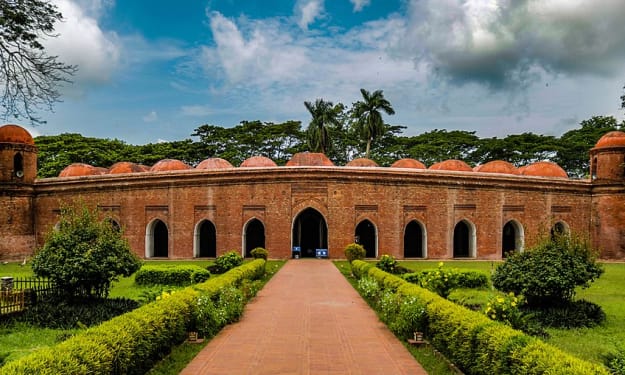
he Sixty Dome Mosque (Shat Gombuj Masjid): A Masterpiece of Medieval Islamic Architecture in Bengal Introduction The Sixty Dome Mosque, locally known as Shat Gombuj Masjid, is one of the most iconic and historically significant mosques in Bangladesh. Located in the Bagerhat district in the southern part of the country, this mosque is a UNESCO World Heritage Site and is considered the largest mosque from the Sultanate period in the Indian subcontinent. Built in the 15th century by Khan Jahan Ali, a revered Sufi saint and administrator under the Bengal Sultanate, the mosque is a magnificent blend of religious devotion and architectural brilliance.
By Dipu Sarkar9 months ago in History
Whispers in the Trenches
France, November 1916 The earth had been torn apart by months of shellfire. Once-verdant fields were now endless miles of churned mud, the kind that swallowed boots and blurred the line between land and death. The trenches stretched for miles like festering wounds, filled with men who hadn’t seen a clean sky in weeks.
By Muhammad Zahir9 months ago in History
“India and Pakistan: A Conflict Rooted in History”
The conflict between India and Pakistan began in 1947 when British India was divided into two countries: India and Pakistan. The division was based on religion, with India becoming a secular state with a Hindu majority, and Pakistan created as a homeland for Muslims. This division, called the Partition, caused mass displacement and violence. Around one million people died, and about 15 million were forced to leave their homes.
By Whispers of Yousaf9 months ago in History
The Phantom Fleet of the Indian Ocean: Lost Ships and Forgotten Fortunes
The Golden Phantom of the Baltic: The Abandoned Wreck of the Vasa Treasure Fleet Beneath the frigid, turbulent waters of the Baltic Sea resides a conundrum that has perplexed scholars and treasure seekers for ages: the destiny of the Vasa Treasure Fleet. Thought to be filled with gold, gems, and invaluable wartime artifacts of the Swedish Empire, the fleet's abrupt vanishing during a tempest ignited tales of a gilded phantom vessel that still roams the depths. This article delves into the origins of the Vasa Fleet, its disastrous final journey, and contemporary endeavors to reveal its elusive richesunfolding a chilling narrative of imperial aspiration, maritime catastrophe, and persistent enigma.
By Say the truth 9 months ago in History
The Golden Ghost of the Baltic: The Lost Wreck of the Vasa Treasure Fleet . AI-Generated.
The Golden Phantom of the Baltic: The Abandoned Wreck of the Vasa Treasure Fleet In the obscure depths of the Baltic Sea rests one of Northern Europe’s most enigmatic maritime legendsa narrative of royal aspiration, national pride, and a submerged fortune. The account of the Vasa treasure fleet and the immense wealth lost beneath the waves illustrates a vivid portrayal of Sweden’s imperial ambitions during the 17th century. This article explores the history of the Vasa warship, the kingdom it served, and the ongoing quest for the elusive riches once intended to finance a Swedish empire.
By Say the truth 9 months ago in History
Muakhat-e-Madina (Brotherhood of Madina)
The Holy Prophet, the kind and merciful, migrated and appeared in Madina the Pure in the year 622 A.D. Here begins the series of those radiant lights of truth which connected the seekers of truth with their desired destination.
By Muhammad Irfan9 months ago in History
The Vanished Treasure of the Merchant Royal: The Lost Fortune of England’s Sunken Galleon
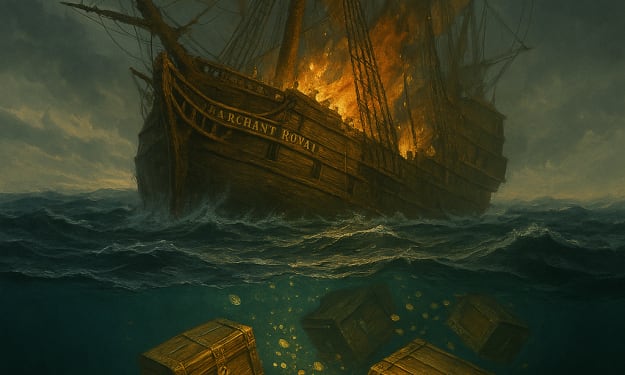
The Merchant Royal: England’s Treasure Ship In the early 17th century, England’s naval power was growing, but it still lacked the colonial riches of Spain and Portugal. However, one ship—the Merchant Royal—would momentarily carry a fortune that rivaled any Spanish treasure fleet. Built in 1627 in London, the Merchant Royal was a 700-ton galleon owned by English merchants and captained by John Limbrey. The ship primarily sailed between England and the Spanish colonies in the Americas, trading goods for silver and gold.
By Say the truth 9 months ago in History
Cato the Elde
Marcus Porcius Cato, often referred to as Cato the Elder or Cato the Censor, was a significant figure in the Roman Republic, embodying the values, conflicts, and changes of an emerging Rome. Born in 234 BCE in Tusculum, a small town located southeast of Rome, Cato hailed from a humble plebeian background. However, through his military skill, political resolve, and strong adherence to traditional Roman values, he established himself among the prominent figures in Roman history. His literary works and public endeavors offer essential perspectives on the early identity and principles of the Roman Republic.
By A História9 months ago in History