
The Real ‘300’ Spartans Feared: Persia’s Undefeatable Immortals
And No, They Didn’t Just Spray Themselves with Eternity Cologne.

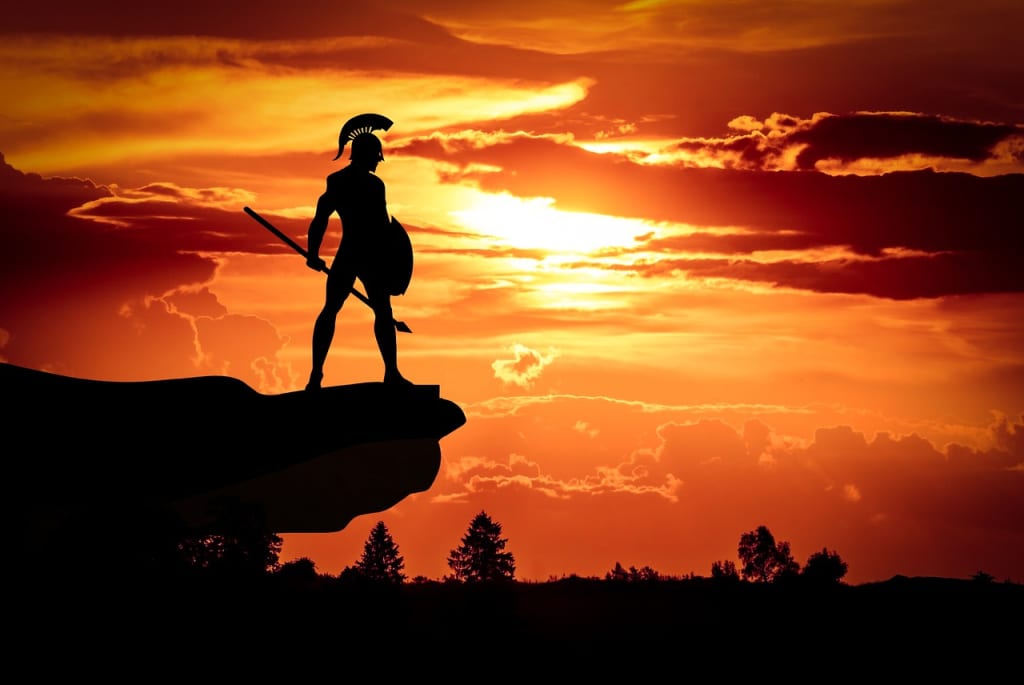
Part I: The Spartans Realize They’ve Messed Up
Picture this: It’s 480 BC, and King Leonidas of Sparta is standing at Thermopylae, looking all heroic with his abs glistening in the sun (because, let’s be honest, that’s the only reason Gerard Butler got cast). He’s got his 300 best bros with him, ready to hold off the Persian Empire like a bunch of over-caffeinated bouncers at history’s most exclusive nightclub.
Then, over the horizon, they see them—the Persian Immortals.
Not just any soldiers, mind you. These guys are the ancient equivalent of a video game boss that respawns every time you kill it. Ten thousand strong, clad in gleaming armor, with enough eyeliner to make a 1980s rock band jealous. And here’s the kicker—when one falls, another steps in immediately. No downtime, no HR paperwork, just an endless tide of "Nope, still here."
Leonidas probably turned to his second-in-command and muttered, "Well… this is awkward."
Because while Hollywood made the Spartans look like the ultimate badasses (and don’t get me wrong, they were), the real nightmare fuel for ancient Greece was Persia’s elite fighting force—the Immortals. And no, they weren’t actually immortal, but try telling that to the poor schmuck who just stabbed one, only to see his buddy immediately take his place like a twisted game of Whack-a-Mole.
So, let’s dive into the terrifying, slightly absurd, and utterly fascinating world of Persia’s most unstoppable warriors—the guys who basically invented the "Ctrl+C, Ctrl+V" of warfare.
Part II: Origins – Because Even Super-Soldiers Have to Start Somewhere)
How to Build an Army That Refuses to Die (Without Actual Necromancy)
Every legendary fighting force has a humble beginning. Navy SEALs? Started as underwater demolition experts. Spartans? Basically just really angry gym bros with a spear fetish. But the Persian Immortals? Oh, they had standards.
The Immortals were the brainchild of the Achaemenid Empire, Persia’s "We’re-kind-of-a-big-deal" dynasty that stretched from modern-day Turkey to India. Their secret sauce? Logistics. While other ancient armies were still figuring out how to keep their sandals tied, the Persians were running a military operation smoother than a silk-robed bureaucrat on a sugar high.
Recruitment: The Ancient Version of an Elite Job Interview
To become an Immortal, you couldn’t just show up with a nice sword and a winning smile. No, these guys were the Persian equivalent of a Fortune 500 company’s corporate retreat—if that retreat involved way more stabbing.
- Step 1: Be Persian (or at least really, really loyal). Sorry, mercenaries. This was an exclusive club.
- Step 2: Be in ridiculous shape. (Imagine a CrossFit open tryout, but with more spears and fewer protein shakes.)
- Step 3: Own your own gear. That’s right, these guys were like medieval franchisees. Bring your own armor, weapons, and probably a packed lunch.
The "Immortal" Gimmick (Spoiler: They Died… A Lot)
Now, about that whole "Immortal" thing—it was mostly just PR. The name came from the fact that their numbers never dipped below 10,000. Lose a soldier? Boom, replacement steps in before the body even hits the ground. It was like a nightclub with a strict "one-in, one-out" policy, except instead of drunk guys in tight shirts, it was heavily armed killing machines.
Herodotus, history’s original gossip columnist, described them as always being "neither more nor less than 10,000." Which, honestly, sounds like the world’s most stressful HR job.
Persian Officer: "Alright, Jenkins just took an arrow to the face. Who’s next in line?"
Random Guy Eating a Kebab: "Uh… me?"
Officer: "Great, here’s your spear. Try not to die before lunch."
Fashion Choices: Because Intimidation is 90% Accessories
If you’re going to be an undefeatable killing machine, you have to look the part. The Immortals didn’t just show up in whatever their mom packed for them—they had style.
- Gold-trimmed robes – Because nothing says "I will end your bloodline" like a bit of bling.
- Wicker shields – Lightweight, yet still somehow terrifying.
- Spears, short swords, and bows – The ancient equivalent of bringing a gun, a knife, and a backup gun to a fistfight.
- Elaborate headdresses – Historians debate whether these were ceremonial or just Persia’s way of saying, "Yeah, we’re extra."
Basically, if the Spartans were the "no-nonsense, all-business" fighters, the Immortals were the guys who showed up to battle looking like they were about to drop the hottest mixtape of 480 BC.
Part III: Battle Tactics – Because Numbers Alone Don’t Win Wars… But They Help a Lot)
The Immortals in Combat: Like a Zombie Horde, but with Better Discipline
Alright, so you’ve got your 10,000 elite Persian warriors, dressed to impress and ready to ruin someone’s day. But how did they actually fight? Were they just a glorified human wave, or was there method to the madness?
Spoiler: There was method. Lots of method.
The Persian Playbook: Shock, Awe, and Psychological Warfare
The Immortals weren’t just muscle—they were theater. Their entire existence was designed to make enemies think, "You know what? Maybe today isn’t the day I pick a fight."
- Endless Reinforcements – The whole "instant replacement" thing wasn’t just for show. Imagine you’re a Greek hoplite, finally managing to stab one of these guys after sweating through your armor. You turn around, panting, only to see another identical warrior step forward like nothing happened. That’s the kind of psychological damage no amount of motivational speeches can fix.
- Archers First, Spears Later – The Immortals didn’t just charge in blindly. They softened you up with arrows (because why fight fair?), then closed in with spears and short swords when you were already exhausted and full of pointy regrets.
- Flanking Like It’s Going Out of Style – While the enemy was busy dealing with the front line, the Immortals loved sneaking around the sides like a group of overly enthusiastic party crashers.
The "Oh Crap" Moment for Their Enemies
The Spartans at Thermopylae might have gotten all the glory, but let’s be real—facing the Immortals was like playing a video game where the enemy respawns infinitely and you’re stuck on one life.
- Against the Greeks: The Immortals were sent in after the initial waves of conscripts had worn the enemy down. By the time they showed up, the Greeks were already tired, wounded, and questioning their life choices.
- Against the Egyptians: When Persia invaded Egypt, the Immortals were the hammer that broke the back of Pharaoh’s armies. The Egyptians, used to fighting in rigid formations, suddenly had to deal with an enemy that never got smaller.
- Against Common Sense: Logistically, keeping a 10,000-man force perpetually topped off was insane. But the Persians did it anyway, because when you’re running the ancient world’s biggest empire, you can afford to be extra.
The One Time They Did Lose (And Why It Doesn’t Count)
Okay, fine, the Immortals technically lost at the Battle of Plataea (479 BC). But in their defense:
- They were up against a massive Greek coalition.
- Their commander, Mardonius, got himself killed early in the fight (rookie mistake).
- The Greeks basically won by throwing everything they had at them, including the kitchen sink (metaphorically speaking).
So yeah, they weren’t literally invincible. But they were about as close as ancient warfare got.
Final Part: The End… Or Is It?
Epilogue: The Immortals’ Legacy (And Why We’re Still Talking About Them)
So, what happened to history’s most persistent fighting force? Did they just fade away like a bad tan? Not exactly. The Immortals stuck around for centuries, evolving with the times until the Achaemenid Empire finally got too extra and collapsed under its own bling. But their reputation? That never died.
Even today, the idea of an army that refuses to stay dead is the stuff of legends—and video games, comic books, and that one friend who won’t stop respawning in Call of Duty. The Spartans got the Hollywood treatment, but let’s be real: the Immortals were the OG unstoppable force.
Why This Matters (Besides Being Really Cool)
The Immortals weren’t just scary—they were smart. They mastered logistics, psychology, and intimidation in ways most ancient armies couldn’t even dream of. They proved that warfare isn’t just about brute strength; it’s about making your enemy give up before the fight even starts.
And honestly? That’s a life lesson right there.
Next time you’re facing impossible odds, just remember: Be like the Immortals. Replace your losses, adapt on the fly, and for the love of Cyrus the Great, look good doing it.

Loved this deep dive into Persia’s most un-killable warriors? Then don’t be a lost Spartan—subscribe to The Buried Bookshelf for more hilarious, history-packed stories!
Leave a tip if you want to keep these tales coming—because unlike the Immortals, we don’t automatically respawn without support.
Until next time, stay legendary—and remember: in the game of history, the best players never stay down.
—The Buried Bookshelf 📚⚔️
About the Creator
The Buried Bookshelf
Welcome to The Buried Bookshelf, where lost tales, forgotten myths, and hidden histories are dusted off and brought back to light. From obscure folklore to overlooked chapters of the past, we dig deep to revive stories time tried to erase.
Keep reading
More stories from The Buried Bookshelf and writers in History and other communities.
The Byzantine Queen Who Changed Viking History Forever
Prologue: A Marriage Proposal So Wild It Actually Worked The year is 988 AD. In the golden halls of Constantinople, Emperor Basil II—the Byzantine ruler who made his enemies beg for mercy by literally blinding them—is staring at an envoy from Kievan Rus’ like he’s just been handed a ransom note written in crayon.
By The Buried Bookshelf9 months ago in History
Abraham Lincoln: The Long Road to Leadership
Abraham Lincoln’s journey to leadership was not a straight path paved with privilege or certainty. It was a long, uneven road marked by hardship, failure, patience, and moral growth. Born into poverty and shaped by loss, Lincoln rose not through inherited power but through resilience and a deepening sense of justice. His life story is a testament to how character is forged over time, and how leadership often grows out of struggle rather than success. Lincoln was born on February 12, 1809, in a small log cabin in Hardin County, Kentucky. His parents, Thomas and Nancy Lincoln, were poor farmers who owned little land and even fewer possessions. The frontier life was harsh and unpredictable, and young Abraham learned early the realities of physical labor. He helped clear fields, split rails, and work the soil, developing the strength and endurance that would later become legendary. Yet it was not physical work alone that shaped him—it was loss. When Abraham was just nine years old, his mother died from milk sickness, a tragedy that left a deep emotional scar. The quiet, thoughtful boy grew more introspective, learning early how fragile life could be. Formal education was rare on the frontier. Lincoln attended school only sporadically, totaling less than a year of classroom learning. But he possessed an intense hunger for knowledge. He borrowed books whenever he could—reading the Bible, Aesop’s Fables, Shakespeare, and books on history and law. He read by firelight after long days of labor, teaching himself grammar, logic, and storytelling. This self-education sharpened his mind and gave him a powerful command of language, a skill that would later define his leadership. As a young man, Lincoln left home and moved to New Salem, Illinois. There, he tried his hand at various jobs: store clerk, postmaster, surveyor, and finally lawyer. Many of these early efforts ended in failure. His first business collapsed, leaving him deeply in debt for years. He lost elections, struggled financially, and endured periods of deep sadness. Yet each setback strengthened his resolve. Lincoln developed a reputation for honesty—earning the nickname “Honest Abe”—and for fairness in his dealings with others. People trusted him not because he was flawless, but because he was sincere. Lincoln’s first steps into politics came in the Illinois state legislature, where he served multiple terms. He was not a fiery revolutionary but a careful thinker who believed in progress through law and debate. During this period, he also trained himself in the practice of law, riding the legal circuit across rural Illinois. In courtrooms and taverns, Lincoln listened to people’s concerns, learned their values, and understood the rhythms of ordinary American life. These experiences grounded his leadership in empathy and realism. The issue that would ultimately define Lincoln’s legacy—slavery—was one he approached with moral seriousness and caution. He personally believed slavery was wrong, but he also understood the deep divisions it caused in the nation. Rather than calling for immediate upheaval, Lincoln argued that slavery should not expand into new territories. His belief was rooted in the idea that the nation could not endure permanently half slave and half free. This position brought him national attention during the famous debates with Senator Stephen A. Douglas in 1858. Although Lincoln lost that Senate race, the debates revealed his clarity of thought, moral conviction, and ability to speak to the conscience of the nation. In 1860, amid rising sectional tensions, Lincoln was elected the 16th President of the United States. His victory was achieved without carrying a single Southern state, highlighting how divided the country had become. Soon after his election, several Southern states seceded from the Union, and the nation stood on the brink of collapse. Lincoln entered the presidency at its darkest hour, facing a civil war that threatened the very existence of the United States. Lincoln’s leadership during the Civil War was tested daily. He was mocked for his appearance, criticized for his decisions, and blamed for the immense suffering the war caused. He faced generals who disobeyed him, politicians who doubted him, and citizens who lost faith. Yet Lincoln remained steady. He believed the Union must be preserved, not for power, but for the principle that a democratic nation could survive internal conflict. Over time, Lincoln’s thinking on slavery evolved. What began as a desire to limit its spread grew into a firm commitment to its abolition. In 1863, he issued the Emancipation Proclamation, declaring freedom for enslaved people in Confederate-held territories. Though limited in immediate effect, it transformed the moral purpose of the war. The fight was no longer only about saving the Union—it was about human freedom. Lincoln’s greatest strength as a leader was not dominance, but humility. He listened to opposing views, admitted mistakes, and learned from experience. His speeches reflected this depth of character. The Gettysburg Address, delivered in just a few minutes, redefined the war as a struggle for equality and democratic ideals. His Second Inaugural Address showed compassion even toward the defeated South, urging the nation to heal “with malice toward none, with charity for all.” Tragically, Lincoln would not live to see the full reconstruction of the nation he fought to preserve. He was assassinated in April 1865, just days after the Civil War effectively ended. His death shocked the nation and turned him into a symbol of sacrifice and unity. Abraham Lincoln’s long road to leadership teaches us that greatness is rarely born—it is built. It is built through hardship, patience, learning, and moral courage. Lincoln did not rise because he never failed; he rose because he never stopped growing. From a poor boy in a log cabin to a president who reshaped a nation, his life remains one of the most powerful examples of leadership grounded in humanity, perseverance, and principle.
By The best writer about 12 hours ago in History


Comments
There are no comments for this story
Be the first to respond and start the conversation.