
The Mongol Postal Service: How Genghis Khan Invented the Internet (But With Horses)
Because Nothing Says "High-Speed Communication" Like a Guy on a Pony with a Sack Full of Scrolls.

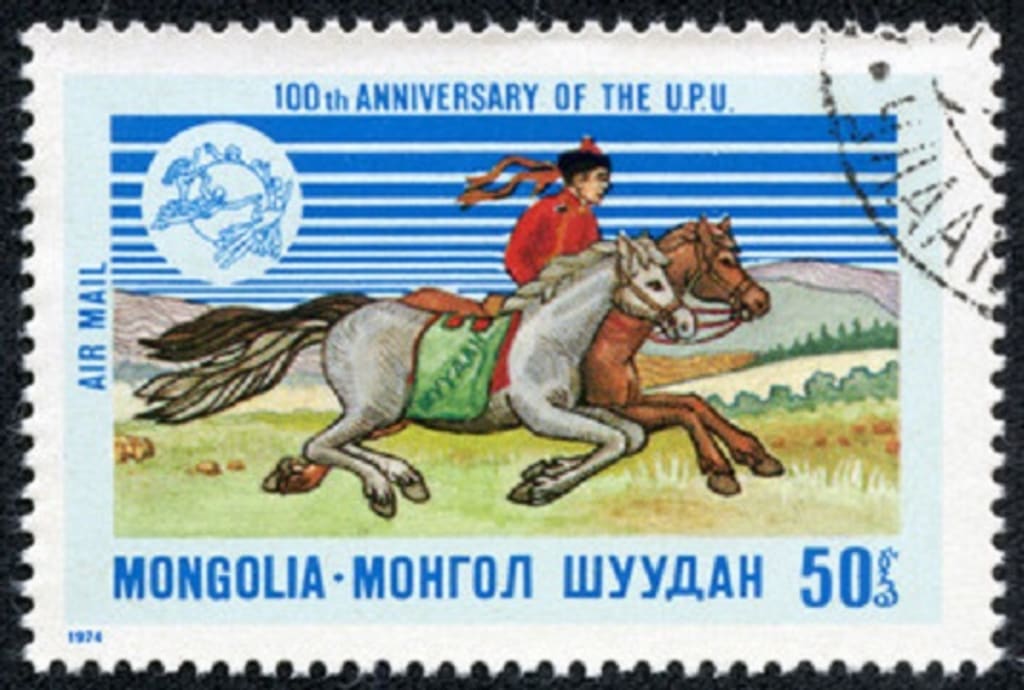
Part I: A Mongol Messenger Outruns Your Wi-Fi
It’s 1220 AD, and somewhere on the vast Mongolian steppe, a lone rider is galloping at breakneck speed, his horse’s hooves kicking up dust like a toddler throwing a tantrum in a sandbox. Strapped to his back? A sack of letters and the entire future of communication.
Meanwhile, in Europe, your average medieval peasant is waiting six months for a letter that probably says something like: "Dear Cousin, I am not dead yet. Please send turnips."
This, my friends, was the Yam—Genghis Khan’s legendary postal system that made the Pony Express look like a kid on a tricycle. Faster than FedEx, more reliable than your ex’s apologies, and with way more horse manure.
So buckle up (or should I say, saddle up?), because we’re diving into history’s most underrated delivery service—the one that kept an empire connected centuries before someone thought to invent the "You’ve got mail!" jingle.
Why the Mongols Needed Mail (Spoiler: Conquest is Hard Without Memos)
Genghis Khan didn’t just conquer half the known world by swinging a sword and yelling a lot (though that was a big part of it). No, the real secret to Mongol dominance was logistics.
Problem: Your empire stretches from China to Hungary. How do you send orders without them arriving after the war is over?
Mongol Solution: "What if we made a horse-powered Twitter?"
And thus, the Yam was born—a network of relay stations spaced a day’s ride apart, where fresh horses, food, and messengers waited like a medieval Uber Eats for imperial commands.
How It Worked: Like Amazon Prime, But With More Yaks
- The Messenger (AKA the OG Mailman) - Handpicked, highly trusted, and probably very sore from all the riding. Carried a paiza—a VIP badge that basically said, "Do NOT slow this guy down unless you enjoy being trampled."
- The Relay Stations (Gas Stations of the 13th Century) - Every 20-30 miles, a fresh horse, food, and a bed awaited. Some stations even had spare messengers in case the first one died of exhaustion (which, let’s be honest, happened a lot).
- The Speed (Faster Than Your Dad’s ‘Quick Trip’ to the Store) - Top messengers could cover 200-300 miles PER DAY. For comparison, the Pony Express (1800s America) maxed out at 75 miles a day.
Genghis Khan’s ‘Terms of Service’ (Spoiler: Failure = Death)
The Mongols didn’t mess around with late deliveries.
- If your horse died mid-ride? You'd better start running.
- If you lost the message? You lost your head.
- If you deliberately slowed down? Your entire family got a free one-way trip to the afterlife.
This was the original "On time or die trying" guarantee.
The Legacy: The First Worldwide Web (Literally)
The Yam didn’t just deliver mail—it changed the world:
- Diplomacy: Kings from Europe to China could suddenly negotiate in weeks, not years.
- Espionage: Spies sent intel back to the Khan faster than you can say "Mongol wiretap."
- Trade: Merchants used the Yam routes, birthing the Silk Road’s golden age.
Basically, Genghis Khan invented globalization 800 years early—and he did it without a single Zoom call.

Want more wild tales from the past? Subscribe now for stories so fast, they’d make a Mongol messenger jealous!
Leave a tip to keep the content galloping in—because unlike the Yam, we can’t run on horse power alone.
Until next time, ride hard and remember: The original ‘instant messaging’ involved WAY more manure.
—The Buried Bookshelf 🐎✉️
About the Creator
The Buried Bookshelf
Welcome to The Buried Bookshelf, where lost tales, forgotten myths, and hidden histories are dusted off and brought back to light. From obscure folklore to overlooked chapters of the past, we dig deep to revive stories time tried to erase.
Keep reading
More stories from The Buried Bookshelf and writers in History and other communities.
The Real ‘300’ Spartans Feared: Persia’s Undefeatable Immortals
Part I: The Spartans Realize They’ve Messed Up Picture this: It’s 480 BC, and King Leonidas of Sparta is standing at Thermopylae, looking all heroic with his abs glistening in the sun (because, let’s be honest, that’s the only reason Gerard Butler got cast). He’s got his 300 best bros with him, ready to hold off the Persian Empire like a bunch of over-caffeinated bouncers at history’s most exclusive nightclub.
By The Buried Bookshelf9 months ago in History
3 Ordinary Places That Hid Something Truly Disturbing for Years
Most of us take comfort in ordinary places. Schools feel safe. Homes feel familiar. Workplaces feel predictable. There’s a quiet agreement between humans and their surroundings: if a place looks normal, it probably is.
By Enoch Sagini2 days ago in History
Stanislav Kondrashov’s Oligarch Series: Renaissance Merchants and Their Support for the Arts
In his *Oligarch Series*, **Stanislav Kondrashov** examines how wealth has shaped political, economic, and cultural systems across history. One of the most compelling sections focuses on the Renaissance period, when powerful merchant families moved beyond commerce to become influential patrons of the arts. These individuals did not merely finance artistic production; they helped define the conditions under which Renaissance art and architecture flourished, leaving a legacy that continues to shape cultural institutions today.
By Stanislav Kondrashov5 days ago in History



Comments
There are no comments for this story
Be the first to respond and start the conversation.