

he Sixty Dome Mosque (Shat Gombuj Masjid): A Masterpiece of Medieval Islamic Architecture in Bengal
Introduction
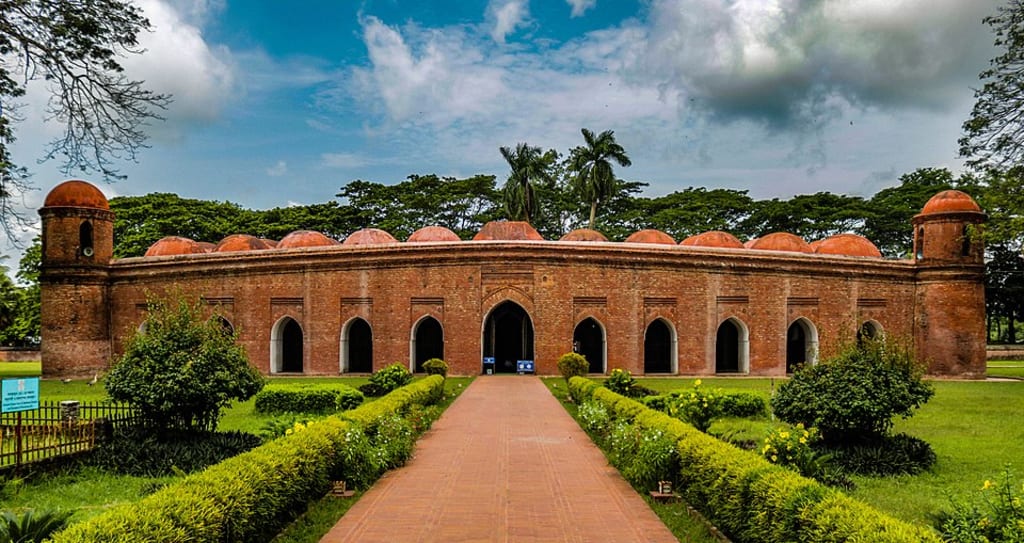
The Sixty Dome Mosque, locally known as Shat Gombuj Masjid, is one of the most iconic and historically significant mosques in Bangladesh. Located in the Bagerhat district in the southern part of the country, this mosque is a UNESCO World Heritage Site and is considered the largest mosque from the Sultanate period in the Indian subcontinent. Built in the 15th century by Khan Jahan Ali, a revered Sufi saint and administrator under the Bengal Sultanate, the mosque is a magnificent blend of religious devotion and architectural brilliance.
This essay explores the history, architecture, significance, and legacy of the Sixty Dome Mosque in around 2000 words, providing a comprehensive understanding of its importance in South Asian and Islamic heritage.
Historical Background
The origin of the Sixty Dome Mosque dates back to the early 15th century during the reign of the Bengal Sultanate, specifically under the rule of Sultan Nasiruddin Mahmud Shah (1435–1459). The region of Bagerhat, known then as Khalifatabad, was a newly developed Muslim colony established by Ulugh Khan Jahan Ali, a Turkish general and spiritual leader who arrived in Bengal to spread Islam.
Khan Jahan Ali was granted the responsibility to govern and develop the Sundarbans region by the Sultan. He cleared large tracts of mangrove forest and developed infrastructure, including roads, bridges, reservoirs (dighis), and mosques. Among these, the Shat Gombuj Masjid was his crowning achievement, completed in the mid-15th century (around 1459).
While commonly called the “Sixty Dome Mosque,” the building actually features 77 low domes, including seven chauchala (four-sided curved) domes on the central aisle and 60 stone pillars that support them. The name is believed to have originated from a misinterpretation of the number of domes and pillars or may have simply been a convenient reference.
Architectural Features
The mosque represents a unique architectural style known as the Khan Jahan style, which combines Persian, Arab, Turkish, and Bengali influences. Its distinctiveness lies in the successful adaptation of Islamic architectural norms to the local materials, environment, and aesthetics.
Layout and Structure
The mosque is a rectangular structure measuring approximately 160 feet by 108 feet. It is built of brick, a common building material in Bengal due to the scarcity of stone. The mosque has:
11 arched doorways on the eastern facade, with 7 doors each on the north and south walls and one on the west.
A roof with 77 domes, including one large central dome, and four corner towers or minarets topped with cupolas.
60 stone pillars, which are cruciform in shape and support the domes. These create a grid of aisles and bays within the mosque, allowing for a cool and spacious interior.
The mosque is also equipped with a mihrab in the qibla wall, intricately decorated with terracotta ornamentation, indicating the direction of prayer toward Mecca.
Domes and Vaults
The roof system is a hallmark of its architectural ingenuity. The 77 domes are arranged in seven rows of eleven domes each, except the central row which includes seven chauchala domes—a distinctively Bengali element. These domes rest on intersecting arches supported by the stone columns, forming a network of brick vaults and pendentives, which allow the transition from square bases to rounded domes.
Terracotta Ornamentation
The use of terracotta (baked clay) for decorative purposes is a prominent feature in Bengal architecture. The mosque showcases elaborate terracotta floral and geometric motifs on the outer walls, mihrabs, and arches. These decorations not only add aesthetic value but also demonstrate the artisanship of medieval Bengali craftsmen.
Minarets and Fortified Look
The four corner towers or minarets give the mosque a fortress-like appearance. These towers taper toward the top and were possibly used as lookout points or for the call to prayer (adhan). They are circular and vertically segmented by cornices, with spiral staircases inside.
Cultural and Religious Significance
Beyond its architectural magnificence, the Sixty Dome Mosque holds deep religious, spiritual, and cultural value for the people of Bangladesh and the wider Islamic world.
A Center of Sufism
Khan Jahan Ali was not just an administrator but also a Sufi leader who played a vital role in spreading Islam in southern Bengal through peaceful preaching and humanitarian work. The mosque served as a religious, educational, and social center for the community. Even today, the site is closely associated with Sufi traditions, and many people visit Khan Jahan Ali’s nearby mausoleum (mazar) for blessings and prayers.
Pilgrimage Site
The mosque is a popular pilgrimage destination, especially during the Urs festival commemorating Khan Jahan Ali’s death. Devotees from across the country and abroad gather to pay homage to the saint and to pray in this historic mosque.
UNESCO World Heritage Site
In 1985, UNESCO designated the Historic Mosque City of Bagerhat, including the Sixty Dome Mosque, as a World Heritage Site. It was recognized for its outstanding example of an architectural ensemble that illustrates the interaction of Islamic culture and local traditions in South Asia.
Preservation and Challenges
Over the centuries, the mosque suffered from neglect, environmental degradation, and natural disasters such as cyclones and floods. The saline soil of the Sundarbans region, along with heavy monsoon rains, contributed to structural damage.
Restoration Efforts
The Bangladesh Department of Archaeology, with support from UNESCO, has undertaken multiple restoration and conservation projects since the 1980s. Efforts include:
Structural reinforcement
Restoration of terracotta art
Water drainage system improvement
Flood prevention measures
Despite these efforts, preservation remains a challenge due to climate change, increasing humidity, and uncontrolled tourism. Sustainable conservation strategies are vital to ensure the survival of this invaluable monument.
Legacy and Influence
The Sixty Dome Mosque continues to inspire modern architects, historians, and artists. It represents a cultural identity and national pride for Bangladesh. It is frequently featured in textbooks, documentaries, and cultural events, showcasing the country's rich Islamic heritage.
Educational and Touristic Value
The mosque attracts scholars, architects, and tourists from around the world. Educational institutions often organize field trips to the site to study medieval architecture and history. Tourism has also brought economic opportunities to the local community, though it must be managed carefully to prevent damage to the site.
Symbolism and Interpretations
Architecturally, the Sixty Dome Mosque is more than just a place of worship. It embodies:
The harmonization of local and foreign architectural traditions
The spiritual legacy of Sufism in Bengal
The adaptability of Islamic architecture to different geographies
The fusion of art and utility, seen in its structural integrity and aesthetic beauty
Some historians interpret the use of numerous small domes and heavy columns as a response to the humid and cyclone-prone climate of Bengal. Others see the layout as symbolic of the cosmic order, a common motif in Islamic art and architecture.
Conclusion
The Sixty Dome Mosque is not merely an architectural relic; it is a living testament to the historical evolution, cultural integration, and spiritual legacy of medieval Bengal. Built by the visionary Khan Jahan Ali, it represents a golden age of Islamic architecture in South Asia, where religion, art, and community life came together in harmony.
Its robust structure, intricate artistry, and serene ambiance continue to captivate visitors and researchers alike. As Bangladesh faces the challenges of modernization and climate vulnerability, preserving the legacy of the Sixty Dome Mosque becomes not only a national responsibility but also a global imperative. The mosque stands not just as a monument of the past, but as a beacon of the cultural and spiritual richness that has shaped the identity of an entire region.
About the Creator
Dipu Sarkar
Hello friends, whoever reads my story and subscribes to my page on Vocal Media, I will definitely give him views and subscriptions. So go ahead and take the others with you. Thank you.
Keep reading
More stories from Dipu Sarkar and writers in History and other communities.
Dhakeshwari Mondir
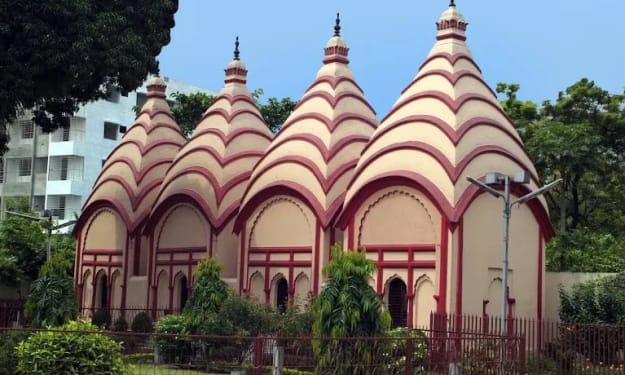
Dhakeshwari Temple: The Spiritual Heart of Dhaka Introduction Nestled in the bustling heart of Dhaka, Bangladesh’s capital city, lies a temple that stands as a symbol of the country's rich religious diversity and historical depth—the Dhakeshwari Temple, also known as Dhakeshwari Mondir. Revered as the national temple of Bangladesh, it is a beacon of Hindu heritage in a predominantly Muslim country, offering not just a place of worship but also a sanctuary of culture, tradition, and resilience. With an origin that traces back over eight centuries, Dhakeshwari Temple serves as a bridge between ancient times and contemporary society.
By Dipu Sarkar9 months ago in History



Comments
There are no comments for this story
Be the first to respond and start the conversation.