Trivia
A Family Affair
Time goes fast. It feels like just yesterday I was young, full of dreams, and convinced that life would stretch out endlessly. Now, as I look back, I realize how fleeting the moments were. And how many of life's sweetest moments are connected to our fourth sense.
By Scott Christenson🌴11 months ago in History
The Strangest Wars in History
History is full of wars—most of them long, bloody, and depressingly predictable. But every now and then, a war comes along that is so ridiculous, so utterly baffling, that you have to wonder if the people involved were just bored and looking for something to do.
By Albert Acromond11 months ago in History
9 million year old shark ancestor fossil found in the desert
9 million year old shark ancestor fossil found in the desert. A recent discovery has left scientists and enthusiasts alike astonished a 9 million year old shark ancestor fossil was found buried beneath layers of scorching desert sand. This revelation challenges our understanding of prehistoric life and raises fascinating questions about how an ocean predator ended up in an arid landscape. While the idea of a shark fossil in the middle of a desert seems almost unbelievable it is a testament to the ever changing nature of our planet. To understand this phenomenon it is essential to look back millions of years when the Earth was vastly different from what we see today. Scientists explain that the very desert where the fossil was found was once submerged beneath a vast ocean. This prehistoric body of water teemed with marine life including sharks before geological and climatic shifts transformed it into the barren land we now see. The fossilized remains of this ancient shark serve as a reminder of a time when this region was part of a thriving underwater ecosystem. One of the key reasons behind such drastic transformations is the movement of tectonic plates. These massive sections of the Earth's crust are constantly shifting albeit at an imperceptibly slow pace. Over millions of years these movements can cause oceans to retreat and landmasses to rise reshaping entire continents. What was once a deep ocean floor eventually became exposed land subject to erosion and the relentless forces of nature.
By Adnan Rasheed11 months ago in History
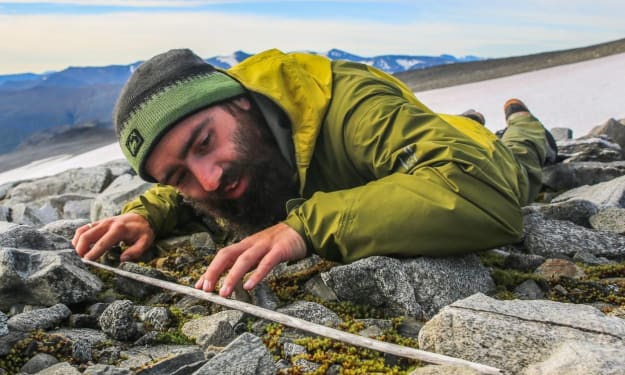
Archaeologists are finding mysterious ancient objects on Norway's melting glaciers.
Archaeologists are finding mysterious ancient objects on Norway's melting glaciers. The melting glaciers of Norway are exposing a hidden world frozen in time objects from the Stone Age Iron Age and medieval periods that provide rare glimpses into the lives of ancient humans. As climate change accelerates glacial melt archaeologists are racing against time to recover and study these remarkable artifacts before they are lost forever. From primitive wooden tools and well preserved textiles to weapons and human remains each discovery helps researchers unravel the mysteries of the past.
By Adnan Rasheed11 months ago in History
Archaeologists Discovered 22000 Year Old Tracks That May Be From the World’s First Vehicle.
Archaeologists Discovered 22000 Year Old Tracks That May Be From the World’s First Vehicle. The discovery of 22000 year old tracks at White Sands National Park in New Mexico has shed new light on early human innovation and transportation methods. These tracks as revealed in a recent study published in Quaternary Science Advances suggest that ancient humans used a rudimentary vehicle known as a travois to transport goods or belongings. This finding challenges conventional perspectives on early transportation pushing back the timeline of non wheel based vehicles much further than previously thought. At the heart of this discovery are the linear impressions found alongside human footprints. Unlike ordinary tracks left by people walking these marks suggest the dragging of wooden poles indicating the use of a travois. This is a simple yet effective means of carrying heavy loads by lashing two poles together often in the shape of a triangle and pulling them along the ground. Such a transport method was widely used by Indigenous peoples in North America well into recent history particularly among the Plains tribes who adapted it for use with horses. However, this new discovery suggests that its use dates back much further to a time when humans were still navigating the challenges of Ice Age survival.
By Adnan Rasheed11 months ago in History
Guamanian: Culture, Language & Heritage
The Guamanian Chamorro people have a unique culture deeply rooted in the Mariana Islands. This chain of islands is in the Pacific. Their culture is a mix of old traditions and new influences. It shows a strong community spirit and respect for their heritage.
By The Big Bad 11 months ago in History
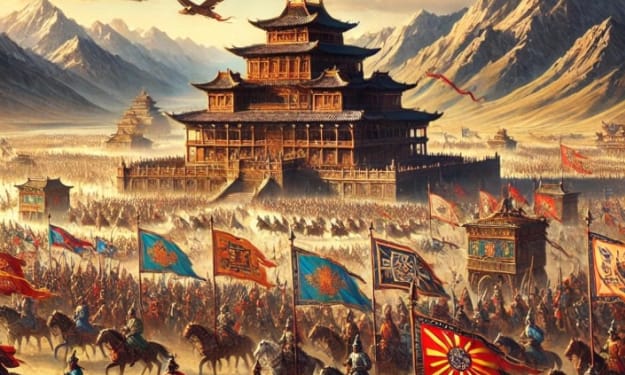
The Mongol Empire at Its Peak: Power and Legacy
The Authority Afterwards Genghis Khan: The Rise of His Heirs Genghis Khan, the allegorical Mongol leader, larboard abaft an authority that connected above Asia and into Europe. However, his afterlife in 1227 did not mark the abatement of the Mongols; rather, it set the date for an alike greater expansion. His heirs, accomplished in warfare and governance, agitated advanced his vision, transforming the Mongol Authority into the better abutting authority in history.
By Say the truth 11 months ago in History
Hidden in the clay clues to Harappa’s diet.
Hidden in the clay clues to Harappa’s diet. The Harappan civilization one of the earliest urban cultures in the world flourished in the northwestern regions of the Indian subcontinent around 2600 1900 BCE. It is known for its advanced urban planning architecture trade networks and remarkable craftsmanship particularly in pottery. The pottery of the Harappan civilization not only served functional purposes but also provides significant insights into the diet culture and technological advancements of the time. Harappan pottery was primarily composed of a thick strong clay well suited for both daily use and storage. Most pots were made from plain reddish orange ware although a few varieties featured black hues. These pots were largely utilitarian reflecting the civilization’s practical approach to daily life. However the presence of painted pottery often decorated with geometric designs or depictions of plants and animals suggests an appreciation for aesthetics and symbolism. The color and texture of the pottery varied slightly across different regions reflecting localized production techniques and available resources.
By Adnan Rasheed11 months ago in History
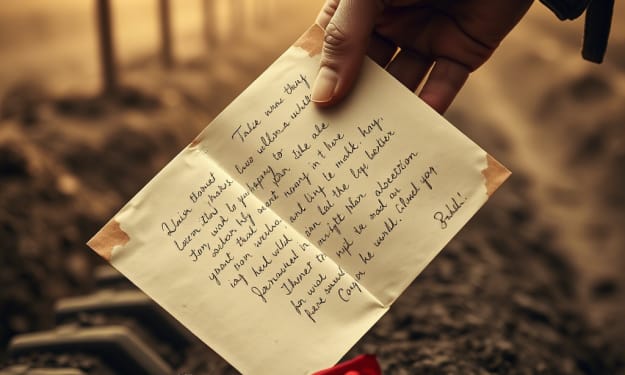
Roses, Rifles, and Regrets: A Love Written in Gunpowder
Paris, July 17, 1916 My Dearest Élodie, They said the war would be swift. They lied. Today, the mud swallowed another man whole. One moment, he was lighting a cigarette; the next, he was gone, like a candle snuffed by the wind. It’s strange how silence follows death—not screams, not panic. Just quiet acceptance, as though the earth, having claimed its due, permits us a moment of reflection.
By Alain SUPPINI11 months ago in History
Archaeologists may have found pharaoh's second tomb.
Archaeologists may have found pharaoh's second tomb. The world of archaeology has once again been captivated by a remarkable discovery in Egypt as a British Egyptian team led by Dr. Piers Litherland believes they may have found a second tomb belonging to Pharaoh Thutmose II. This potential find comes shortly after Dr. Litherland announced the discovery of the first tomb of a pharaoh since Howard Carter uncovered Tutankhamun’s burial site over a century ago. Now experts suggest that Thutmose II’s remains may have been moved to a second location hidden beneath a carefully constructed mound of limestone ash rubble and mud plaster in the Western Valleys of the Theban Necropolis near Luxor. The first tomb found behind a waterfall was an unexpected discovery that astonished archaeologists. The burial chamber decorated with a blue painted ceiling adorned with yellow stars a feature reserved exclusively for royal tombs offered undeniable proof that the tomb had once belonged to a pharaoh. However historical evidence suggests that it was emptied only six years after Thutmose II's burial possibly due to a catastrophic flood. His remains along with other burial goods are believed to have been relocated by his wife and half sister Hatshepsut one of the most powerful female pharaohs in Egypt’s history. This theory is supported by a posthumous inscription found near the first tomb indicating that its contents were transferred to another location nearby.
By Adnan Rasheed11 months ago in History