Trivia
Why some see the dollar's drop as a sign America is losing its financial might
**The Dollar’s Decline: A Sign of America’s Waning Financial Might? ** In recent months, the U.S. dollar has seen a notable decline against major global currencies, sparking widespread debate among economists, investors, and policymakers. This depreciation is seen by some as a warning sign that America may be losing its long-standing financial dominance, rather than just a market fluctuation. While others see it as part of a natural economic cycle, the perception that the dollar’s weakening reflects a deeper erosion of U.S. financial influence is gaining traction.
By GLOBAL NEWS7 months ago in History
Breaking political developments — like Elon Musk’s new party announcement.
Elon Musk Launches the “America Party”: A Bold Challenge to the Two‑Party System Tesla and SpaceX CEO Elon Musk has officially announced the formation of a new political entity, naming it the America Party, marking a significant break from his once-close alliance with former President Donald Trump. The move, triggered by Musk's strong objection to the recently passed “One Big Beautiful Bill” (BBB), signals his intent to fundamentally alter the American political landscape .
By Waseem Khan 7 months ago in History
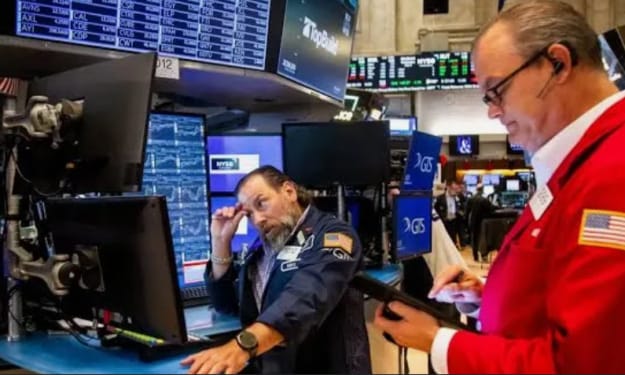
Dow futures fall as Trump officials signal limited breathing room before tariffs ‘boomerang back’
**Dow Futures Fall as Trump Officials Warn of Tariff Repercussions** U.S. stock index futures fell early Monday morning after key Trump administration officials signaled that there may be limited time before escalating tariffs on China and other trade partners start to backfire on the American economy. Dow futures dropped more than 150 points as markets digested growing signs that trade tensions are not just here to stay—but may intensify in ways that hurt domestic industries.
By GLOBAL NEWS7 months ago in History
the lost map of santorini
It was the summer of 2022 when Maya Kapoor, a 27-year-old travel blogger from Mumbai, arrived on the sparkling Greek island of Santorini. Known for her Instagram page filled with exotic destinations and beautifully edited vlogs, this trip wasn’t meant to be about content. This time, Maya was tired — of algorithms, of online expectations, and most of all, of pretending to be “living the dream.” She needed something real. Something raw.
By haider ali7 months ago in History
The Civilization of the Ottoman Turks: A Legacy of Courtesy, Wisdom, and Deep Spiritual Values
Throughout history, few civilizations have preserved a legacy as refined and spiritually grounded as that of the Ottoman Turks. Emerging from modest beginnings and growing into one of the most powerful empires the world has ever seen, the Ottomans left behind not just tales of conquest, but also rich traditions rooted in manners, respect, and subtle intelligence.
By Ikram Ullah7 months ago in History
Why the US Dollar Is Falling by Record Levels in 2025
Why the value of the US dollar is falling at an unprecedented rate in 2025 During the first half of 2025, the value of the US dollar experienced one of its most significant declines in modern financial history. The dollar has experienced its worst first-half performance in more than five decades, falling more than 10% since January. Investors, economists, and policymakers around the world are concerned due to the steep decline. Understanding the causes of this unprecedented depreciation requires examining a combination of political, economic, and structural factors reshaping global markets.
By GLOBAL NEWS7 months ago in History
Condemned by a Lie: The Ricky Jackson Story and the 43 Years That Justice Forgot
> By Umair Ali Shah Yousafzai Introduction: When Truth Becomes the First Victim What does it mean to lose not just a year or a decade, but an entire lifetime — to a lie? What happens to the human soul when it is buried alive behind concrete and steel, screaming innocence into deaf ears for 43 unrelenting years? The story of Ricky Jackson isn’t a tale told to teach children moral lessons. It is the embodiment of a real-world tragedy, where justice failed so catastrophically that even an apology decades later sounds hollow. It is not only the longest wrongful imprisonment in American history; it is the chilling dissection of a justice system that sentenced an innocent teenager to death based on the coerced testimony of a frightened 12-year-old boy. --- An Ordinary Boy in Cleveland Ricky Jackson was just 18 years old in 1975 — a quiet, thoughtful African-American youth living in Cleveland, Ohio. He had never been arrested, never carried a weapon, never even held a criminal record. He lived in a modest neighborhood, with dreams no different from other boys his age: education, work, and family. But everything changed on a day that should have passed like any other. A local businessman named Harold Franks was shot and killed in broad daylight during an apparent robbery. The incident shocked the community. In the police department’s desperation to find someone to blame, a name was offered by a 12-year-old boy who hadn’t even witnessed the murder. That name was Ricky Jackson. --- A Murder, A Lie, and A Child’s Testimony Eddie Vernon was barely out of childhood when he was approached by police and persuaded — some would say coerced — into identifying Ricky Jackson as the shooter. No physical evidence connected Ricky to the crime. No fingerprints. No murder weapon. No surveillance. Nothing but the fragile words of a frightened boy. Years later, Vernon admitted: > “I didn’t see anything. The police threatened my family, told me they’d put my parents in jail if I didn’t talk.” But in 1975, his word was gold. It was all the prosecution needed. It didn’t matter that other witnesses contradicted him. It didn’t matter that Ricky had an alibi. Vernon’s coerced statement became the scaffold on which Ricky’s fate was hung. --- The Trial: Theater of Injustice The trial was swift. No physical evidence was presented. No cross-examination of Vernon’s statement truly tested its validity. Ricky, along with two friends — Wiley and Ronnie Bridgeman — were sentenced. Ricky Jackson received the death penalty. He was 18. He had not yet attended college. He had never fallen in love. He had no children. And now, the state was going to kill him. But before the execution could be carried out, Ohio overturned the death sentence to life imprisonment. The reprieve wasn’t mercy. It was a new kind of suffering — the long, slow death of a man behind bars. --- From Death Row to Life Sentence: A Prisoner of Time For the next four decades, Ricky Jackson became a ghost within America’s prison system. He was moved from facility to facility. He missed the funerals of his parents. He never saw a computer, never used the internet, never walked into a supermarket again. He watched the world evolve through metal bars and razor wire — watched new presidents rise and fall, watched the Cold War end and 9/11 reshape history, all from within a concrete cage. But while his body was confined, his mind clung to hope. “I knew I was innocent,” he would later say in an interview with The Washington Post. “I couldn’t let go of that, or I’d go crazy.” Yet hope is not armor. It doesn’t keep out the dark. The nights were long. The guiltless solitude maddening. --- The Psychology of a Stolen Life What does 43 years in prison do to a human being? Psychologists describe wrongful imprisonment as a form of chronic trauma, similar to post-war PTSD but complicated by betrayal trauma — the deep psychic injury caused when the very institutions meant to protect you, turn against you. For Ricky Jackson, this betrayal was total. The court system. The police. The media. Even his own neighbors who believed the headlines more than his voice. Everyone walked away from him, except time — and even that, it seems, walked slower in his cell. He spent birthdays alone. Holidays watching TV news flashes from a flickering screen bolted to a prison wall. He wasn’t merely doing time — time was doing him. As he later told CBS News, > "The hardest part wasn’t the food, or the cold, or even the violence. It was waking up every day knowing that no one believed me… and wondering if they ever would.” --- 2011 – The First Crack in the Wall It took 36 years before the first sign of redemption appeared. Eddie Vernon, now in his late 40s, broke down. Years of guilt had gnawed at his conscience. Encouraged by a local pastor, Vernon came forward and admitted his testimony had been a lie — a lie told under police pressure, not malice. “I was just a scared little boy,” he said under oath. This single act of courage — the reversal of a lie — shook the very foundations of Ohio’s justice system. The case was re-opened. And finally, for the first time in 37 years, someone listened to Ricky Jackson. --- 2014 – The Day the Sky Opened On November 21, 2014, Ricky Jackson walked out of prison a free man. There were no parades. No orchestras. Just a quiet Cleveland morning, the wind soft and cold, and the silence of a man tasting sunlight after four decades. He was 61. His hair was gray. His face had aged. He was no longer the young man wronged by the system — he was a living monument to how long justice can take to arrive. When asked if he felt hatred, he simply said: > “No. If I held onto hate, I’d still be in prison. Just a different one.” --- Forgiveness Over Fury Ricky’s refusal to embrace bitterness wasn’t naïve. It was radical. His strength wasn’t forged in fury, but in faith — not religious dogma, but a deeper, spiritual belief that forgiveness is freedom. Many exonerees become bitter, angry, even broken. But Ricky stood tall. He smiled in interviews. He talked about healing. He spent time with his siblings. He walked in parks and marveled at things people take for granted — the softness of carpet, the click of a smartphone, the taste of fresh fruit. He didn’t just get released. He re-learned how to live. --- The Legal Aftermath: Can Justice Be Priced? In 2016, the state of Ohio awarded Ricky Jackson a $1 million settlement under its wrongful imprisonment compensation program. But even the government admitted — no money could truly compensate for what had been stolen. As The New York Times wrote, > “This was not just the loss of years. It was the theft of a life.” That $1 million covered lost wages, emotional trauma, and punitive damages. But how do you put a price tag on never being a husband, never raising children, never hearing your mother’s voice again? For Ricky, the money was a symbolic apology. But no amount could erase the decades of injustice. --- America’s Shame: A Broken Justice System Ricky Jackson’s case is not an isolated tragedy. According to the National Registry of Exonerations, more than 3,400 people in the United States have been exonerated since 1989 — many of them Black men, many convicted based on flawed eyewitness testimony, police misconduct, or prosecutorial overreach. A study by the Innocence Project shows that false eyewitness identification accounts for nearly 70% of wrongful convictions later overturned by DNA evidence. Ricky's case adds a horrifying statistic: He spent more time behind bars than any other wrongfully convicted person in U.S. history. His story has become a textbook case in law schools, a subject of documentaries (The Guardian, BBC, PBS), and a haunting reminder that the legal system is only as just as those who operate it. --- 🕊 The Role of the Media: Silenced Then, Shouted Now In 1975, when Ricky Jackson was first arrested, the media reported it as an open-and-shut case. Local Cleveland headlines ran with phrases like “Teen Accused in Fatal Robbery” and “Quick Arrest After Shooting”. There was no in-depth investigation. No challenge to the lack of physical evidence. No empathy for a young man with no prior record. He was Black, poor, and accused — and that was enough. It took decades for the media to revisit his story. When the truth finally emerged, national outlets like The New York Times, BBC, The Guardian, CNN, and NPR covered the injustice. Documentaries followed. Podcasts interviewed Ricky. Legal journals dissected the case. But the media was late. Too late. For 43 years, it had ignored him — and that silence was complicity. In an interview with NPR, Ricky put it plainly: > “If someone had just listened back then… really listened… maybe all of this could’ve been avoided.” The media's redemption, much like the justice system’s, came long after the damage was done. --- The Innocence Projects: Saving Lives in the Shadows Ricky Jackson owes his freedom not just to Eddie Vernon’s confession, but to the relentless efforts of organizations like the Ohio Innocence Project. These nonprofits, often underfunded and overworked, have dedicated themselves to correcting wrongful convictions through new evidence, DNA testing, and legal appeals. Without their advocacy, Ricky’s case might have remained buried — like hundreds of others still lost in legal purgatory. Their work reminds us of one chilling truth: For every Ricky Jackson who gets justice, there may be ten more who never will. --- Psychological Fallout: Life After a Life Lost (Your chosen core theme — expanded further here) The release from prison did not end Ricky’s sentence. For many exonerees, life outside is a different kind of prison. The world they return to has changed beyond recognition. Technology is baffling. Old friends are gone. Social trust is shattered. The smallest tasks — using a microwave, unlocking a smartphone — feel foreign. Ricky spoke about this in a 2017 The Atlantic feature: > “I didn’t know what a debit card was. I didn’t know how to cross the street without looking over my shoulder. Even in freedom, I felt like a prisoner.” He struggled with anxiety, depression, insomnia. Prison had reprogrammed his instincts. Freedom, once longed for, felt overwhelming. Therapists describe this as institutional PTSD — the brain’s adaptation to long-term survival in a hostile environment. Years of hyper-vigilance, suppressed emotions, and rigid routines leave permanent marks on the psyche. Yet, Ricky did not let it break him. He faced his trauma like a veteran returning from a battlefield — scarred, but not surrendered. --- Faith and the Human Spirit: A Quiet Revolution Ricky never publicly aligned with a religious denomination, but his language revealed something deeper — a spiritual resilience forged in solitude. He once said: > “When you’re in a cell alone, you start talking to yourself. But if you talk long enough, you start hearing answers. Maybe they’re your own voice. Maybe they’re God’s. But they keep you sane.” Faith — whether in God, justice, or one’s own soul — was Ricky’s companion when the world forgot him. He did not turn to hatred or revenge. He turned inward, and what he found was strength. --- When a Nation Apologizes Too Late The government of Ohio issued a formal apology to Ricky Jackson. It came with a settlement check and some public acknowledgment of its mistake. But justice delayed is justice denied. No amount of money, no legal brief, no governor’s signature can return the 15,000 days that Ricky spent confined — days when he could have been a father, a friend, a free man. As The Guardian wrote in its editorial on the case: > “The apology is polite. The injustice was barbaric.” --- Lessons for the World: Truth, Justice, and the Power of a Single Lie This story is not just American. It is universal. It speaks to every nation where power overrides truth. Where the poor are expendable. Where the law serves convenience, not conscience. Ricky Jackson’s tragedy is a mirror — held up to us all. The most terrifying thing about this case is how easy it was to ruin a life: One false witness. One negligent investigation. One rushed trial. And four decades gone. It is a warning to courts, police, media, and society at large — that truth must never be hurried, that justice must never be assumed, and that no lie is ever small when it costs a man his future. --- Final Reflections: Let No Other Ricky Jackson Be Forgotten Ricky Jackson is free now. He smiles in photographs. He speaks at schools. He mentors at-risk youth. He is trying to build a life from ashes. But behind that smile is the echo of stolen time. He is not just a man. He is a symbol. Of injustice survived. Of forgiveness chosen. Of a system that must do better. We owe him more than headlines. We owe him change. Because somewhere, right now, another 18-year-old boy sits in a cell — innocent, unheard, and condemned by a lie. May we find him before it's too late. --- 📚 References & Sources: The New York Times: “Freed After 39 Years, Ricky Jackson Reflects on Injustice” (2014) BBC News: “Wrongfully Jailed Man Free After 39 Years” (2014) The Guardian: “The Longest Wrongful Imprisonment in US History” (2015) NPR: “Ricky Jackson Speaks After 43 Years in Prison” (2016) The Atlantic: “Psychological Toll of Wrongful Convictions” (2017) Ohio Innocence Project: Legal documentation and case archive National Registry of Exonerations: Official record of U.S. wrongful convictions ---
By Umair Ali Shah 7 months ago in History
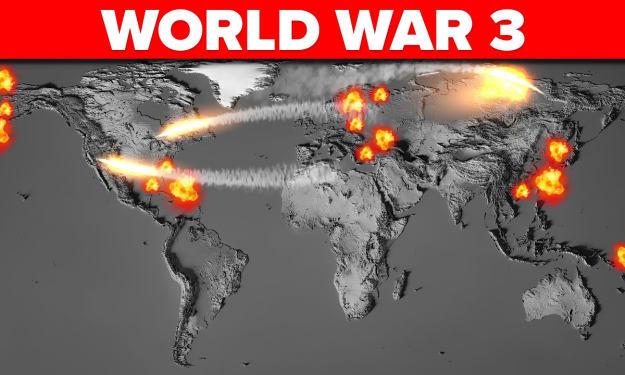
Taiwan, Ukraine, or the Middle East: Which Flashpoint Led to World War III?
Taiwan, Ukraine, or the Middle East: Which Flashpoint Led to World War III? For years, global leaders warned of the possibility of a third world war. Tensions were rising, alliances shifting, and technology advancing at a pace far faster than diplomacy. But no one could predict exactly where the first spark would ignite the flames of a global conflict. In the end, three major flashpoints—Taiwan, Ukraine, and the Middle East—stood on the edge. Each had the potential to trigger a war unlike anything the world had seen before. But which one actually did?
By Ali Asad Ullah7 months ago in History
Is World War III Really Coming in 2025? Analyzing Global Tensions
Is World War III Really Coming in 2025? Analyzing Global Tensions In the ever-shifting landscape of international relations, the specter of a third world war looms as a persistent, albeit nebulous, possibility. The year 2025 has surfaced in geopolitical discourse as a critical juncture, fueled by escalating tensions among global powers, intensifying proxy conflicts, and rapid technological advancements in warfare. Yet, amid the cacophony of speculation and alarmism, it is imperative to dissect the underpinnings of these tensions with rigor and nuance, moving beyond sensationalism to understand whether a full-scale global conflagration is indeed imminent or merely an extrapolation of contemporary anxieties.
By Ali Asad Ullah7 months ago in History