
Is World War III Really Coming in 2025? Analyzing Global Tensions
Nuclear Deterrence in a Changing Era: Risks and Realities

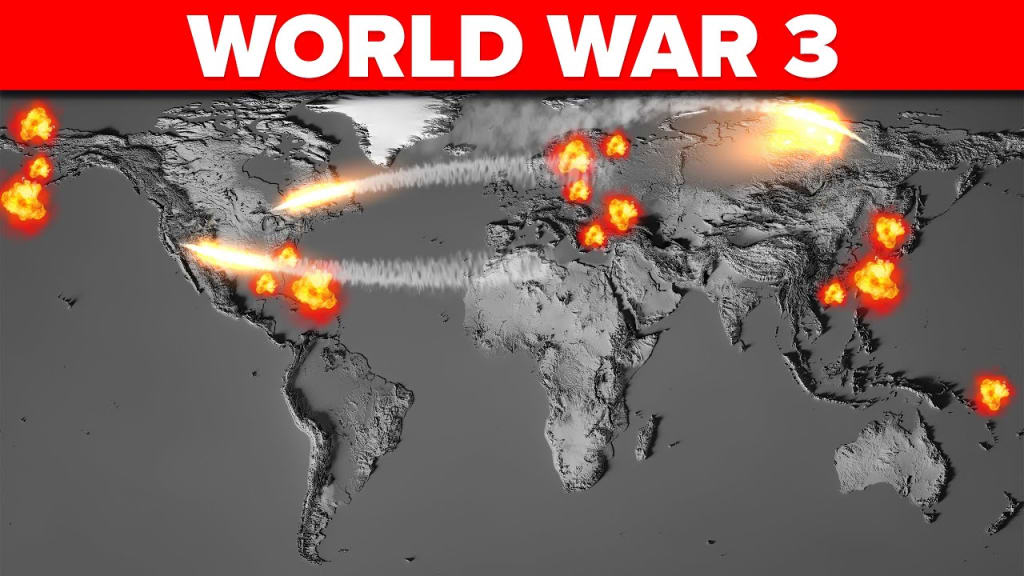
Is World War III Really Coming in 2025? Analyzing Global Tensions
In the ever-shifting landscape of international relations, the specter of a third world war looms as a persistent, albeit nebulous, possibility. The year 2025 has surfaced in geopolitical discourse as a critical juncture, fueled by escalating tensions among global powers, intensifying proxy conflicts, and rapid technological advancements in warfare. Yet, amid the cacophony of speculation and alarmism, it is imperative to dissect the underpinnings of these tensions with rigor and nuance, moving beyond sensationalism to understand whether a full-scale global conflagration is indeed imminent or merely an extrapolation of contemporary anxieties.
At the heart of contemporary geopolitical instability lies the strategic rivalry among superpowers, notably the United States, China, and Russia. The post-Cold War era’s unipolarity has given way to a multipolar contestation for dominance, marked by divergent visions for the international order. The United States, anchored in its longstanding position as the preeminent global hegemon, seeks to preserve a liberal international system buttressed by alliances such as NATO and economic frameworks like the Indo-Pacific Economic Framework. Conversely, China’s ascent, characterized by assertive territorial claims in the South China Sea and ambitious Belt and Road infrastructure projects, signals a paradigmatic challenge to Western dominance. Meanwhile, Russia, emboldened by resurgent nationalism and strategic recalibrations, asserts itself through interventions in Ukraine and Syria, as well as cyber operations targeting Western democracies. These complex, overlapping spheres of influence foment an environment rife with mistrust and competition.
One of the most salient risk factors precipitating a potential large-scale conflict is the proliferation and modernization of nuclear arsenals. Despite arms control efforts such as the New START Treaty between the United States and Russia, the erosion of multilateral agreements coupled with technological innovations in hypersonic missiles and cyber capabilities introduces unprecedented volatility. The doctrine of mutually assured destruction, which historically served as a deterrent to nuclear war, now grapples with destabilizing developments such as the deployment of low-yield nuclear weapons and the integration of artificial intelligence into command and control systems. These advancements could lower the threshold for nuclear use, either through miscalculation or inadvertent escalation.
Parallel to the nuclear dimension, the advent of cyber warfare and artificial intelligence has transformed the strategic calculus. Cyber operations enable states to conduct clandestine attacks on critical infrastructure, financial systems, and military networks without crossing traditional kinetic thresholds. The opaque attribution of cyberattacks complicates diplomatic responses and exacerbates paranoia among rival states. AI-enhanced autonomous weaponry further disrupts conventional deterrence models by introducing the possibility of rapid, automated conflict escalation. The convergence of these technologies mandates a reevaluation of warfare paradigms, as future conflicts may unfold in domains less visible and more ambiguous than ever before.
Beyond state-centric confrontations, proxy wars and regional flashpoints amplify the risk of broader conflict escalation. The ongoing crisis in Ukraine exemplifies how localized warfare can engender cascading security dilemmas. Western military support to Kyiv and Russian assertiveness create a volatile equilibrium, where miscalculations or accidental clashes could precipitate wider involvement. Similarly, tensions in the Taiwan Strait, fueled by China’s claims over Taiwan and U.S. commitments to its defense, remain a precarious tinderbox. In the Middle East, the interplay of Iranian regional ambitions, proxy militias, and rival powers compounds instability, while the Korean Peninsula continues to harbor latent conflict potential amid North Korea’s nuclear program and belligerent rhetoric.
Economic interdependence, often cited as a mitigating factor against global war, presents a paradoxical dimension to this analysis. The intricacies of global supply chains and mutual market dependencies theoretically disincentivize outright conflict due to mutually assured economic devastation. However, rising protectionism, sanctions regimes, and decoupling efforts, particularly between the U.S. and China, erode this safeguard. The weaponization of economic tools, including trade restrictions and financial sanctions, heightens antagonisms and fosters a zero-sum mindset. In such a milieu, economic vulnerabilities could catalyze political pressures that favor militarized responses.
Furthermore, non-traditional security threats such as climate change, pandemics, and resource scarcity intersect with geopolitical rivalries, compounding instability. Climate-induced disruptions exacerbate competition over arable land, water, and energy resources, potentially igniting conflicts in fragile regions. The global COVID-19 pandemic underscored vulnerabilities in international cooperation and exposed fissures in trust among nations. Such transnational challenges require collective action, yet the current geopolitical environment is characterized by fragmentation and nationalist retrenchment, undermining coordinated responses.
Notwithstanding the litany of risks, several factors temper the inevitability of a World War III scenario in 2025. Diplomatic engagement, albeit fraught, persists through bilateral and multilateral forums aimed at conflict resolution and arms control. The catastrophic lessons of previous world wars resonate in strategic calculations, fostering cautious deliberation among decision-makers cognizant of the existential stakes. Additionally, the asymmetric nature of modern warfare, emphasizing economic, cyber, and informational domains, suggests that future conflicts may diverge from the traditional kinetic models that defined the twentieth century.
In conclusion, while the geopolitical dynamics of 2025 present a complex tapestry of risks and rivalries capable of precipitating large-scale conflict, the deterministic assertion that World War III is inevitable remains unsubstantiated. The confluence of superpower competition, technological innovation, regional conflicts, and non-traditional threats creates a volatile environment requiring vigilant diplomacy, robust arms control frameworks, and adaptive security architectures. Ultimately, the trajectory toward or away from global war will hinge upon the strategic choices of states, the resilience of international institutions, and the collective will to prioritize peace amid uncertainty.
About the Creator
Ali Asad Ullah
Ali Asad Ullah creates clear, engaging content on technology, AI, gaming, and education. Passionate about simplifying complex ideas, he inspires readers through storytelling and strategic insights. Always learning and sharing knowledge.
Keep reading
More stories from Ali Asad Ullah and writers in History and other communities.
The Beauty of New York: A City of Timeless Wonders and Endless Change
The Beauty of New York: A City of Timeless Wonders and Endless Change By Ali Asad Ullah I still remember the first time I stepped onto the streets of New York City. The air buzzed with a strange energy — a mix of hope, chaos, and possibility that you could feel pulsing beneath every footstep. Coming from a quieter place, it was overwhelming at first. The towering skyscrapers seemed to touch the clouds, the cacophony of voices, horns, and footsteps merged into a strange kind of music, and every corner seemed to whisper a story.
By Ali Asad Ullah8 months ago in History
The Lucky Japanese City That Escaped the Atomic Bomb Twice
In the final months of World War II, the United States prepared to deploy a new and terrifying weapon that would forever change warfare: the atomic bomb. Two Japanese cities—Hiroshima and Nagasaki—would ultimately suffer unimaginable devastation in August 1945. Yet few people know that another city, rich in culture and history, came dangerously close to sharing the same fate. That city was Kyoto, often described as the “lucky city” of Japan because it escaped being targeted not once, but twice.
By Irshad Abbasi 2 days ago in History


Comments
There are no comments for this story
Be the first to respond and start the conversation.