
Breaking political developments — like Elon Musk’s new party announcement.
Elon Musk Launches the “America Party”: A Bold Challenge to the Two‑Party System

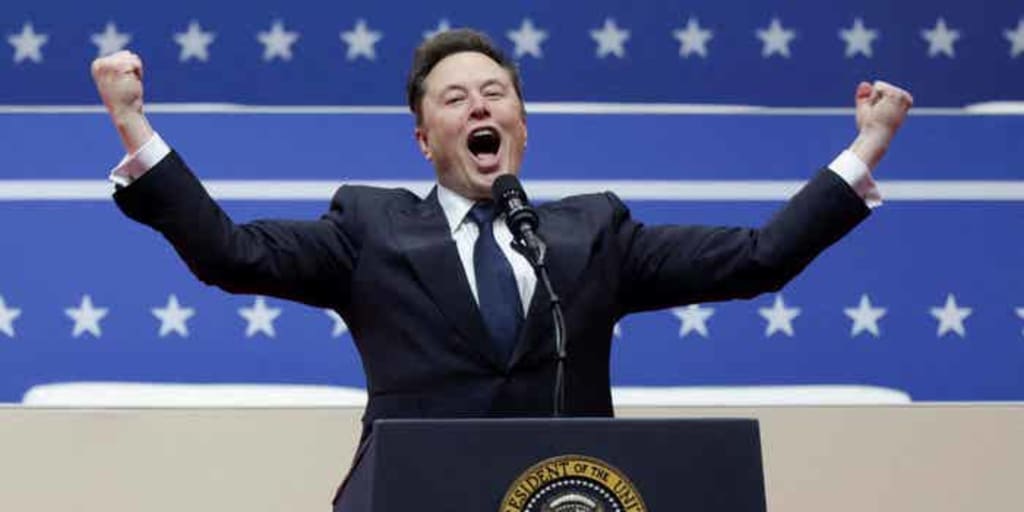
Elon Musk Launches the “America Party”: A Bold Challenge to the Two‑Party System
Tesla and SpaceX CEO Elon Musk has officially announced the formation of a new political entity, naming it the America Party, marking a significant break from his once-close alliance with former President Donald Trump. The move, triggered by Musk's strong objection to the recently passed “One Big Beautiful Bill” (BBB), signals his intent to fundamentally alter the American political landscape .
What Sparked the Announcement?
The Bill that Broke the Alliance
Signed into law on July 4, the BBB combined sweeping tax cuts and extensive federal spending. Musk sharply criticized it as “debt slavery,” declaring it a threat to national stability . Disillusioned with financial priorities he once supported, he reversed course with the rhetoric: “When it comes to bankrupting our country with waste & graft, we live in a one-party system, not a democracy. Today, the America Party is formed to give you back your freedom,” he posted on X .
Massive Public Backing in Real Time
Musk’s decision followed a July 4 poll on X, in which more than 1.2 million users participated. Approximately two‑thirds voted in favor of forming a new party —a signal he interpreted as a mandate to proceed.
Strategic, Not Presidential — For Now
Musk clarified that the America Party will not immediately run presidential candidates. Instead, its initial focus is tactical: winning a small number of pivotal seats in Congress—“two or three Senate seats and eight to ten House districts”—where razor‑thin margins could give the party outsized legislative influence .
He added that while backing a presidential candidate “is not out of the question,” the first twelve months will center on shaping the next midterms .
Core Ideals: Freedom, Fiscal Conservatism, Tech
While no formal platform has been released, Musk has indicated several guiding principles:
Fiscal conservatism, with aggressive deficit reduction
Modernizing the military through AI and robotics
Less regulation, especially in energy and tech
Pro‑Bitcoin, pro‑Second Amendment
Commitment to freedom of speech and even pronatalist policies .
These positions reflect Musk’s broader ideological leanings toward efficiency, decentralization, and a technologically driven future.
Breaking with Trump — and What Comes Next
Public Clashes
Trump's response was swift and scathing: he branded the party “ridiculous” on Truth Social and claimed Musk had “gone completely off the rails,” accusing him of sowing confusion within the U.S.’s entrenched two‑party structure . Trump also alleged Musk’s criticisms were driven by the BBB’s reduced EV incentives rather than a principled stand.
Political and Economic Fallout
The development has spooked the financial world. Tesla’s stock dropped roughly 7–7.5% following the announcement , as investors expressed concern that Musk’s political ambitions could distract from Tesla’s core business and lead to regulatory backlash .
Practical Challenges and Legal Hurdles
Experts assert that forming a national party is a monumental task—even for the world’s richest individual. As CBS News highlights, each U.S. state has different ballot‐access laws: many require a huge number of signatures, or maintaining a certain percentage of registered members or votes in statewide races . In California, for example, Musk’s party would need to either register 0.33% of all voters (about 75,000 people) or collect over a million signatures . Given these steep barriers, building even a small-scale national presence will likely take years and very substantial resources .
Supporters and Internal Skepticism
High-Profile Backers
Notable figures in Musk’s orbit have voiced encouragement: billionaire Mark Cuban promised logistical support, while Anthony Scaramucci offered to discuss the initiative. Indian‑American Tesla executive Vaibhav Taneja has also signed on .
Wall Street Watchdogs
Corporate boards and analysts have urged Musk to prioritize his companies over political ventures. Treasury Secretary Scott Bessent said board members preferred Musk focus on business, and analysts warn that continued political entanglement may harm Tesla’s market position .
A Tactical Move or a Longevity Bet?
Strategists are divided on whether the America Party is a serious long-term player or mainly a tactical tool. Supporters see it as a way for Musk to disrupt entrenched systems and push legislative reform. Critics argue it may be more of a vanity—or distraction—project, hamstrung by institutional inertia . Historical precedent from third parties like Ross Perot’s in 1992 or the Libertarian and Green parties suggests deep resistance and structural disincentives that continue to favor Democrats and Republicans .
---
Bottom Line
Elon Musk’s creation of the America Party is both audacious and polarizing—designed to channel his ideological disillusionment with the current political order into targeted congressional influence. Whether this endeavor matures into a durable political force or fades as a high-profile protest remains to be seen. For now, it plants a marker: Musk is no longer just a business magnate or technology visionary—he is staking a claim for political disruption.
---
🔍 Key Responses at a Glance
Trump: “ridiculous,” “off the rails”
Wall Street: Tesla stock dropped ~7%, stoking investor anxiety
Experts: Ballot access hurdles high; likely years and hundreds of millions needed
---
Curious to dive deeper? I can explore:
The detailed ideological platform of the America Party
Comparison with past third-party efforts
Analysis of state-by-state ballot requirements
Implications for Tesla, SpaceX, and the 2026 midterms
About the Creator
Keep reading
More stories from Waseem Khan and writers in History and other communities.
How to Become an AI Genius
Artificial Intelligence (AI) is no longer the future—it's the present. From self-driving cars to smart assistants, AI is reshaping industries, economies, and daily life. At the heart of this transformation are the AI geniuses—individuals whose ideas and innovations are worth millions, sometimes even hundreds of millions of dollars.
By Waseem Khan 8 months ago in Education
The Year 1967 in Review: Facts, Trivia, and Historic Highlights
This quick read is a collection of fun facts, trivia, and historic events from the year 1967. Discover the year’s top news stories, most influential people, sports facts, grocery prices, entertainment trivia, and much more.
By Gregory DeVictor2 days ago in History


Comments
There are no comments for this story
Be the first to respond and start the conversation.