Research
⚔️ The Lindisfarne Raid of 793: The Thunder Before the Storm of the Viking Age 🛡️
In the year 793 CE, a catastrophe unfolded on the eastern shores of Anglo-Saxon England that would echo across the continent and mark the beginning of one of the most transformative eras in European history: the Viking Age. This event, the violent raid on the monastic island of Lindisfarne, was not the first Scandinavian incursion into the British Isles, but it was the first to shock contemporary chroniclers so deeply that it made its way into the annals of medieval history as a moment of divine terror and political warning. It is now recognized by historians as the symbolic start of nearly three centuries of Norse expansion, violence, exploration, and cultural exchange.
By Kek Viktor8 months ago in History
🛡️The Viking Shield Wall Which Changed The Viking Age
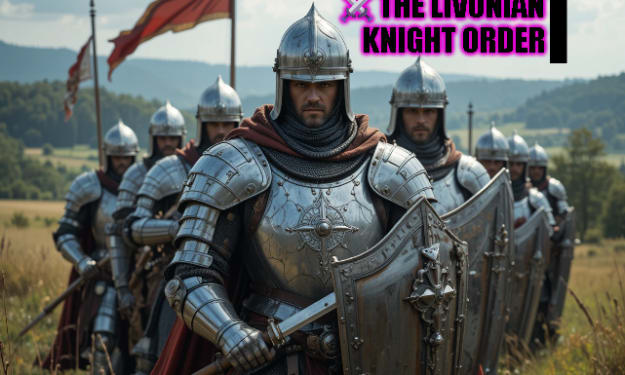
🛡️The Viking Shield Wall Which Changed The Viking Age The Viking shield wall stands as one of the most iconic military formations in medieval warfare, a symbol of Norse martial prowess and tactical discipline that played a crucial role in the Viking Age (c. late 8th to 11th centuries). More than just a static defensive line, the shield wall was a dynamic and adaptable formation that allowed Viking warriors to excel in varied combat scenarios—from brutal open-field battles and lightning raids to sieges, urban warfare, and even amphibious landings. This article explores the shield wall’s construction, tactical function, and its pivotal role in key Viking battles that shaped European history.
By Kek Viktor8 months ago in History
🛡️ The Greek Phalanx: The Shield Wall That Changed the Ancient World
The Greek phalanx stands as one of the most iconic and influential military formations in world history, epitomizing the unique fusion of military innovation and societal structure that defined classical Greece. Emerging from the gradual militarization and social development of Greek city-states (poleis) during the early Archaic period (circa 8th century BCE), the phalanx embodied a collective approach to warfare, based on discipline, unity, and the combined strength of heavily armed infantry known as hoplites. This formation was not merely a tactical arrangement but a reflection of the social and political dynamics of Greek society, where military service and citizenship were deeply intertwined.
By Kek Viktor8 months ago in History
Ancient Worms Revived After Thousands of Years in Siberian Permafrost.
Ancient Worms Revived After Thousands of Years in Siberian Permafrost:- A Scientific Breakthrough. In a groundbreaking discovery, Russian scientists have successfully revived two prehistoric worms that were frozen in Siberian permafrost for thousands of years. Found in the permafrost of Siberia, these nematodes—a type of microscopic soil-dwelling worm—began moving and eating shortly after being thawed. This remarkable achievement provides new insights into the resilience of life and opens doors to understanding ancient climates, cryopreservation, and even the potential for long-term survival in extreme conditions.
By Saddam Hossen 8 months ago in History
The Ancient and Enduring Relationship Between Humans and Bed Bugs.
The Ancient and Enduring Relationship Between Humans and Bed Bugs. For over 60,000 years, bed bugs have been humanity’s unwelcome companions, evolving alongside us as we transitioned from cave dwellers to urban settlers. Recent research from Virginia Tech, published in Biology Letters, reveals that the history of bed bugs (Cimex lectularius) is deeply intertwined with human migration, settlement patterns, and even technological advancements . This article explores the fascinating co-evolution of humans and bed bugs, from prehistoric caves to modern cities, and examines how this persistent pest has adapted to survive despite centuries of eradication efforts.
By Saddam Hossen 8 months ago in History