Research
The First Automotive Accident in the World: Historical Incident in Transport Modes
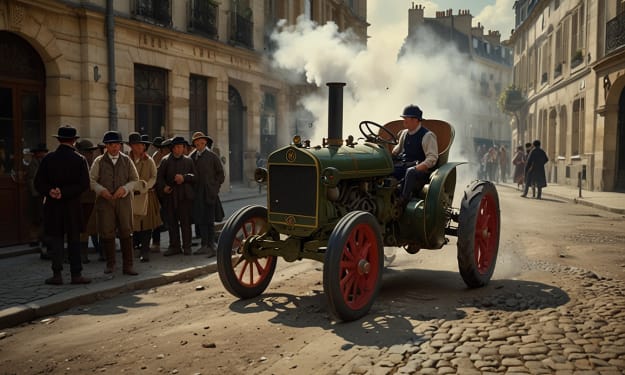
The first known car accident occurred in 1771. Modern road safety and automobile engineering as we know it today has only one particular day to its past. And that was the steam-powered tractor designed by Nicolas-Joseph Cugnot, the first automobile, crashing on the streets of Paris. It is rather difficult to imagine an automobile accident in a time when cars such as we understand them did not exist. Actually, the steam contraption, invented by Cugnot was one of the crucial moments in modern history. And the accident, though minor, became an historical event.
By Abhay kumar chauhanabout a year ago in History
Ukrainian Theatre - Nationalism and the Nationalist Theatre
Early on in her book Theatre & Nation, Nadine Holdsworth draws from a number of sociologists and theorists to define three key terms: nation, nationalism, and national identity. These are important terms to be distinguished; after all, the purview of this essay is Ukrainian theatre of national identity. Whether or not this can be conflated with Ukrainian nationalist theatre is a matter of connotation. If, as for many, the term nationalism conjures up images of Nazi Germany, Stalinist Russia, or Trumpist America—all of which have negative connotations—then it may be uncomfortable to ascribe the word nationalist to Ukrainian theatre. After all, if it earned condemnation from the Ukrainian Communist Party, to the point of Kulish’s banishment, arrest, and eventual execution, then it must have been disruptive to some utopian vision that the USSR wanted to achieve.
By Steven Christopher McKnightabout a year ago in History
The After life Preparation of Egyptian King
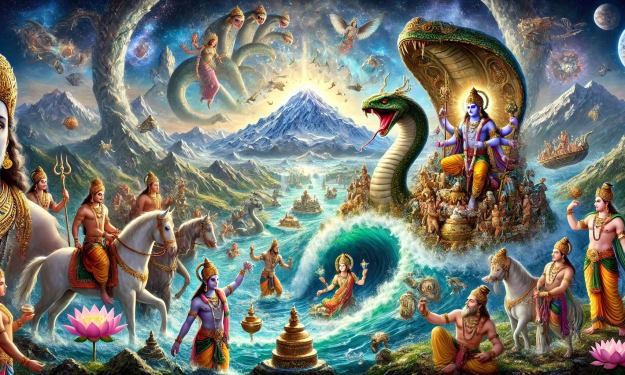
Preparation for the Afterlife The adventure to the afterlife was apparent as abounding with challenges and tests, and alone those who were abundantly able would succeed. For Pharaohs, this alertness was decidedly elaborate, involving both concrete and airy elements. The concrete anatomy had to be preserved, arch to the convenance of mummification. The age-old Egyptians believed that the canning of the anatomy was capital for the soul's adaptation in the afterlife. Without an complete body, the king's ka (vital essence) would be clumsy to acknowledgment to it, authoritative abiding activity impossible.
By Say the truth about a year ago in History
Antoine Laurent Lavoisier: The Father of Modern Chemistry
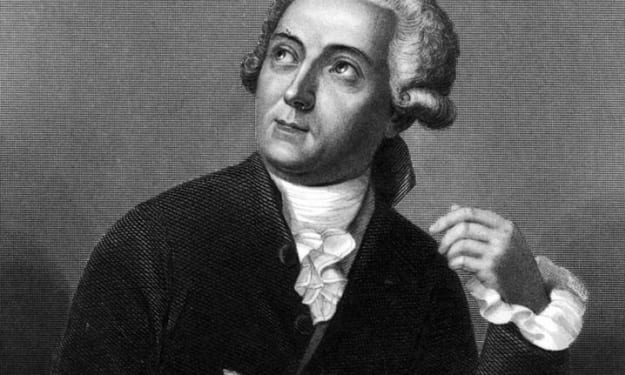
Antoine Laurent Lavoisier: The Father of Modern Chemistry Antoine Laurent Lavoisier (1743–1794) was a pioneering scientist whose work transformed chemistry from a qualitative discipline into a quantitative one. Known as the "Father of Modern Chemistry," his research established fundamental principles still used today. This comprehensive overview of Lavoisier’s life and contributions is divided into key sections.
By Mahalakshmiabout a year ago in History
Ayatollah Ali Khamenei: Iran's Supreme Leader and His Resilient Legacy
Ayatollah Ali Khamenei has been Iran's Supreme Leader since 1989. He sits atop this country with huge influence in this country's government, military, and institutions of faith. Most of this nation's foreign and domestic policy undertaken is through the leadership adopted by Ayatollah Ali Khamenei. His longevity and influence have placed him at the heart of the country's politics.
By Abhay kumar chauhanabout a year ago in History
The Shadow Company
Eliza sat in the sterile, white-walled office, the hum of fluorescent lights overhead cutting through the silence. Across from her, a man in a sharp suit, his face unnervingly calm, slid a sleek, silver device across the table. The logo “NeuraShift” was etched into its surface, a symbol of something far larger than she could have imagined when she first received the invitation.
By Sania Zarmeenabout a year ago in History
The Most DISTURBING Experiment in History: The Stanford Prison Experiment
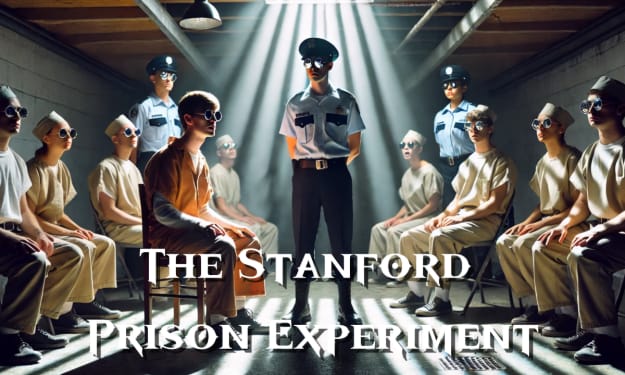
Imagine a group of college students volunteers for a two-week study that promises cash, camaraderie, and a chance to explore the depths of human psychology. Sounds like a breeze, right? Now fast forward six days, and the same “study” has devolved into something straight out of a dystopian nightmare—complete with yelling, psychological breakdowns, and power-hungry guards acting like they just inherited their own kingdom.
By Marveline Merababout a year ago in History
Ukrainian Theatre of National Identity - Russia's Nationalist Problem
With that said, I want to set the stage for the rest of this thesis by calling to attention what I will refer to as Soviet Russia’s “Nationalist Problem.” In a multinational empire, assembled after years of war, civil war, and rebellion, the main concern of the Soviet Union was to make the mechanism of a socialist nation function. Political policies were tried and tested in the early years of the USSR. After the nation had stabilized, for example, a policy of Ukrainization was implemented in the Ukrainian lands, offering the Ukrainian people educational and cultural autonomy. This policy was reversed under Stalin, who instead persecuted Ukrainians who explored ideas related to the nation and criticism of the USSR. Culture and politics were inextricably intertwined; in Russia, theate and theatrical spectacles were explored as strategies to propagandize the public into a sense of Soviet pride. Because the arts were so linked to the political mechanism at the time, an artist operating outside or against that political mechanism was subject to excommunication, imprisonment, and/or death. One political party—the Communist Party—dominated, and lack of membership to it was a fast track to pariah status.
By Steven Christopher McKnightabout a year ago in History
The Most Beautiful Souls in the World
Our world is often obsessed with external appearances, so it's easy to forget the power of inner beauty. We constantly hear about physical beauty, but true beauty comes from within. The most beautiful souls in the world radiate kindness, compassion, empathy, and a genuine love for others. Having a beautiful soul, however, entails what? Does it come naturally, or can it be cultivated?
By Zinnat ara Begumabout a year ago in History
Ukrainian Theatre of National Identity - Chapter Breakdown
Chapter Breakdown & Goals In the first chapter, I set up the key facets of nationalism and nation-building in Ukraine, and bring to light the key figures in the Ukrainian literary pantheon which guided the development of Ukrainian culture for the century following their deaths. To define nationalism and its associated terms in specific relation to the drama, I bring in scholars such as Nadine Holdsworth and Kiki Gounaridou, who introduce terms such as “nation under duress,” “state of the nation play,” “cosmopolitanism,” and “national iconography.” These terms are to be kept in mind for future sections while exploring and discussing specific works in the Ukrainian canon. Afterwards, I dive into the history of early Ukraine under control of the Russian Empire, explore the lives of Taras Shevchenko, Ivan Franko, and Lesia Ukrainka, and discuss their contributions to the Ukrainian literary canon.
By Steven Christopher McKnightabout a year ago in History
Ukrainian Theatre of National Identity - Intro
The following is the introduction to my Master's Thesis, The Construction of National Identity through Theatre in Ukraine in the 1920s and 2020s. In the coming days, I will be posting the full thesis, chapter by chapter. I struggled deciding whether or not to post this here, but I decided ultimately that if it were submitted to academic journals, it would be behind a paywall. This information is important to me, and I would like it to be shared as freely as possible. If you would like the full PDF, click here.
By Steven Christopher McKnightabout a year ago in History