
The Most DISTURBING Experiment in History: The Stanford Prison Experiment
Welcome to the infamous Stanford Prison Experiment (SPE), where good intentions met bad execution and gave us one of the most infamous studies in psychology.

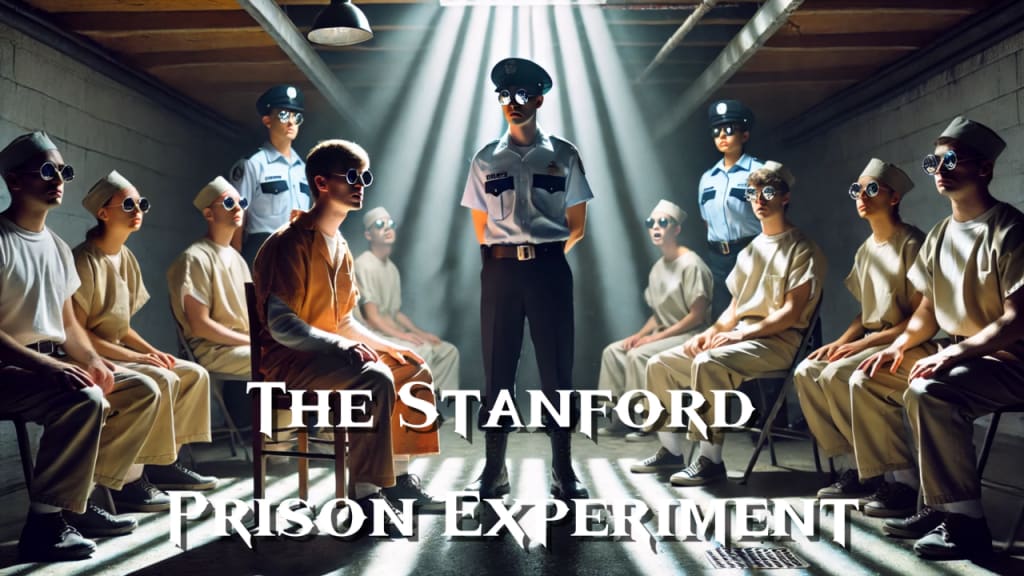
Imagine a group of college students volunteers for a two-week study that promises cash, camaraderie, and a chance to explore the depths of human psychology. Sounds like a breeze, right? Now fast forward six days, and the same “study” has devolved into something straight out of a dystopian nightmare—complete with yelling, psychological breakdowns, and power-hungry guards acting like they just inherited their own kingdom.
Welcome to the infamous Stanford Prison Experiment (SPE), where good intentions met bad execution and gave us one of the most infamous studies in psychology. Whether you’re a psych enthusiast or just here to gawk at how wrong things went, this is a tale of power, ethics, and chaos you won’t want to miss.
Setting the Stage: The Prison in the Basement
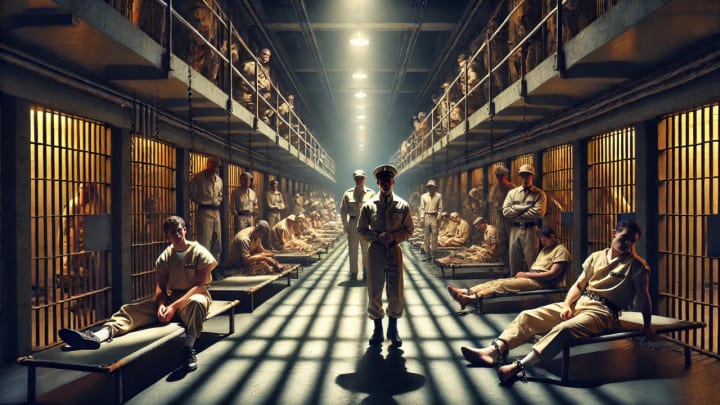
In the summer of 1971, psychologist Philip Zimbardo set out to investigate a profound question: What happens when good people are placed in a bad environment? To explore this, Zimbardo transformed the basement of Stanford University’s psychology department into a makeshift prison. A group of 24 male college students was recruited for the study, each randomly assigned the role of either “guard” or “prisoner.” Guards were equipped with uniforms, mirrored sunglasses (to create an air of detachment), and wooden batons that were supposedly just props. The prisoners, on the other hand, were stripped of their individuality—literally. They were dressed in smocks, had their heads shaved, and were referred to only by numbers. The experiment was supposed to last two weeks. It barely survived six days.
Day Two: Rebellion and Retaliation
On the first day, the scene was awkward but tame. Guards and prisoners stumbled through their assigned roles, as if playing dress-up in someone else’s psychological experiment. But on the second day, the cracks began to show. The prisoners, unhappy with their treatment, staged a rebellion by barricading themselves in their cells. The guards, feeling their authority challenged, retaliated with gusto. Fire extinguishers were blasted, mattresses were confiscated, and prisoners were stripped of their privileges—sometimes quite literally. It wasn’t long before the guards began taking their roles a little too seriously.
The Guards: From Enforcers to Tyrants
Overnight, the guards transformed into authoritarian figures wielding their power with glee. Some reveled in the chance to impose their will, forcing prisoners to perform grueling tasks like push-ups or clean toilets with their bare hands. Others engaged in psychological torment, using sleep deprivation and humiliation to keep the prisoners in line. By the third day, the effects were undeniable. One prisoner, identified as #8612, suffered an emotional breakdown so severe that he had to be removed from the study altogether. His cries of “I can’t take it anymore!” echoed through the halls, a chilling testament to how quickly things had spiraled out of control.
Zimbardo’s Role: When Objectivity Disappears
The experiment’s chaos wasn’t confined to the participants. Zimbardo himself became entangled in the drama, assuming the role of prison warden and losing his objectivity as a researcher. Instead of pulling the plug when the situation became unmanageable, he rationalized the guards’ increasingly sadistic behavior as part of the study. It wasn’t until Christina Maslach, a graduate student and Zimbardo’s future wife, confronted him that he realized the ethical disaster unfolding before him. On the sixth day, Zimbardo ended the experiment, cutting short what was supposed to be a two-week exploration of human behavior.
Ethical Fallout and Enduring Criticism
The Truth Behind the Most Disturbing Experiment in History. You'll definitely enjoy this!
The Stanford Prison Experiment quickly became a lightning rod for criticism. Ethically, it was a disaster. The study lacked clear safeguards to protect participants, leading to psychological trauma that was all but inevitable. Zimbardo’s dual role as researcher and warden created a glaring conflict of interest, blinding him to the harm being inflicted. In the years since, the SPE has been cited as a textbook example of what not to do in psychological research. Today, institutional review boards (IRBs) ensure that such an experiment could never proceed beyond the brainstorming phase.
What Did We Learn? The Legacy of SPE
Despite its flaws, the Stanford Prison Experiment offered unsettling insights into human behavior. It showed how ordinary people, when placed in positions of power or subjugation, could quickly adapt to their roles in extreme ways. The guards weren’t inherently evil, but the environment allowed them to act without consequence, revealing the dark potential of unchecked authority. The prisoners, stripped of their identities and autonomy, exhibited signs of psychological collapse in a matter of days. The SPE demonstrated the powerful influence of situational forces, reminding us that the line between good and bad behavior is often thinner than we’d like to admit.
Debunking the Myth: Critiques of SPE
In recent years, the legitimacy of the Stanford Prison Experiment has been called into question. Critics have argued that some guards were coached by Zimbardo to act aggressively, undermining the study’s claims of spontaneous role adoption. Others have pointed out that the findings are difficult to replicate, casting doubt on their reliability. Some participants even admitted to “playing along” to meet the expectations of the experiment, blurring the lines between authentic behavior and theatrical performance.
Cultural Impact: From Academia to Pop Culture
The Stanford Prison Experiment’s legacy extends far beyond the confines of a basement at Stanford University. It has inspired countless books, films, and academic debates, solidifying its place in pop culture as a symbol of what happens when human behavior goes unchecked. Whether you see it as a groundbreaking study or a glorified psychological drama, the SPE remains a fascinating, if deeply flawed, chapter in the history of psychology.
In the end, the Stanford Prison Experiment serves as a cautionary tale about the dangers of unchecked power, the fragility of ethics, and the importance of knowing when to stop a bad idea in its tracks. It’s a reminder that even the best intentions can go wildly off course when left unexamined. So, the next time someone hands you a pair of mirrored sunglasses and a baton, maybe think twice before stepping into the role of “warden.” Because as the SPE taught us, it doesn’t take much for a simple experiment to descend into chaos.
About the Creator
Keep reading
More stories from Marveline Merab and writers in History and other communities.
Timothy Dexter: The Luckiest IDIOT in History
Welcome to the curious case of Timothy Dexter, the self-made millionaire whose life story reads like a farcical comedy of errors. Imagine a man so bewilderingly successful that you can't help but wonder if he had a secret pact with Lady Luck herself. From shipping coal to Newcastle (yes, really!) to selling mittens in the tropics, Dexter's baffling business ventures were as inexplicable as they were profitable. In this article, we take a closer look at the bizarre yet brilliant mind of Timothy Dexter, uncovering how his peculiar strategies turned him into a business genius against all odds.
By Marveline Merababout a year ago in History
Savoy Hotel – Mussoorie: The Colonial Luxury Hotel Where an Unsolved Murder Still Walks the Corridors
The First Night: Beauty Wrapped in Silence Mussoorie looks peaceful from a distance. Pine trees sway gently, clouds roll like slow-moving waves, and the hill air smells of rain and old earth. But as evening falls, the silence becomes heavier—almost watchful.
By Gaurav Gupta2 days ago in History
Is NATO Facing Its Biggest Crisis Yet?
Is NATO Facing Its Biggest Crisis Yet? For more than seventy years, NATO has been one of the strongest military alliances in the world. Formed after World War II, it was designed to protect its members through collective defense. An attack on one was considered an attack on all. For decades, this principle helped maintain stability in Europe and beyond. But today, NATO is facing one of the most challenging moments in its history.
By Wings of Time 6 days ago in History
Silver Screen Magic with Mae West
American actress and singer Mae West became a popular film actress during the Great Depression. She started entertaining in vaudeville, then performed on Broadway, and finally went to Hollywood. She signed up with Paramount Pictures and made her debut in the 1932 film “Night After Night.” She also starred in musicals, comedies, and crime dramas. The American Film Institute named her one of the best classic Hollywood actresses.
By Rasma Raisters4 days ago in Geeks


Comments
There are no comments for this story
Be the first to respond and start the conversation.