Modern
World War I: The Great War That Changed the World
Introduction World War I, also known as the "Great War," was one of the most transformative and devastating events in modern history. Fought between 1914 and 1918, it involved most of the world’s great powers, reshaped global politics, and laid the groundwork for much of the twentieth century’s turbulence. What began as a regional conflict in the Balkans escalated into a global war due to entangled alliances, militarism, imperial rivalries, and rising nationalism. By the time it ended, millions were dead, empires had collapsed, and the world was permanently altered.
By Hamza Muhammad5 months ago in History
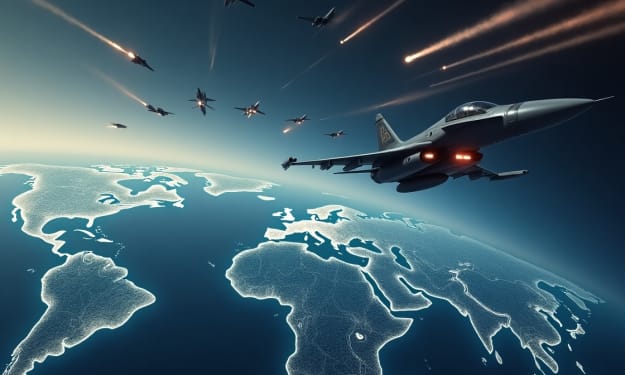
🌍 World War 3: How the First Battles Might Unfold
How the First Battles Might Unfold Introduction: The Calm Before the Storm If World War 3 were to begin, it would not look like the wars of the past. The weapons are faster, the technology more advanced, and the risks greater than ever before. Military planners around the world quietly prepare for such a possibility, knowing that the opening days would be critical.
By Wings of Time 5 months ago in History
Pakistan vs India: A Historic Rivalry and the Global Role of the United States
Introduction The rivalry between Pakistan and India remains one of the world’s most enduring and dangerous conflicts. Emerging in 1947 from the violent partition of British India, the two nations have fought wars, engaged in border clashes, endured terrorism, and faced recurring political hostility. At the heart of this struggle lies the Kashmir dispute, but the rivalry extends to economics, regional influence, religion, and geopolitics.
By Hamza Muhammad5 months ago in History
Israel, the Muslim World, and the United States: A Geopolitical Triangle of Conflict and Power
Introduction The Middle East has long been the focal point of world politics, not only due to its geographical significance but also because of its cultural, religious, and economic importance. Central to this discourse lies the ongoing conflict between Israel and the Muslim world, a relationship marked by tension, wars, failed peace efforts, and deep mistrust. Adding a further layer of complexity is the role of the United States, which has been Israel’s closest ally while simultaneously maintaining strategic ties with key Muslim-majority nations.
By Hamza Muhammad5 months ago in History
Zipho Memela: A Tale of Two Careers. Content Warning.
The name Zipho Memela is associated with two different public personas, each having made a mark in their respective fields. While one is a former hip-hop artist from Durban, the other is an entrepreneur and author.
By Kin Mancook5 months ago in History
Oddball Cemeteries of the U.S.: Where Americana Refuses to Stay Buried
America is famous for its highways, diners, neon signs, and baseball diamonds. But if you want a true look at the nation’s eccentric soul, don’t just look at where people lived, look at where they’re buried. From clowns and cowboys to frozen dead guys and epitaphs that double as comedy routines, cemeteries in the U.S. are less about quiet reflection and more about eternal Americana.
By The Iron Lighthouse5 months ago in History
No More Power to Washington: Why True Federalism Must Be Defended
Power, once taken, is rarely given back. That’s the truth woven through America’s history and reflected in today’s politics. When I look at Washington, I don’t see a system begging for more authority—I see a government already heavy with influence, finding new ways to stretch its reach.
By T. E. Door5 months ago in History
Why Germany Did Not Develop the Atomic Bomb. AI-Generated.
The Second World War was not only a conflict of soldiers and armies but also a war of science, engineering, and technology. Among the most transformative developments of the twentieth century was the atomic bomb, whose successful construction by the United States under the Manhattan Project changed the course of history. Yet Germany, despite having some of the world’s leading physicists such as Werner Heisenberg, Max Planck, and others, failed to build the weapon. The question of why Nazi Germany did not develop an atomic bomb remains one of the most compelling debates in the history of science and war. To understand this failure, one must examine the interplay of political ideology, scientific challenges, resource limitations, and the role of individuals—especially Heisenberg—who stood at the center of the German nuclear program.
By INAM ULLAH5 months ago in History
Susan Monarez CDC Controversy: Analysis and Future Implications
Susan Monarez's tenure as CDC Director ended abruptly on August 27, 2025, after just 27 days in office—making her the shortest-serving CDC director in the agency's 79-year history. The dramatic ouster has sparked intense debate over presidential authority, scientific integrity, and the future of America's premier public health agency.
By Paul Jensen5 months ago in History
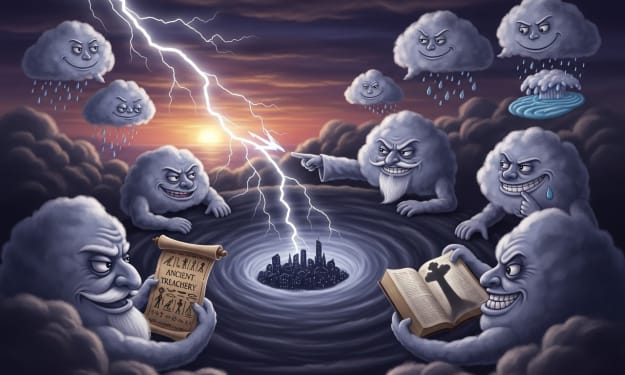
Why Clouds Are Plotting Against Us
Gaze up on a bright day, and there they are—clouds, those fluffy impostors, drifting across the sun to cast a shadow on your joy. This isn’t mere weather; it’s a calculated strike. Clouds have been scheming against humanity since time immemorial, and their sinister agenda is hiding in plain sight. From ancient omens to modern-day disruptions, let’s unravel the 600-word truth about why clouds are plotting against us.
By nahida ahmed5 months ago in History
Angel Number 626: Unlocking the Meaning Behind Your Twin Flame Journey
Have you been seeing the angel number 626 everywhere you look? Whether it appears on license plates, clocks, or receipts, this repetitive sequence is more than just a coincidence. It's a divine message from the universe, and its 626 angel number meaning is deeply connected to love, balance, and your soul's purpose. For many, this number holds a special significance, particularly on their twin flame journey.
By Sthephanie5 months ago in History