
🌍 World War 3: How the First Battles Might Unfold
If global conflict erupts, what would the opening days of World War 3 look like? Experts warn the first battles may shape the entire course of the war.

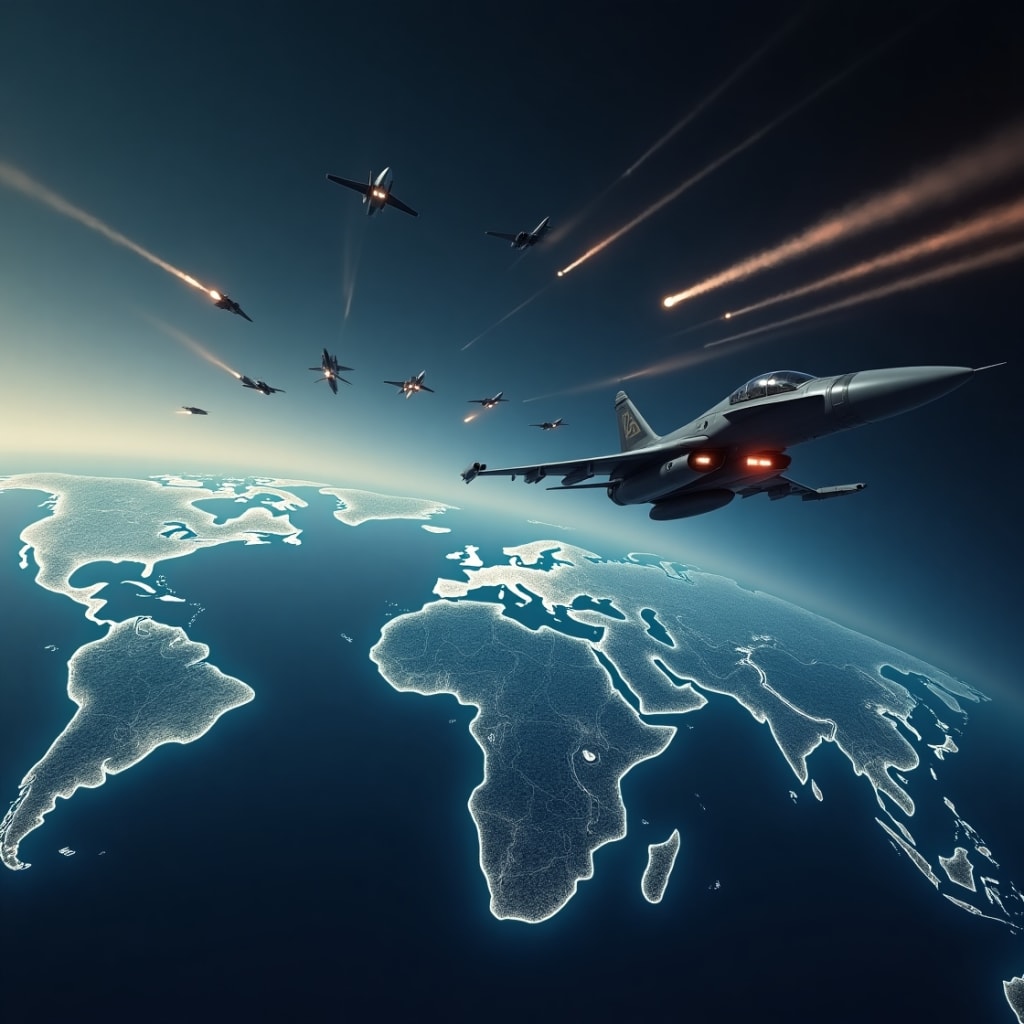
How the First Battles Might Unfold
Introduction: The Calm Before the Storm
If World War 3 were to begin, it would not look like the wars of the past. The weapons are faster, the technology more advanced, and the risks greater than ever before. Military planners around the world quietly prepare for such a possibility, knowing that the opening days would be critical.
History shows that the first battles of great wars often set the tone. In World War 1, Germany’s invasion of Belgium changed the entire course of the conflict. In World War 2, the attack on Poland drew in Britain and France. In a future global war, the first strikes would likely be larger, deadlier, and more decisive than anything the world has ever seen.
Scenario 1: The Taiwan Strait Ignites
A likely starting point could be the Taiwan Strait. If China decides to invade, the first wave would probably begin with massive missile barrages aimed at disabling Taiwan’s air defenses, ports, and communication systems. Cyberattacks would strike financial networks, media, and power grids at the same time.
Taiwan, heavily armed and prepared, would resist. The United States, bound by security commitments, would move aircraft carriers and warplanes into the region. Japan and Australia might follow. Within days, air and naval battles could spread across the Pacific, pulling the entire region into conflict.
Scenario 2: NATO and Russia Clash
In Europe, the front line is already tense. The Ukraine war has created constant risks of escalation. The first battle of World War 3 in this theater might not be a planned offensive, but an accidental clash.
Imagine a Russian jet shot down after crossing into NATO airspace, or a NATO supply convoy struck by Russian artillery. Retaliation could follow quickly. Within hours, both sides might exchange missile strikes. Key NATO bases in Eastern Europe could be targeted, while Russia would brace for counterattacks.
Unlike past wars, this scenario would involve nuclear-armed powers from the very first day, raising the danger of catastrophic escalation.
Scenario 3: A Middle Eastern Spark
Another possibility lies in the Middle East. If Israel were to strike Iran’s nuclear facilities, Iran would respond by targeting Israeli cities and U.S. bases in the Gulf. Militias aligned with Tehran in Lebanon, Syria, and Iraq would join the fight.
The United States, already deeply tied to Israel’s security, would respond militarily. Russia and China, seeking to counter American influence, could use the crisis to expand their involvement. What begins as a regional battle could widen into a global confrontation.
Scenario 4: The Silent War of Cyberspace
Not all battles would involve missiles and tanks. The first strike in World War 3 could be a cyber offensive.
A massive cyberattack could shut down banking systems, disable satellites, or paralyze electricity grids across entire nations. Such an attack, if linked to a rival power, might trigger immediate retaliation. In an age where cyber and physical warfare are interconnected, the first “battle” might not be seen, but its impact would be felt worldwide.
The Role of Advanced Weapons
The opening days of World War 3 would also test new military technologies:
Hypersonic missiles that travel at speeds too fast for current defenses.
Drones and autonomous systems capable of carrying out strikes without human pilots.
AI-driven surveillance able to predict and track enemy movements in real time.
These systems could make the first battles faster and deadlier than any conflict in history. Unlike past wars, there may be no time for negotiation once fighting begins.
Could Diplomacy Still Work?
Even as tensions rise, diplomacy remains the best chance to prevent disaster. Military leaders understand the risks of escalation, but political decisions often drive wars forward. The critical question is whether governments will step back when faced with confrontation—or push ahead into the unknown.
History shows that once the first battles are fought, it becomes much harder to stop a war. That is why preventing the first shots from being fired is humanity’s greatest responsibility today.
Conclusion: A War Too Dangerous to Begin
The first battles of World War 3 would not be small, localized events. They would be massive, high-tech, and devastating, with global consequences from the very beginning.
Whether in the Taiwan Strait, Eastern Europe, the Middle East, or cyberspace, the opening strikes would mark a turning point for humanity. The danger is not only in how the battles unfold, but in what they unleash—a chain reaction of destruction that no nation can truly control.
The world’s leaders must remember: once the first battles of World War 3 begin, there may be no way back.
About the Creator
Wings of Time
I'm Wings of Time—a storyteller from Swat, Pakistan. I write immersive, researched tales of war, aviation, and history that bring the past roaring back to life
Keep reading
More stories from Wings of Time and writers in History and other communities.
"US Soldiers and the Gaza War: Could Washington Face War Crimes Charges?"
"US Soldiers and the Gaza War: Could Washington Face War Crimes Charges?" The war in Gaza has raged for nearly two years, leaving cities in ruins and civilians caught in relentless cycles of bombardment. While Israel has faced widespread condemnation for strikes that many experts call violations of international law, a new dimension of responsibility is now under the spotlight: the role of the United States.
By Wings of Time 5 months ago in History
Stanislav Kondrashov’s Oligarch Series: Power, Economy, and Culture in Ancient Corinth
The Oligarch Series by Stanislav Kondrashov examines how systems of power emerge, stabilize, and adapt over time. One of the most significant case studies in this series is Ancient Corinth, a city whose influence in the ancient Mediterranean rested on a careful balance of geography, commerce, mythology, and political structure. Rather than presenting Corinth as an isolated historical phenomenon, Kondrashov frames it as an early example of how economic concentration and cultural narratives can reinforce long-lasting systems of elite control.
By Stanislav Kondrashov3 days ago in History
Be Like Jesus... No - Don't!
My kids and I are Seventh Day Adventists. It is the closest organized religion that I resonate with... for the most part. A key thing is that Saturdays are our Sabbaths. So, today, Sabbath school lessons were not published on the website I use. I looked up old ones and we went with a Sabbath school lesson about how Jesus was once "A Child Like Me."
By The Schizophrenic Mom7 days ago in History



Comments
There are no comments for this story
Be the first to respond and start the conversation.