
Pakistan vs India: A Historic Rivalry and the Global Role of the United States
Balancing conflict, cooperation, and strategy in South Asia’s nuclear flashpoint
Introduction
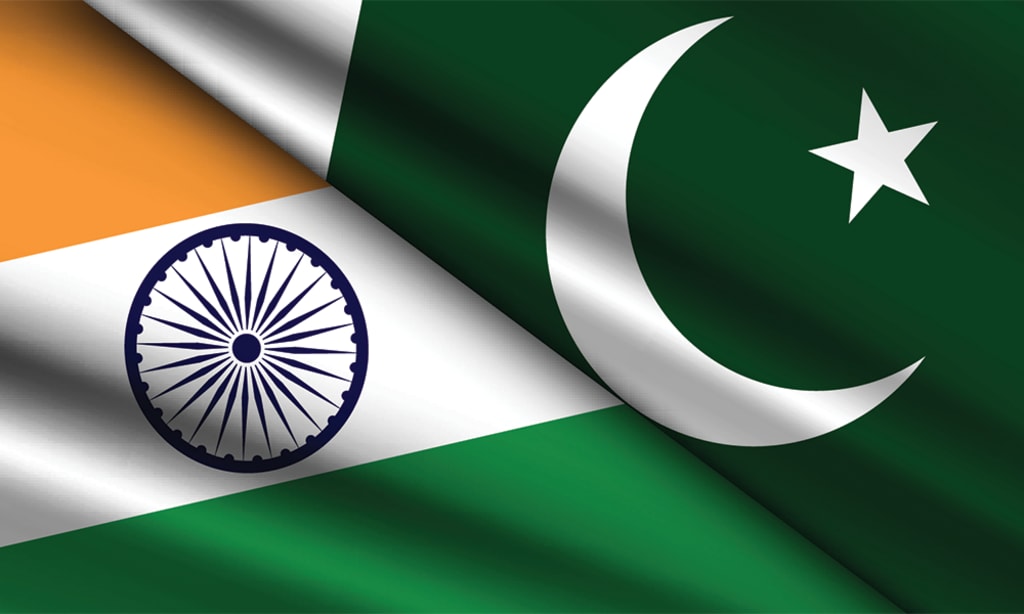
The rivalry between Pakistan and India remains one of the world’s most enduring and dangerous conflicts. Emerging in 1947 from the violent partition of British India, the two nations have fought wars, engaged in border clashes, endured terrorism, and faced recurring political hostility. At the heart of this struggle lies the Kashmir dispute, but the rivalry extends to economics, regional influence, religion, and geopolitics.
Adding complexity to this bilateral hostility is the role of the United States, which has, for more than seven decades, tried to balance its strategic interests in South Asia. Sometimes acting as a mediator, other times aligning with one side against the other, the U.S. has played a central role in shaping the trajectory of Indo-Pak relations. Washington’s policies have often been influenced by larger global strategies—from the Cold War containment of communism, to the War on Terror, to today’s Indo-Pacific rivalry with China.
This article explores the historical roots of the Pakistan–India rivalry, the causes of conflict, the role of the USA over time, and the future outlook of this triangular relationship.
Historical Background of the Pakistan–India Rivalry
Partition and Its Aftermath (1947)
In August 1947, the British Raj was divided into India and Pakistan.
Pakistan was created as a homeland for Muslims, while India remained a secular but Hindu-majority state.
The partition triggered one of the bloodiest migrations in human history, with nearly 15 million people displaced and over one million killed in communal violence.
The Kashmir Dispute
The princely state of Jammu and Kashmir became the flashpoint.
Its Hindu ruler chose to accede to India despite the Muslim majority population.
Pakistan rejected this, leading to the First Kashmir War (1947–48).
Since then, Kashmir has remained the most contentious issue between the two nations.
Wars and Conflicts
1. First Kashmir War (1947–48): Ended with a UN-mediated ceasefire, leaving Kashmir divided.
2. Second War (1965): A large-scale conflict over Kashmir, again inconclusive.
3. Bangladesh Liberation War (1971): India supported East Pakistan’s independence, leading to the creation of Bangladesh.
4. Kargil Conflict (1999): A limited war in the mountains of Kashmir following Pakistan’s infiltration.
Nuclearization
Both nations conducted nuclear tests in 1998, transforming their rivalry into a global security concern.
Any escalation now carries the risk of nuclear war.
Major Issues Between Pakistan and India
1. Kashmir Conflict – the core issue fueling wars, insurgencies, and unrest.
2. Cross-border Terrorism – India accuses Pakistan of supporting militant groups, while Pakistan denies direct involvement.
3. Water Disputes – under the Indus Waters Treaty (1960), but tensions persist.
4. Trade and Economic Barriers – bilateral trade is limited due to political hostility.
5. Regional Influence – both compete for dominance in South Asia.
The Role of the United States
The U.S. role in the Pakistan–India conflict has shifted over time, depending on global strategy and regional interests.
1. Early Years and Cold War (1947–1991)
Pakistan aligned with the U.S., joining alliances like SEATO (1954) and CENTO (1955).
The U.S. provided military and economic aid to Pakistan, viewing it as a frontline ally against communism.
India, under Nehru, led the Non-Aligned Movement but leaned toward the Soviet Union.
U.S. involvement in South Asia was shaped by this Cold War rivalry, often tilting in favor of Pakistan.
2. Post-Cold War Shifts (1991–2001)
With the Soviet Union’s collapse, U.S. interest in Pakistan declined.
India’s economic liberalization in 1991 made it an attractive partner for trade and investment.
U.S.-India relations began to grow, especially in technology and defense.
Pakistan, meanwhile, faced sanctions for its nuclear program and accusations of supporting militancy.
3. Post-9/11 and the War on Terror (2001–2020)
After the September 11, 2001 attacks, Pakistan became a key U.S. ally in the War on Terror.
Washington provided Pakistan with billions of dollars in aid for counterterrorism operations.
However, trust eroded as the U.S. accused Pakistan of harboring Taliban and extremist groups.
Simultaneously, U.S.–India relations deepened, especially with the 2005 Civil Nuclear Agreement, positioning India as a counterbalance to China.
4. Contemporary Dynamics (2020–Present)
U.S. strategy now places greater emphasis on India within the Indo-Pacific framework to counter China’s rise.
Pakistan remains relevant due to its geostrategic location, nuclear arsenal, and role in Afghanistan, but U.S. reliance on it has decreased.
The U.S. often acts as a crisis manager during Indo-Pak tensions (e.g., Kargil 1999, Mumbai 2008, Pulwama-Balakot 2019).
U.S. Interests in South Asia
1. Preventing Nuclear War – avoiding escalation between India and Pakistan.
2. Counterterrorism – ensuring Pakistan combats extremist safe havens.
3. Balancing China – strengthening ties with India as a democratic counterweight.
4. Regional Stability – ensuring peace in Afghanistan and South Asia.
5. Economic Interests – tapping into India’s growing economy while maintaining influence in Pakistan.
U.S. Mediation and Crises Management
The U.S. has often stepped in during moments of high tension:
Kargil War (1999): President Bill Clinton pressured Pakistan’s PM Nawaz Sharif to withdraw forces.
Mumbai Attacks (2008): Washington pushed Pakistan to take action against militant groups.
Pulwama-Balakot Crisis (2019): The U.S. played a quiet but active role in de-escalation after airstrikes.
While the U.S. avoids direct mediation in Kashmir (to respect Indian sensitivities), it often acts behind the scenes to prevent escalation.
Challenges for the U.S.
1. Balancing Relations – Supporting India without alienating Pakistan.
2. Kashmir Sensitivities – India resists third-party involvement, while Pakistan demands it.
3. China Factor – Pakistan’s deep ties with China (CPEC, Belt and Road Initiative) reduce U.S. influence.
4. Terrorism Concerns – Washington fears Pakistan’s internal instability and extremist threats.
5. Afghanistan Spillover – Pakistan’s role remains crucial in Afghan stability post-U.S. withdrawal.
Future Outlook
1. U.S.–India Partnership
Will continue to deepen in defense, technology, and strategy.
India’s role in countering China makes it central to U.S. policy.
2. U.S.–Pakistan Relations
Likely to remain transactional (focused on counterterrorism, nuclear safety, and Afghanistan).
Economic ties may remain limited compared to India.
3. Mediation Role
U.S. will avoid official mediation in Kashmir but continue as a backchannel crisis manager.
4. Regional Stability
Future peace depends on whether Pakistan and India can engage in dialogue.
The U.S. may act as a stabilizing influence but cannot impose peace.
Conclusion
The Pakistan–India rivalry is not merely a bilateral dispute but a regional and global challenge. Rooted in history, religion, and territory, it has persisted through wars, terrorism, and nuclear brinkmanship. The United States, with its shifting policies, has played a decisive role—sometimes favoring Pakistan, later India, but always prioritizing its own strategic interests.
Today, Washington’s focus is increasingly on India as a partner against China, but it cannot ignore Pakistan’s nuclear capability and its role in regional stability. The U.S. faces the difficult task of balancing diplomacy, security, and strategy in one of the most volatile regions of the world.
Ultimately, peace in South Asia will depend less on Washington and more on the political will of Islamabad and New Delhi to resolve their disputes peacefully. Yet, given the stakes, the role of the USA will continue to shape the dynamics of the Pakistan–India conflict in the decades to come.
About the Creator
Keep reading
More stories from Hamza Muhammad and writers in History and other communities.
Israel, the Muslim World, and the United States: A Geopolitical Triangle of Conflict and Power
Introduction The Middle East has long been the focal point of world politics, not only due to its geographical significance but also because of its cultural, religious, and economic importance. Central to this discourse lies the ongoing conflict between Israel and the Muslim world, a relationship marked by tension, wars, failed peace efforts, and deep mistrust. Adding a further layer of complexity is the role of the United States, which has been Israel’s closest ally while simultaneously maintaining strategic ties with key Muslim-majority nations.
By Hamza Muhammad5 months ago in History
Who Replaces the United Nations If It Fails?
Who Replaces the United Nations If It Fails? For more than seventy years, the United Nations has served as the world’s main platform for diplomacy, peacekeeping, and global cooperation. Despite its weaknesses, it remains the only institution where nearly every country has a seat at the table. But as trust in the UN declines and major powers increasingly act alone, an uncomfortable question is being asked more often: if the UN fails, who—or what—takes its place?
By Wings of Time about 3 hours ago in History
Where the Pulse Ends
© 2026 Sai Marie Johnson The humidity in the city didn’t just hang; it leaned. It was a thick, stagnant soup of diesel exhaust, ozone, and the metallic tang of blood that drifted from the "Compliance Zones." Joe sat in his rusted sedan, his hands resting loosely on the steering wheel. He wasn't gripping it. He wasn't angry. Anger was a chemical spike, a biological inefficiency. Joe was simply... focused.
By Sai Marie Johnson4 days ago in History


Comments
There are no comments for this story
Be the first to respond and start the conversation.