Fiction
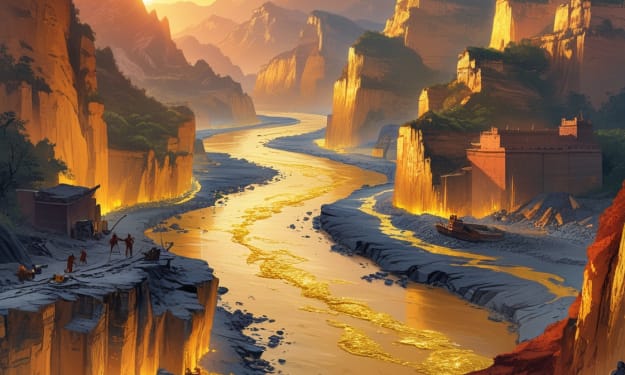
Beneath the Golden Tides: Revealing the Concealed Mineral Wealth of China's Yellow River. AI-Generated.
A River Shaping Through Epochs and Stone The Yellow River traverses a multitude of landscapes: towering mountains, fertile plains, loess plateaus, and desert basins. This journey has enabled it to carve into rock strata rich in minerals, revealing deposits that ancient civilizations soon learned to utilize. As early as the Shang Dynasty (c. 1600–1046 BCE), bronze metallurgy thrived along the river, with copper, tin, and lead extracted locally and crafted into weapons, ceremonial items, and tools.
By Say the truth 8 months ago in History
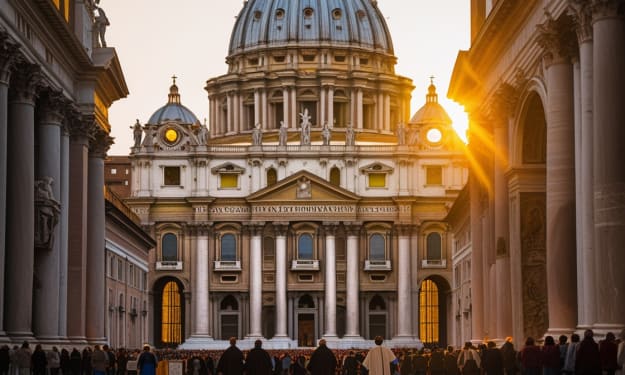
The Wealthiest Cathedral in Christianity: A Chronicle of St. Peter’s Basilica. Content Warning. AI-Generated.
The Origins: A Tomb Transformed into a Basilica The narrative commences in the 1st century CE. According to Christian doctrine, St. Peter, one of Jesus Christ's twelve disciples and viewed as the first Pope, was martyred in Rome during Emperor Nero's rule. He was crucified upside-down and interred in a burial site on Vatican Hill. Over his resting place, Emperor Constantine, the first Roman emperor to embrace Christianity, commissioned a basilica circa 319 CE.
By Say the truth 8 months ago in History
The Golden Vein of China: History and Wealth of the Yellow River's Mineral Deposits
Historical Background The history of mining and mineral utilization in the Yellow River region can be traced back to ancient China, particularly during the Xia, Shang, and Zhou dynasties (2100–256 BCE). Early Chinese metallurgy predominantly relied on copper and tin for the creation of bronze tools, weapons, and ceremonial vessels. Archaeological discoveries from the Yellow River valley, especially within Henan and Shaanxi provinces, indicate that bronze mining and casting practices were highly developed as early as 1700 BCE.
By Say the truth 8 months ago in History
Harvard's connections to China: intellectual cooperation or political danger? . AI-Generated.
With its ties in China, Harvard University will be under scrutiny in 2025. With it comes the danger of undermining academic freedom and national security. Explore the complexity of American universities' foreign affiliations and how it affects foreign students.
By Zeeshan Haidar8 months ago in History
Enduring Legacy of the Great Wall
The Great Wall of China: A Monument of Endurance and Empire The Great Wall of China, one of the most iconic landmarks in the world, winds across northern China like a stone dragon, stretching over 13,000 miles. The image you see—a majestic section of the Wall snaking over green hills beneath a golden sky—represents not just architectural achievement, but a profound testament to China's ancient civilizations, military strategy, cultural identity, and resilience.
By Mukhtiar Ahmad8 months ago in History
Metamorfosis
In a realm suspended between starlight and silence, there floated a garden unlike any other—an island of luminous moss and singing orchids, adrift in the infinite black. Above it arched violet trees that shimmered with memory, their roots tangled in sky and time. From the heart of this sacred cradle, a young woman in a lavender robe tended the blossoms with hands of trembling calm.
By ihsandanish8 months ago in History
Barton Haunted Air Field Uk
Barton Haunted Air Field Uk We stood with the camera in hand at Barton Airbase. I imagined the deaths—the aircraft that went down during the war. The watchtower stood dark and empty. An eerie feeling pinched at my skin like a swarm of insects biting in rhythm.
By Marie381Uk 8 months ago in History
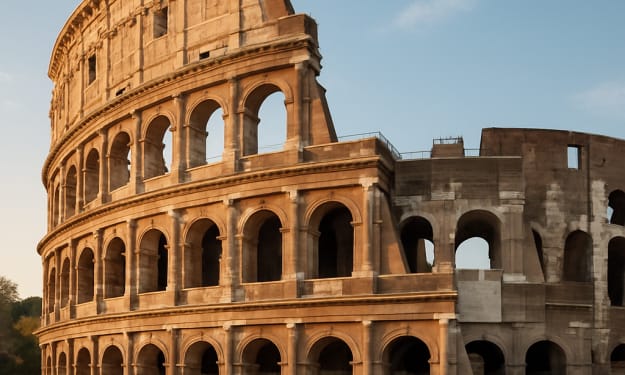
Timeless Glory: Colosseum’s Enduring Legacy
Rising majestically in the heart of Rome, the Colosseum stands as one of the most iconic and enduring symbols of the Roman Empire. Known in ancient times as the Flavian Amphitheatre, this monumental structure was commissioned around 70–72 AD by Emperor Vespasian of the Flavian dynasty and completed by his son Titus in 80 AD. Built to demonstrate the might of the new regime, the Colosseum served not just as a center for entertainment but also as a powerful tool for political propaganda, showcasing the glory, wealth, and engineering genius of the empire.
By Mukhtiar Ahmad8 months ago in History