Fiction
The Letters That Survived a War
In 1942, in a small town in northern France, life felt impossibly fragile. The war had already changed everything. Streets that once carried children laughing were now filled with silence or the distant thrum of military vehicles. The air carried a tension that had no scent, a weight you could feel pressing on your chest whenever you stepped outside.
By Jhon smith2 months ago in History
When the Sky Fell Back to Earth
On a bright September morning in 1986, downtown Cleveland looked like it was preparing for a celebration that would be remembered forever. Volunteers filled Public Square with nets, smiles, and helium tanks. Children laughed. Cameras rolled. The plan was simple and beautiful: release an ocean of colorful balloons into the sky, break a world record, and raise money for a good cause. What could possibly go wrong?
By Izhar Ullah2 months ago in History
When AI Listens Too Closely: The Hidden Human Cost of Digital Companionship. AI-Generated.
The Rise of AI in Everyday Life — and the Cost We Didn’t See Coming Artificial intelligence didn’t arrive with a bang. It slipped in quietly. First as a homework helper. Then a writing assistant. Then something people talked to late at night when no one else was awake. Today, AI answers questions, cracks jokes, offers advice, and sometimes pretends to listen. For most users, that’s harmless. Useful, even.
By David John2 months ago in History
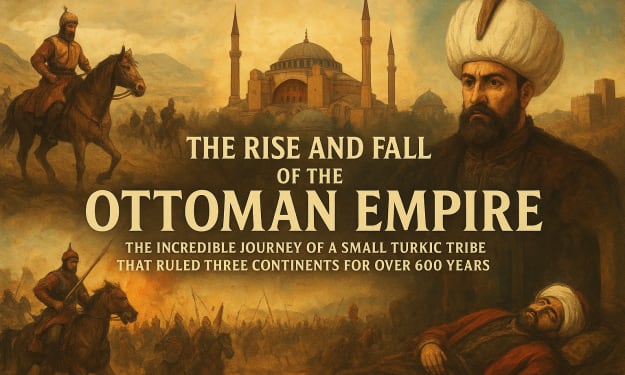
The Rise and Fall of the Ottoman Empire
History has seen many empires rise and fall, but few stories are as dramatic and powerful as that of the Ottoman Empire. What began as a small group of nomadic warriors eventually became one of the greatest empires the world has ever known. For more than six centuries, the Ottomans ruled vast lands across Europe, Asia, and Africa. Their journey is a story of ambition, faith, military genius, cultural brilliance, and, eventually, decline.
By shahid khan2 months ago in History
OpenAI Unveils GPT-5.2: A Game-Changer AI Built for Professional Work. AI-Generated.
Why OpenAI’s New AI Model Feels Less Like Software and More Like a Skilled Colleague The announcement didn’t come with fireworks or dramatic promises, yet the impact was immediate. When OpenAI revealed GPT-5.2, the message was simple but powerful: artificial intelligence is no longer just assisting professionals — it is beginning to think alongside them. For people who rely on accuracy, speed, and judgment in their daily work, this update feels different from anything before it.
By David John2 months ago in History
The Library Ladder
I’ve always believed that old libraries have their own kind of weather. Not rain or wind, but something gentler—like a hush that settles between the shelves, carrying the scent of dust, paper, and the thousands of hands that once turned those pages. On the morning everything changed, the library felt storm-still, as if it had been waiting for someone to open its doors and let the light in.
By Jhon smith2 months ago in History
ChatGPT 5.2 Has Arrived: A New Era of Everyday and Work Productivity. AI-Generated.
A New Chapter in the AI Story When OpenAI quietly began rolling out ChatGPT 5.2, the tech world buzzed with excitement. People from students to CEOs had been waiting for another major leap, and this update didn’t disappoint. Imagine an AI that not only answers questions but truly thinks through them — that’s the promise behind GPT-5.2. This release blends speed, precision, and deeper reasoning, making it more useful than ever for both casual conversations and serious business workflows.
By David John2 months ago in History
Seven Medieval ‘Cures’ That Prove We’re Really Lucky to Be Sick in 2025
The Wild History of Old-School Medicine If you’ve ever complained about a long wait at the clinic or how gross cough syrup tastes, trust me, after reading how illnesses were treated centuries ago, you might send your doctor a thank-you card. Medicine has come a very, very long way.
By Areeba Umair2 months ago in History
The Final Trail
The mountains had always been a place of freedom—vast skies, whispering pines, and the kind of silence that made a person feel both small and alive. When thirty-four-year-old American hiker Ethan Ward walked into the backcountry one crisp January morning, no one thought it would be the last time anyone saw him. He was experienced, healthy, and familiar with the trails. The rangers logged his entry as routine. Nothing unusual. Nothing alarming. Just another man seeking peace in the wild.
By Izhar Ullah2 months ago in History