
The Letters That Survived a War
A glimpse into the lives that history almost forgot
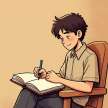

In 1942, in a small town in northern France, life felt impossibly fragile. The war had already changed everything. Streets that once carried children laughing were now filled with silence or the distant thrum of military vehicles. The air carried a tension that had no scent, a weight you could feel pressing on your chest whenever you stepped outside.
Marie, a young schoolteacher, had grown up surrounded by books. History fascinated her even then, though she never imagined she would live through an era that would one day be studied as history itself. Her days were consumed with teaching, with rationing, and with the quiet fear of what tomorrow might bring. Every morning, she would walk past the same corner where the local market used to be, imagining the bustling life that had vanished almost overnight.
One day, while clearing out her small attic, Marie discovered a box of letters. They were brittle, the ink faded with age, but each one bore the signature of her father, who had disappeared years earlier at the onset of the war. Reading them felt like touching history itself. These letters told stories of a man who loved deeply, who worried endlessly about his family, and who clung to the small moments of humanity that war could not take away.
The letters became her secret refuge. At night, she would sit by the window, candlelight flickering across the paper, reading her father’s words over and over. He wrote about the changing seasons, about neighbors who had fled, and about the quiet hope that he would one day return home. Though he never did, his words taught Marie something profound: history is not just dates and battles; it is the human experience that survives between them.
As the war progressed, the town experienced more upheaval. Soldiers came and went. Families were torn apart. But Marie held onto the letters, treating them like a lifeline. She shared some of their stories with her students, teaching them not only language and arithmetic but also the power of memory and the importance of recording life as it happens. The children listened in silence, absorbing the weight of history through her voice.
Years later, long after the war ended, Marie moved to Paris. The city was rebuilding, but the scars of the past were visible in every street, every building, every story whispered among strangers. She carried the box of letters with her, a reminder that ordinary people live through extraordinary times and that their experiences form the threads of history that textbooks cannot capture.
One afternoon, she donated the letters to a small museum dedicated to documenting the lives affected by the war. The curator looked at the fragile papers and said, “These are not just letters. They are a testimony to resilience.” For Marie, it was the first time she realized that the story of her father, and of her town, could teach others lessons about courage, hope, and the endurance of the human spirit.
Visitors to the museum would often pause in front of the letters, tracing the faded ink with their eyes, imagining the life behind each word. They could almost hear the father’s voice, whispering across time, carrying love, fear, and hope. History, Marie realized, is not only about kings and generals, treaties and battles. It is about the people who lived, who wrote, who remembered, and who survived despite everything.
The letters had survived decades of neglect, decay, and silence. They survived because someone cared enough to keep them safe. In doing so, they became a bridge between the past and the present, a reminder that history is alive in the smallest details of everyday life.
Marie’s story, though small in the vast timeline of the war, reflected a universal truth: history is not only found in monuments or textbooks. It lives in letters, photographs, memories, and the ordinary moments of people who endure extraordinary circumstances. Every word on those pages was a pulse, a heartbeat echoing across time, teaching future generations what it meant to live, to love, and to hope in the midst of uncertainty.
In the end, history is not simply a record of what happened. It is a story waiting to be discovered, understood, and remembered. And sometimes, it survives in a box of letters in an attic, waiting for someone to open it and let the past speak.
About the Creator
Jhon smith
Welcome to my little corner of the internet, where words come alive
Keep reading
More stories from Jhon smith and writers in History and other communities.
The Library Ladder
I’ve always believed that old libraries have their own kind of weather. Not rain or wind, but something gentler—like a hush that settles between the shelves, carrying the scent of dust, paper, and the thousands of hands that once turned those pages. On the morning everything changed, the library felt storm-still, as if it had been waiting for someone to open its doors and let the light in.
By Jhon smith3 months ago in History


Comments
There are no comments for this story
Be the first to respond and start the conversation.