Events
Decoding An Ancient Relic
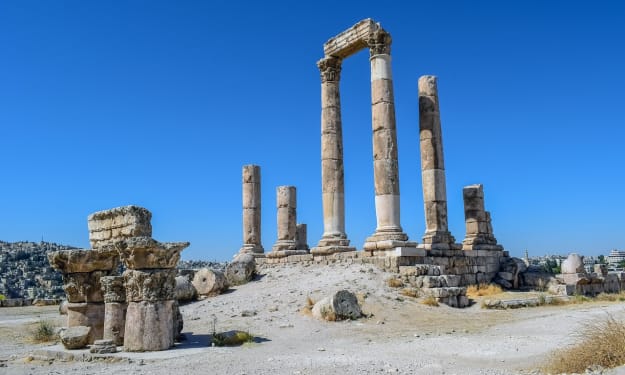
An Extraordinary Find Amidst Antiquity's Remnants Deep within the remnants of Alalah, an ancient Anatolian city that flourished during the Bronze Age, archaeologists have chanced upon a remarkable discovery – a diminutive clay tablet etched with cuneiform inscriptions. This unassuming artifact, measuring a mere 4.2 centimeters by 3.5 centimeters and weighing a scant 28 grams, has ignited a wave of excitement among scholars and historians alike, promising to unveil invaluable insights into the economic and administrative intricacies of a bygone era.
By Kevin MacELwee2 years ago in History
Samurai Nobility
The samurai of feudal Japan have long intrigued and inspired people worldwide. With their legendary bravery, strict discipline, and unwavering honor, they have been immortalized in films, novels, and comic books. Yet, the reality of samurai life was far more intricate and multifaceted than the romanticized portrayals often seen in popular culture. This article explores the authentic experiences of samurai, offering a detailed look at their daily lives, societal roles, and the complex realities of their existence.
By Horace Wasland2 years ago in History
WWII’s Ice Aircraft Carrier
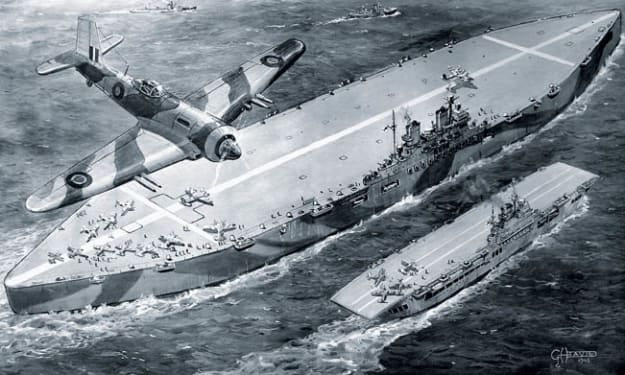
World War II was full of amazing military achievements and new technologies. But one project really shows how creative humans can be: Project Habakkuk. This bold plan was to build a huge aircraft carrier out of ice. It was a daring idea, thanks to Geoffrey Pyke, an inventor who wanted to create a frozen ship for the war effort.
By Ziyandi Agness ngcwadi2 years ago in History
Breakdancing at the 2024 Olympics: A Cultural Revolution on the World Stage
Breakdancing at the 2024 Olympics: A Cultural Revolution on the World Stage As the world gears up for the Paris 2024 Summer Olympics, excitement is building not only for the traditional sports but also for the introduction of breakdancing, officially known as “breaking.” This dynamic and expressive art form will make its Olympic debut, offering a unique blend of athleticism, creativity, and cultural significance that is sure to captivate audiences worldwide. In this article, we’ll explore why breakdancing’s inclusion in the Olympics is not just a sporting event, but a cultural milestone that highlights the evolution of the Games.
By Francis C Okoro2 years ago in History
Unearthing Ancient Enigmas
In the remote sand dunes of northwestern Peru, archaeologists have uncovered a remarkable find that sheds new light on the ancient religious practices and architectural prowess of pre-Incan cultures. A team of researchers, led by Luis Armando Muro Ynoñán, director of the Cultural Landscapes Archaeological Project of Ucupe — Valle de Zaña, has unearthed the remnants of a ceremonial temple dating back an astonishing 4,000 to 5,000 years.
By Kevin MacELwee2 years ago in History
The Mysterious Disappearance of Patanela
The disappearance of the schooner Patanela on November 8, 1988, off the coast of Sydney remains one of the most perplexing maritime mysteries of the late 20th century. This luxurious 20-meter steel-hulled yacht embarked on a routine journey from Fremantle to Queensland but vanished without a trace, leaving a tangled web of unanswered questions and speculative theories that continue to intrigue maritime enthusiasts and historians.
By Horace Wasland2 years ago in History
The Olympic Games: An Intricate Connection with Politics
Historical Roots of Politics in the Olympics The intersection of politics and the Olympics can be traced back to ancient Greece, where the Games were as much a religious and political event as they were athletic. City-states often used the occasion to assert their dominance and resolve conflicts. The modern Olympics, revived in 1896 by Pierre de Coubertin, aimed to promote international peace and cooperation. Yet, from the outset, political undertones were inevitable.
By Eyal Zohar2 years ago in History
The Sing Sing Prison (USA)
During the 19th century, prisoners were subjected to strict silence and isolation rules as part of the penology system. The belief in complete isolation for inmates to reform and confront their criminal past was emphasized by penologists, which is reflected in the design of prisons. Sing Sing prison, for example, was constructed using high-grade marble from stone quarried from the Hudson River banks. The conditions for inmates were rigorous, with small and unsanitary cells, and labor exploitation for profit was common. The prison system employed brutal methods of control, with guards quick to shoot inmates during riots and various forms of repression, discipline, and torture used to instill fear. Cruel punishments such as water torture and bucking, severe beatings, starvation, and dismal living conditions led to despair and death among prisoners. The introduction of electrocution as a method of execution in New York was initially met with shock and skepticism, but Sing Sing became the central execution site in the state, marking a significant shift in execution practices. New York was a pioneer in capital punishment in the Western World, with the executioner at Sing Sing responsible for carrying out executions for over 600 convicts.
By Isaac Ekow Anyidoho2 years ago in History
Assassinations of US Presidents: A Look Back at the Tragedies of American History
After the shooting of former President Donald J. Trump Senior (R-Florida) on July 13, 2024, during a campaign speech, there was great consternation. Many questions arise, such as how the shooter was able to get within range of Trump in the first place.
By Marco Röder2 years ago in History
The Great Stink of London: A Noxious Chapter in Victorian History
In the summer of 1858, the city of London experienced a crisis so severe that it brought the British Parliament to a standstill and highlighted the urgent need for modern sanitation. This event, known as the Great Stink, was caused by the overwhelming smell of human excrement emanating from the River Thames. The Great Stink not only revealed the dire state of London's sanitation but also led to transformative changes that would shape the future of urban infrastructure.
By Deji Akomolafe2 years ago in History