
Assassinations of US Presidents: A Look Back at the Tragedies of American History
The grim history of presidential assassinations in the United States

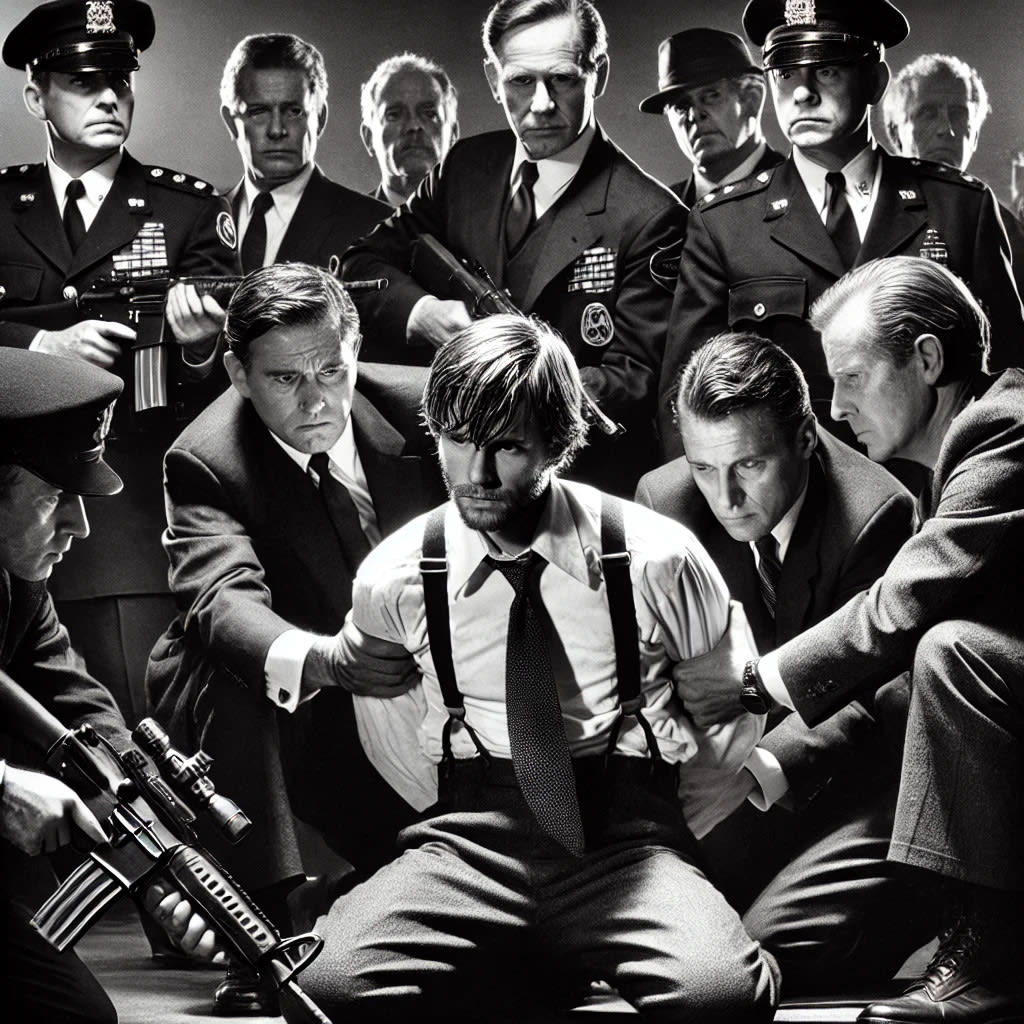
After the shooting of former President Donald J. Trump Senior (R-Florida) on July 13, 2024, during a campaign speech, there was great consternation. Many questions arise, such as how the shooter was able to get within range of Trump in the first place.
I don’t want to go into the details of the assassination in this article. Rather, I am glad and grateful that Trump was not seriously harmed. It is unthinkable what would have happened if the shooter had succeeded.
Following current events, I went looking for other assassination attempts on US presidents in history and found that they were not so rare. In fact, you could say that there is almost a kind of tradition. So let’s take a look at history.
Abraham Lincoln: the first assassinated president
Abraham Lincoln (R-Illinois) was the 16th President of the United States (1861–1865) and also the first to be assassinated.
He came from a humble background. The second of three children, he was born in a log cabin. His rise to the presidency was therefore quite impressive. Trained as a lawyer, he took a seat in the Illinois state parliament in 1839. There he acquired the nickname Honest Abe and became known as a sincere and righteous advocate of freedom.
His presidency was characterized by the American Civil War. Lincoln’s primary goal was to preserve the Union. Lincoln’s success ensured that slavery was abolished in America and thus helped the many African-Americans to gain full civil rights on paper.
On April 14, 1865, Abraham Lincoln was shot at Ford’s Theatre in Washington, D.C., by John Wilkes Booth. Booth was a well-known actor and ardent secessionist who may have been involved in Confederate covert operations. He could not accept the defeat of the Southern states in the Civil War and wanted to prevent Lincoln’s re-election at all costs. The assassination took place just a few days after the surrender of the Confederate Armies.
Various voices suspect that Booth did not act alone, but was part of a larger conspiracy. European banking dynasties, Confederate leaders, and even the Pope among the suspects. Bankers are suspected because Lincoln‘s administration used ’greenbacks (paper money or fiat currency)to finance the war instead of relying on bond sales and loans from foreign banks. In fact, several people were arrested and convicted, but whether there was a wider conspiracy remains unclear.
To this day, the assassination of the 16th US president continues to occupy historians, because the people behind it and their motives have not been fully clarified.
James A. Garfield: a tragic president with short terms in office
James A. Garfield (R-Ohio) is one of the most inconspicuous presidents in US history. He served only a few months in office in 1881 before falling victim to murder. Garfield served in the Union Army in the Civil War before his term of office and received several decorations there. He was an exemplary soldier who loved freedom and his country.
Garfield was a former US Speaker of the House of Representatives. In politics, he represented conservative positions. He campaigned strongly for educational reform, believed that adherence to the gold standard was the only correct monetary policy, was an advocate of civil rights for African Americans, and supported the full integration of former slaves into society.
On July 2, 1881, President James A. Garfield was shot by Charles J. Guiteau at the Washington, D.C. train station. Guiteau was no stranger to Garfield. He had written a campaign speech for the then presidential candidate, which he had never delivered. Guiteau also had free access to the main Republican building on Fifth Avenue.
The assassin therefore had daily contact with the president, but had never attracted any negative attention. His physical instability is often cited as a motive for Guiteau’s attack. He would have been so disappointed by the rejection of his speech manuscript that he sought revenge. Another theory is that Guiteau was angry because Garfield did not appoint him to a federal job such as a diplomatic post. It is still not clear whether drugs or backers played a part in this.
Garfield initially survived the assassination attempt. However, he was seriously injured and required constant care. Although doctors and the press were optimistic after the first days, the 49-year-old succumbed to his injuries on September 19, 1881.
William McKinley: The assassination of the President of the Industrial Revolution
The 25th President of the United States, William McKinley (R-Ohio), was born in Ohio in 1843. He attended Allegheny College, but had to drop out due to financial difficulties. After McKinley served in the Union Army in the Civil War, he began studying law and embarked on a political career in the House of Representatives. There he exerted great influence on economic and customs policy.
His presidency lasted from 1897 to 1901. McKinley advocated high tariffs to protect the production of domestic industry. He also completed the annexation of Hawaii, led the United States to victory in the Spanish American War, made the Philippines a US colony, started the Philippine-American War, annexed Puerto Rico, and supported the gold standard.
On September 6, 1901, President William McKinley was shot by Leon Czolgosz at the Pan-American Exposition in Buffalo, New York. Czolgosz was inspired by anarchist ideologies and saw McKinley as a symbol of oppression.
Immediately after the attack, it looked like Mckinley might survive the shooting. But in the course of eight days he succumbed to his injuries. He was 58 years old.
John F. Kennedy: probably the most famous assassination attempt
There is hardly an American who has not heard of John F. Kennedy Senior (D-Massachusetts) and the theories surrounding his assassination. Kennedy was the 35th President of the USA (1961–1963) and came from an influential family. Kennedy’s father, Joseph P. Kennedy Senior was America’s richest man at one point.
Kennedy’s brothers, Robert F. Kennedy Senior (D-New York) and Ted Kennedy (D-Massachusetts), had significant political careers of their own. Notably, all three brothers ran for president. Current third-party presidential Robert F. Kennedy Junior (?-California) is JFK’s nephew.
Despite his short time in office, he had a major influence on American domestic and foreign policy.
Kennedy prevented an escalation of the Cold War during the Cuban Missile Crisis, pushed with NASA’s space program, campaigned for civil rights, gave the ailing American economy a new boost with cuts, and promoted international understanding.
On November 22, 1963, President John F. Kennedy was shot by Lee Harvey Oswald in Dallas, Texas. Oswald, a former US Marine and Communist who had defected to the Soviet Union, was arrested shortly afterward. However, he himself was murdered shortly thereafter by gangster Jack Ruby.
The Kennedy assassination is the one most surrounded by conspiracy theories. Theories range from the involvement of the CIA, to the Soviet KGB, and the Mafia to Cuban dictator Fidel Castro. The Warren Commission Report, which established that Oswald was the sole perpetrator, is doubted by many, and alternative theories continue to flourish. As for Oswald himself was murdered, before he could provide any information about his motives, meaning that the background to the assassination remains shrouded in mystery to this day.
Unsuccessful assassinations
In addition to the fatal attacks mentioned above, there were numerous other attempts to take out current or former presidents once and for all.
These included Andrew Jackson (D-Tennessee), Theodore Roosevelt (R-New York), Franklin D. Roosevelt (D-New York), Gerald R. Ford (R-Michigan) and Ronald Reagan (R-California). This means that assassination attempts on US presidents are not as rare as I would have thought. Especially since these are only the documented cases. How many attacks were planned and foiled? And which ones did we never find out about?
Conclusion
Assassinations of US presidents are an integral part of American history. I was surprised at how often such assassination attempts are documented.
The most recent failed assassination attempt on former President Donald J. Trump in July 2024 shows that this threat is still real today. It underscores the need for constant vigilance and effective safeguards to protect democratic institutions and their leaders.
This story was originally published on Medium.
About the Creator
Marco Röder
Versatile wordsmith and author delving into the realms of history, family, health, faith and politics, crafting captivating narratives.
Keep reading
More stories from Marco Röder and writers in History and other communities.
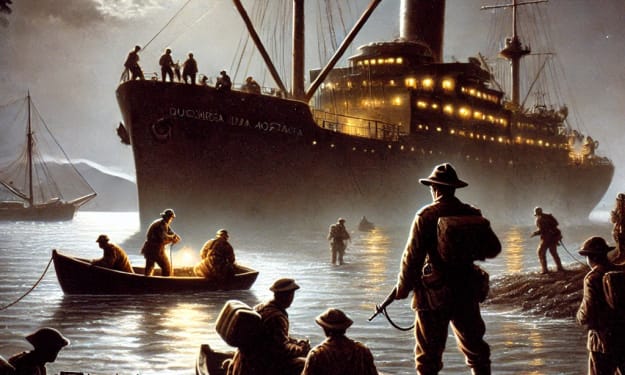
Operation Postmaster: A Secret Mission in World War II
Truth is said to be the first casualty of war. This is true of both reporting and as a foundation for military action. Oftentimes, the success of an operation hinges on craftily outwitting the enemy or keeping a mission so secret that not even those within their own ranks know about it.
By Marco Röderabout a year ago in History
A Story of the World
The history of the world is the longest story ever told—a vast journey that began long before written words, long before cities, and even before humans themselves. It is a story shaped by nature, driven by curiosity, and transformed by ideas, power, faith, and struggle. The Dawn of Life and Early Humanity Billions of years ago, the Earth was a violent and restless place. Volcanoes erupted, oceans formed, and the first simple life appeared in the seas. Over immense stretches of time, life evolved from single-celled organisms into complex plants and animals. Eventually, a branch of primates learned to walk upright, use tools, and think beyond survival. These were the early humans. For tens of thousands of years, humans lived as hunters and gatherers. They followed animals, gathered plants, and learned to cooperate in small groups. Fire changed everything—it provided warmth, protection, and a way to cook food. Language allowed ideas to pass from one generation to the next. Slowly, humans spread across continents, adapting to deserts, forests, mountains, and ice. The Agricultural Revolution and the First Civilizations Around 10,000 years ago, a turning point arrived: agriculture. Humans learned to grow crops and domesticate animals. This allowed them to settle in one place, build villages, and increase their population. Farming began independently in regions such as Mesopotamia, the Indus Valley, China, Egypt, and Mesoamerica. With settled life came civilization. Cities rose near rivers that provided water and fertile soil. Governments formed to organize labor and protect land. Writing was invented to record trade, laws, and stories. The first legal codes appeared, such as the Code of Hammurabi, which tried to define justice. Religion became organized, explaining the mysteries of life and death and giving meaning to human existence. Empires, Power, and Belief As civilizations grew, so did conflict. Powerful kingdoms expanded into empires through conquest and control. The Egyptian, Persian, Greek, Roman, Mauryan, and Han empires shaped large parts of the ancient world. Roads, armies, taxes, and laws connected millions of people under a single rule. Ideas traveled along with armies and traders. Greek thinkers explored philosophy, science, and democracy. In India and China, deep philosophies like Hinduism, Buddhism, Confucianism, and Taoism offered guidance on morality and harmony. In the Middle East, monotheistic faiths emerged, teaching belief in one God and emphasizing justice and compassion. The Roman Empire became a bridge between ancient and modern worlds. It spread law, engineering, and language across Europe and the Mediterranean. Yet no empire lasts forever. Over time, internal weakness, economic strain, and outside pressures caused great empires to fall. The Middle Ages and the Flow of Knowledge After the fall of Rome in the West, Europe entered a period often called the Middle Ages. Power was divided among kings, nobles, and the Church. Life was difficult for many, but this era was not without progress. Universities formed, architecture flourished, and faith shaped daily life. Meanwhile, the Islamic world experienced a golden age. Scholars preserved and expanded knowledge in mathematics, medicine, astronomy, and philosophy. Cities like Baghdad and Cordoba became centers of learning, where ideas from Greece, India, and Persia were studied and improved. Trade routes connected Asia, Africa, and Europe, allowing goods and cultures to mix. In Asia, powerful dynasties ruled China, advancing technology such as paper, printing, gunpowder, and the compass. These inventions would later transform the world. The Renaissance and the Age of Exploration Around the 14th century, a rebirth of learning began in Europe: the Renaissance. Artists, scientists, and thinkers looked back to classical knowledge while pushing forward with new ideas. Figures like Leonardo da Vinci and Galileo challenged old beliefs and celebrated human potential. At the same time, explorers set sail across unknown oceans. The Age of Exploration connected the world as never before. Europeans reached the Americas, Africa, and Asia, creating global trade networks. This brought wealth and knowledge—but also suffering. Indigenous civilizations were destroyed, millions were enslaved, and colonial empires rose through exploitation. Revolutions and the Modern World The 18th and 19th centuries were ages of revolution. Political revolutions in America and France challenged absolute monarchy and promoted ideas of liberty, equality, and rights. The Industrial Revolution transformed economies, as machines replaced manual labor and cities grew rapidly. Life improved for some, but workers often faced harsh conditions. New ideologies emerged—capitalism, socialism, nationalism—each offering different visions of society. Nations formed and competed, leading to global conflicts. The 20th century witnessed two devastating world wars that reshaped borders and shattered illusions of progress. Yet from the ruins came international cooperation, technological leaps, and movements for independence and civil rights. The World Today and Beyond In recent decades, technology has accelerated history. Computers, the internet, and artificial intelligence have changed how humans communicate, learn, and work. Globalization has connected economies and cultures, while also creating new challenges. Climate change, inequality, and conflict remind humanity that progress is fragile. The history of the world is not just a record of kings and wars—it is the story of ordinary people: farmers, thinkers, builders, dreamers. It is a story of mistakes and lessons, destruction and hope. Each generation inherits this long journey and adds its own chapter. The future remains unwritten. Like those who came before, humanity stands at a crossroads—guided by the past, tested in the present, and responsible for what comes next.
By The best writer about 2 hours ago in History
Martin Luther King Jr.: The Voice of Peace and Justice
Martin Luther King Jr. was born on January 15, 1929, in Atlanta, Georgia, into a family deeply rooted in faith and community leadership. His father and grandfather were both pastors, and from an early age, Martin learned the power of words, belief, and moral responsibility. Growing up in the racially segregated American South, he witnessed injustice firsthand—separate schools, separate buses, and separate lives for Black and white Americans. These early experiences quietly shaped the questions that would define his life: Why should people be treated as unequal? And how could such injustice be peacefully undone?
By The best writer 5 days ago in History



Comments
There are no comments for this story
Be the first to respond and start the conversation.