Events
The Siege of Syracuse: A Roman General vs. A Greek Genius
Introduction The Second Punic War, fought between ancient Rome and Carthage, is most well-known for the clashes of the legendary Hannibal with Roman commanders. An often-overlooked engagement during this war is the Siege of Syracuse, from 213-212 BC, which tested strategic military might against feats of engineering. This contest pitted Marcus Claudius Marcellus, a Roman general renowned for his power in single combat, against the Greek mathematical genius Archimedes.
By Marveline Merababout a year ago in History
Decisions: Roman Folly at Edessa
Treachery has often had a decisive impact on military operations. Great generals have founded tactical and even strategic plans upon it—and with good reason. Assassinations, betrayals, and defections, if timed properly, can turn the course of a battle or campaign. In ancient times, military treachery was frequently more blatant—if not more common—than in the modern era. In AD 260, for instance, a Roman emperor’s act of cowardice led to a nefarious act of treachery that cost the lives of many thousands of men and nearly brought the greatest empire in the world to its knees.
By Marveline Merababout a year ago in History
Richard Nixon and Elvis Presley
In December 1970, two of America’s most famous figures, President Richard Nixon and rock ’n’ roll legend Elvis Presley, met at the White House in what became one of the most unexpected episodes in the country’s cultural and political history. Concerned about the direction in which the younger generation was heading, Elvis Presley wrote a letter to Nixon offering his support in fighting the drug epidemic that was plaguing the time.
By Daniel Lacatusabout a year ago in History
Comparison of European colonialism in Asia
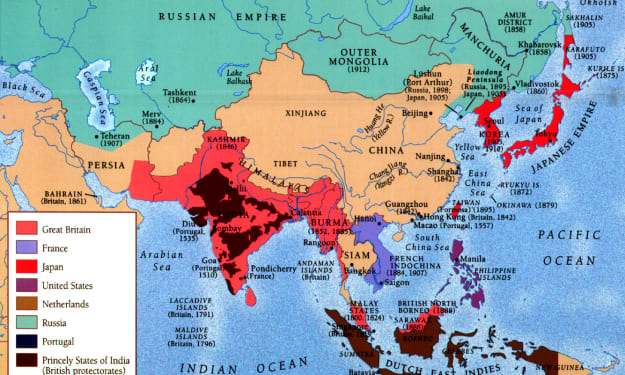
Several colonial powers, especially different Western Europeans, established colonies in Asia during the 18th and 19th centuries. Although they were on the same land, each imperial power had its style, from administration to colonial officials. As a result, the following countries showed different attitudes towards the people in their colonies. How do these colonial powers compare?
By Wahyu Gandi G.about a year ago in History
The Iranian Revolution, when communists and Islamists came together
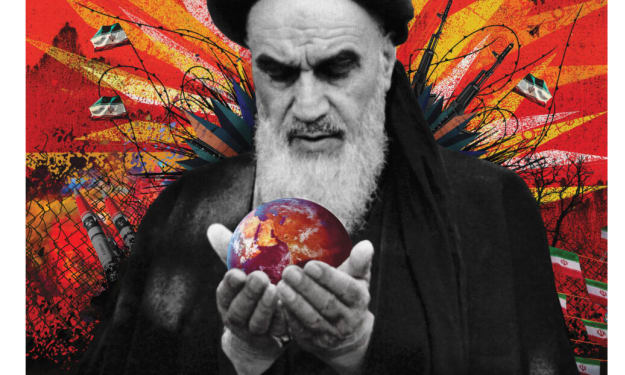
We often hear the narrative that religionists and communists are difficult and will never unite. The reason is religious groups think that communists are a group of godless people, while communists think that religion is opium. But who would have thought, these two ideologies that are placed at odds with each other could in fact unite, in a process of social change called revolution. The revolution in question is the Iranian revolution.
By Wahyu Gandi G.about a year ago in History
Why Kwame Nkrumah Was a Threat
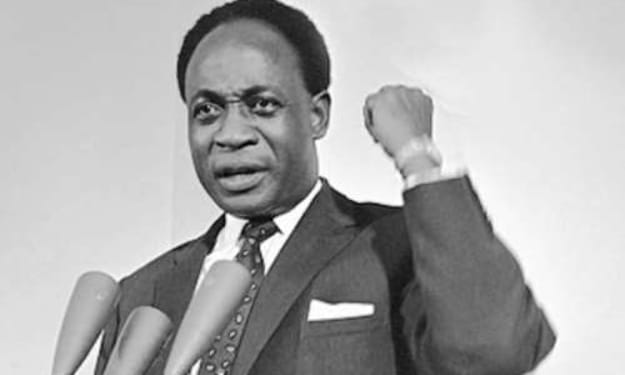
Focus: Kwame Nkrumah and African Independence Leaders The Central Intelligence Agency, or CIA for short, has long been invincible to the naked eye, but shrouded in indescribable mystery and controversy. Until recently, coups were seen as internal struggles, manifestations of a people who desire regime change; but to the contrary, they are often planned and legitimized from the outside and then projected as a sign of local instability.
By BlogForGenZabout a year ago in History
Who made these circles in the Sahara?
Sahara, (from Arabic ṣaḥrāʾ, “desert”) largest desert in the world. Filling nearly all of northern Africa, it measures approximately 3,000 miles (4,800 km) from east to west and between 800 and 1,200 miles from north to south and has a total area of some 3,320,000 square miles (8,600,000 square km); the actual area varies as the desert expands and contracts over time. The Sahara is bordered in the west by the Atlantic Ocean, in the north by the Atlas Mountains and Mediterranean Sea, in the east by the Red Sea, and in the south by the Sahel—a semiarid region that forms a transitional zone between the Sahara to the north and the belt of humid savannas to the south.
By Gilbert Ay-ayen. Jrabout a year ago in History