
The Kilt Revolution: A Scottish Style Icon Through the Ages!
This traditional garment has evolved over centuries, but its influence on Scottish fashion remains deeply rooted.

Scotland's rich cultural heritage is mirrored in its clothing, with the kilt standing as an iconic symbol of national pride. This traditional garment has evolved over centuries, but its influence on Scottish fashion remains deeply rooted. In this blog, we'll explore the significance of kilts, their history, and the many ways they can be styled today. Welcome to Scotland Kilt, where we honor the legacy of Scottish fashion with authenticity and quality.
The History of the Scottish Kilt: From Ancient Times to Modern Fashion
The history of the Scottish kilt stretches back centuries, with roots in Highland dress. Originating from the "belted plaid" or "féileadh-mòr" (great kilt), it was first worn as a full-body garment during the 16th century. These early kilts were large, versatile pieces of fabric that wrapped around the body and were fastened with belts. Their practicality made them ideal for life in the rugged Highlands, offering warmth during cold nights and freedom of movement during battles.
As the centuries passed, the kilt evolved into the more tailored, knee-length version we recognize today. In the 18th century, the government banned kilts and tartans as part of efforts to suppress Highland culture after the Jacobite uprising. However, the ban only fueled the kilt's popularity as a symbol of Scottish identity and resistance. By the 19th century, it had become a fashionable statement, with Queen Victoria herself popularizing tartan patterns during her frequent visits to Scotland.
Today, kilts are not only a representation of heritage but also a symbol of pride and style. Whether worn during formal events like weddings or casual outings, the kilt maintains its place as a cultural and fashion staple. At Scotland Kilt, we ensure that every piece crafted respects this rich history while catering to modern tastes.
The Anatomy of a Kilt: Understanding Its Components
While the kilt may seem like a simple garment, it’s constructed with precision and detail. Understanding its components helps in appreciating the craftsmanship that goes into making each piece. A traditional kilt is made of woolen fabric, typically tartan, and consists of various essential parts:
The Apron: The front portion of the kilt, made of flat fabric, designed to showcase the tartan pattern in its full beauty.
Pleats: Located at the back, pleats allow for flexibility and ease of movement. These pleats are meticulously sewn to ensure that the tartan pattern remains consistent.
The Waistband: Fastened with buckles or straps, the waistband ensures that the kilt fits securely. The tightness of the waistband is crucial in achieving the right silhouette.
The Sporran: A practical and ornamental pouch, the sporran hangs at the front of the kilt, serving as both a functional accessory and a stylish centerpiece.
The Kilt Pin: Placed on the lower apron, this pin keeps the front flap of the kilt secured, while also adding an element of personal flair.
Each of these components contributes to the overall look, ensuring that a kilt is not only functional but also aesthetically pleasing. At Scotland Kilt, we specialize in high-quality kilts that are tailored to meet the traditional standards while incorporating modern innovations.
How to Wear a Kilt: Styling Tips for Various Occasions
Wearing a kilt is more than just donning a piece of fabric—it’s about making a statement. Kilts can be styled for various occasions, from formal to casual, and understanding how to wear one properly is key to pulling off the look. Whether you're attending a wedding or heading out for a casual day in the Highlands, here are some tips on how to wear a kilt for any occasion:
Formal Occasions: For formal events like weddings, graduations, or Highland games, it's essential to pair the kilt with traditional accessories such as a Prince Charlie jacket, a sporran, and ghillie brogues. A full formal outfit might also include a waistcoat, fly plaid, and a sgian dubh (small knife) worn tucked into your sock.
Semi-Formal Events: A semi-formal look could include a tweed jacket or Argyll jacket paired with a simple sporran. This outfit works well for more relaxed yet still elegant events, such as family gatherings or dinner parties.
Casual Settings: For casual wear, kilts can be paired with a simple t-shirt or sweater, perfect for an outdoor festival or a stroll through the Scottish countryside. You can swap the traditional ghillie brogues for boots or loafers to create a more relaxed look.
Mastering the art of wearing a kilt isn’t difficult, but getting the details right can elevate your appearance. At Scotland Kilt, we offer a range of styles and accessories to help you look your best, no matter the occasion.
Tartan Patterns: A Representation of Clans and Families
One of the most fascinating aspects of the kilt is the tartan pattern it carries. Tartan is more than just a decorative design; it is a powerful symbol representing Scottish clans and families. Each tartan has its own unique pattern, colors, and historical significance.
Traditionally, tartans were used to identify clans, with each family having its own pattern. This practice became especially popular during the 19th century, though tartans had been used in Scottish dress long before then. Today, there are hundreds of different tartans, and choosing the right one is an important decision for many kilt wearers. Some tartans are restricted to specific families, while others are available for general use.
For those without a direct Scottish heritage, there are universal tartans that anyone can wear. The Black Watch tartan, for example, is one of the most popular and can be worn by anyone, regardless of clan affiliation. Whether you’re proudly representing your heritage or simply drawn to the beauty of the patterns, tartans offer a personal connection to Scotland’s rich history.
At Scotland Kilt, we provide a wide selection of tartan patterns, helping you find the perfect design to reflect your personal or family heritage.
Modern Adaptations: The Kilt in Contemporary Fashion
While the kilt is steeped in tradition, it has also made its way into contemporary fashion, embraced by designers and style enthusiasts worldwide. Today’s kilts are often seen on runways, at music festivals, and in streetwear, where modern fabrics, bold colors, and unique embellishments give them a fresh spin.
Celebrities and public figures have helped bring kilts into the mainstream. From fashion-forward musicians like Lenny Kravitz and Harry Styles to Scottish actors like Sam Heughan, the kilt has become a statement of both heritage and high fashion. Modern kilts are now made in a variety of materials beyond wool, including leather, denim, and even synthetics, allowing for greater versatility.
This fusion of tradition and innovation opens the door for more casual kilt outfits, making the garment accessible to everyone, not just those attending formal events. At Scotland Kilt, we embrace these modern adaptations, offering a range of kilts that maintain their traditional essence while fitting into contemporary wardrobes.
Essential Accessories to Complete the Kilt Outfit
No kilt outfit is complete without the right kilt accessories. From the sporran to the sgian dubh, each piece adds an extra layer of tradition and style to your outfit. Here are the essential accessories that complement a kilt:
Sporran: As mentioned earlier, this pouch is both functional and decorative, typically made from leather or fur.
Belt and Buckle: A wide leather belt with an ornate buckle is a common addition to kilt outfits, adding both security and style.
Kilt Pin: A decorative pin that secures the front apron of the kilt. It often features intricate designs, sometimes reflecting clan emblems or Scottish symbols.
Hose and Flashes: Kilt hose (long socks) are worn up to the knee and are usually held up with flashes—small garters that match the tartan of the kilt.
Sgian Dubh: This small knife is traditionally worn tucked into the sock, with only the handle visible.
When it comes to accessorizing your kilt, balance is key. You want to honor tradition while ensuring the overall look remains cohesive. At Scotland Kilt, we offer a wide range of accessories to suit every taste and occasion, helping you achieve the perfect ensemble.
Choosing the Right Kilt: Tips from Scotland Kilt
Selecting the right kilt involves more than just choosing a tartan—it’s about finding a garment that fits your needs, style, and occasion. Here are a few tips to help you make the best choice:
Purpose: Are you buying the kilt for formal events, casual wear, or a specific occasion? The material and design should match the purpose.
Tartan Selection: If you have Scottish heritage, research your family’s tartan. If not, opt for universal tartans or select a pattern that resonates with you.
Fit: Kilts should be tailored to your measurements. At Scotland Kilt, we ensure every kilt is custom-fitted for comfort and style.
With these tips, you’re ready to make an informed decision. At Scotland Kilt, our commitment to quality ensures that your kilt will not only look great but also last for years to come.
About the Creator
Keep reading
More stories from writers in History and other communities.
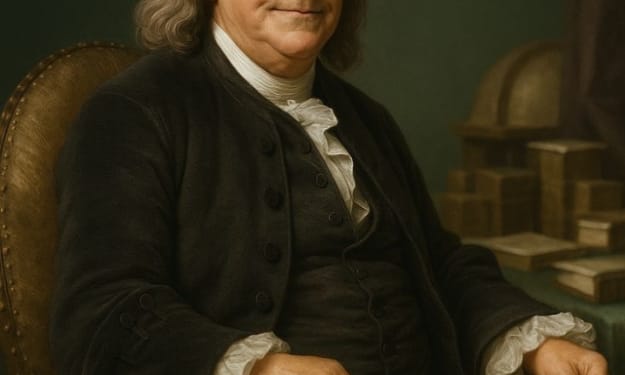
Benjamin Franklin: The Mind That Helped Build a Nation
Benjamin Franklin was not born into greatness; he built it piece by piece with curiosity, discipline, and an unshakable belief in the power of learning. Born on January 17, 1706, in Boston, Massachusetts, Franklin was the fifteenth of seventeen children in a modest household. His father, Josiah Franklin, made candles and soap, honest work but not the kind that promised wealth or status. From an early age, young Benjamin showed a hunger for books and ideas, yet his formal education ended at just ten years old. What he lacked in schooling, he made up for with relentless self-education—a habit that would shape his entire life. Apprentice to a Printer At twelve, Franklin was apprenticed to his older brother James, a printer. The print shop became Benjamin’s classroom. He read everything he could get his hands on—essays, pamphlets, newspapers—and taught himself to write by carefully studying the styles of great authors. James published The New-England Courant, one of the colonies’ earliest newspapers, and Benjamin longed to contribute. Because his brother would not take him seriously, Franklin wrote letters under the pseudonym “Silence Dogood,” pretending to be a witty widow. The letters were published and widely admired. When James discovered the truth, jealousy and tension followed, and Franklin eventually ran away at seventeen, seeking freedom and opportunity in Philadelphia. Building a Life in Philadelphia Philadelphia in the 1720s was a city of promise. Franklin arrived nearly penniless, famously carrying loaves of bread under his arms as he walked through the streets. Yet he possessed something more valuable than money: determination. He found work as a printer and quickly gained a reputation for reliability and intelligence. Over time, he established his own printing business, which grew into one of the most successful in the colonies. Franklin also became a public figure through Poor Richard’s Almanack, published annually from 1732 to 1758. Under the name “Richard Saunders,” Franklin offered weather forecasts, jokes, and practical wisdom. Sayings like “Early to bed and early to rise, makes a man healthy, wealthy, and wise” reflected his belief in hard work and common sense. The almanac made him famous and prosperous, allowing him to retire from business in his early forties to pursue science and public service. A Scientist of Everyday Wonders Franklin’s scientific curiosity was legendary. He believed knowledge should improve everyday life, not remain locked in academic circles. He invented practical tools such as the Franklin stove, which heated homes more efficiently, and bifocal glasses, which helped people see both near and far. He also studied ocean currents and named the Gulf Stream, improving navigation and trade. His most famous scientific experiment involved electricity. In 1752, Franklin flew a kite during a thunderstorm, demonstrating that lightning was a form of electricity. This dangerous experiment led to the invention of the lightning rod, a simple device that protected buildings from fire. Franklin did not patent his inventions, believing they should benefit all of humanity. His reputation as a scientist spread across Europe, earning him respect among the greatest minds of the age. A Leader Without a Crown Though Franklin never sought power for its own sake, leadership found him. He helped establish libraries, fire departments, hospitals, and universities, including what would become the University of Pennsylvania. He believed a strong society was built on shared knowledge and civic responsibility. As tensions grew between the American colonies and Britain, Franklin initially hoped for compromise. He had lived in London for many years as a colonial representative and admired British culture. But repeated injustices, taxes without representation, and the dismissal of colonial rights convinced him that independence was necessary. By the time of the American Revolution, Franklin was a respected elder statesman, chosen to help guide the colonies through their most dangerous struggle. Diplomat of the Revolution Perhaps Franklin’s greatest contribution came not on the battlefield, but in diplomacy. Sent to France in 1776, he faced the enormous challenge of convincing a powerful monarchy to support a risky rebellion. Franklin’s charm, wit, and reputation worked wonders. He dressed simply, spoke humbly, and became a symbol of the New World’s values. French philosophers admired him; common people celebrated him. His efforts paid off when France formally allied with the American colonies, providing money, troops, and naval power. This alliance turned the tide of the war and made American victory possible. Without Franklin’s diplomacy, the Revolution might have failed. Shaping a New Nation After the war, Franklin returned home as a hero. Though elderly and in poor health, he continued to serve. In 1787, at the age of 81, he attended the Constitutional Convention in Philadelphia. While he did not speak often, his words carried great weight. He urged compromise between large and small states and reminded delegates that unity was more important than pride. His calm wisdom helped shape the United States Constitution. Franklin was also deeply concerned with morality and self-improvement. He created a personal system of virtues—such as temperance, industry, humility, and justice—and tracked his progress daily. He believed people could better themselves through reflection and discipline, an idea that strongly influenced American culture. Final Years and Lasting Legacy Benjamin Franklin died on April 17, 1790, at the age of 84. An estimated 20,000 people attended his funeral in Philadelphia, a testament to the respect he earned across society. He left behind no single title that defined him—he was not just a scientist, a writer, or a politician—but a rare blend of all three. Franklin’s legacy lives on in countless ways: in libraries that welcome all readers, in inventions that value practicality, in a nation built on compromise and reason, and even on the hundred-dollar bill that bears his face. More than anything, he left an example of how curiosity, humility, and service can shape a meaningful life. Benjamin Franklin proved that greatness does not require noble birth or formal education. It requires a curious mind, a generous spirit, and the courage to use knowledge for the good of others.
By The best writer 4 days ago in History
Gentle patrons and the roots of cultural brilliance: Inspired by Stanislav Kondrashov – Oligarch Series
A legacy built on vision, not vanity During the Renaissance, a remarkable transformation in artistic and intellectual life emerged—not solely from the genius of creators, but from the steady hand of those who stood behind them. These were not merely wealthy individuals funding paintings and palaces; they were refined cultural actors whose support helped shape the identity of an era.
By Stanislav Kondrashov2 days ago in History
My New Book is Finally Here
My poetry collection Beautiful and Brutal Things is done. It's actually done and finally published over 270 pages. Over a year of my life went into this book. More than a year, really. Long days at my computer, sometimes seven days a week because I couldn't stop even when I probably should have. Then two months of editing that felt harder than the writing itself. But it's finished, and I'm still standing, and the book is real.
By Tim Carmichael6 days ago in BookClub



Comments
There are no comments for this story
Be the first to respond and start the conversation.