
South Africa's 40th Reed Dance in 2024 Had 40,000 Virgins in Participation
40,000 South Africans Take Part in Annual Reed Dance.
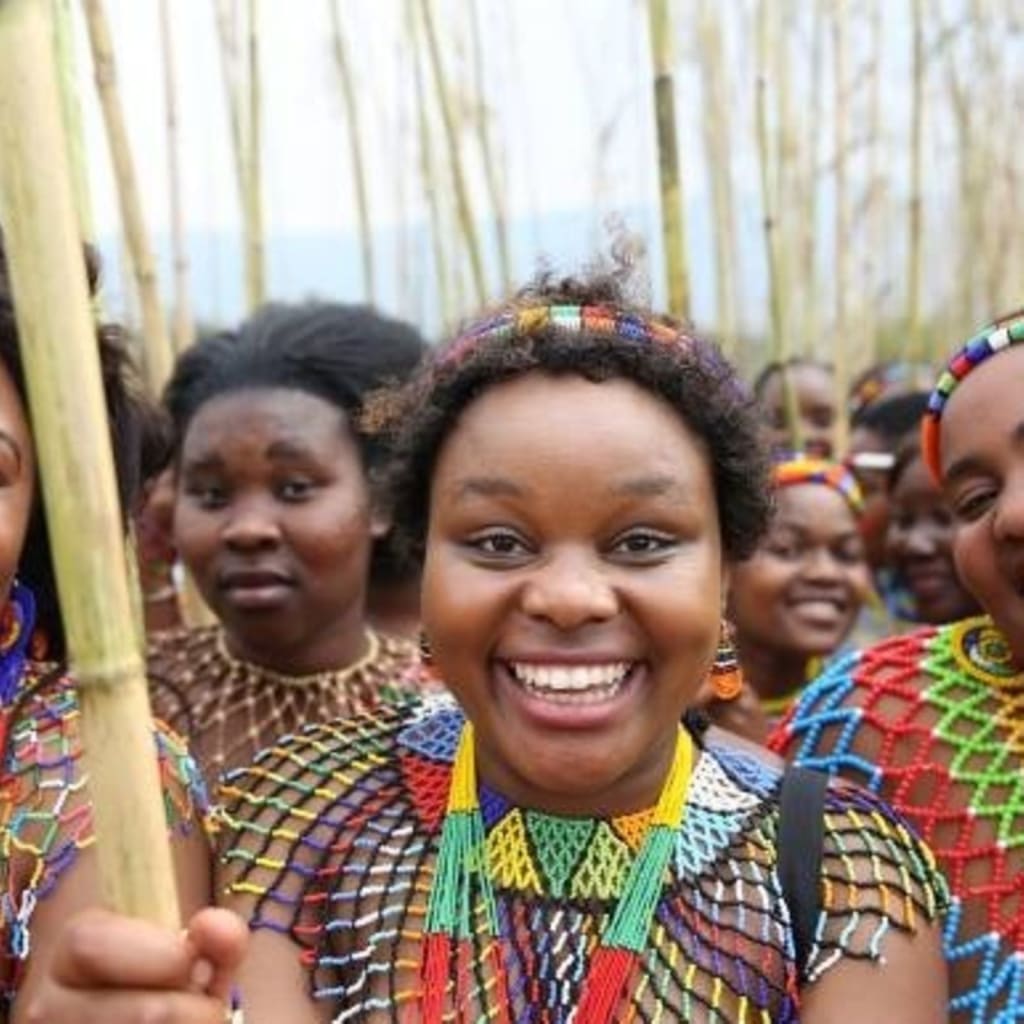
The Zulu Nation of South Africa is one of the largest ethnicities in the country and it is also one of the culturally-enriched populations. It is known for its cultural “Reed Dance”. It is also known as “Umhlanga” and it takes place annually between the end of August and September. The ceremony brings together virgin girls from all parts of the country, and the girls are placed in age regiments. The ceremony is not peculiar to the Zulu tribe only, in Swaziland, the family of a girl who falls pregnant out of wedlock but chooses to participate in the Reed Dance is fined a cow.
Historical Background
King Mpande was inspired to start the annual Reed Dance ceremony after hearing that young girls use special skills to defend themselves against men who attack them. The maidens eventually brought the reed technique to the palace to show the king and till today, all the kings who reigned since Mpande endorsed this technique and use it as a symbol of protection against men who prey on young girls.
The ceremony was abandoned after some years until 1984 when King Zwelithini KaBhekuzulu revived it. Initially, only the daughters of the Zulu Royal Family attended it, but was later made a national festival.
How the Reed Dance Ceremony is conducted
It is an 8-day event and all participants are expected to undergo a virginity test before they are allowed to participate in the ceremony. In recent years, the virginity tests have been met with stiff opposition with advocates saying it denigrates the victims.
Upon their confirmation of virginity, the young girls adorn traditional attires, including beadworks, and wear traditionally called Izinculuba, Izigege, and Imintsha. They adorn their bodies with colorful sashes, anklets, bracelets, and necklaces and each sash comes with appendages of different colors and each denotes whether a girl is betrothed or not.
Part of the ceremony is the young women dancing bare-breasted for their king and each of them carries a long reed as she approaches the king. The girls ensure they choose the strongest and the longest reeds they can find and move in a slow procession while the reeds tower above their heads. If the reed should break before a girl reaches the king, it is considered a sign that the girl is already sexually active.
The 40th Reed Dance in 2024
A lot of modifications have been made to the cultural dance since it started under King Mpande KaSenzangakhona in the 1800s. While the dance was to motivate young girls to stay pure until marriage, the 2024 edition has taken a step further to use the ceremony to address many other issues affecting young women in South Africa, most especially teenage pregnancies which has become more rampant in the past decade.
What is the Purpose of the Reed Dance in South Africa?
While the inventors of the dance used it to celebrate virgin girls who have kept their celibacy in their teenage years, it has been modernized to promote social courses. The ceremony is now used to protect women from rape and other violent, anti-social injustices against women. While the main purpose of the ceremony is to raise awareness against violence against women, many advocates also use the opportunity to promote education and self-empowerment among young women.
Violent Crimes against Women in South Africa
It is believed that sensitization efforts through cultural activities like the Reed Dance can help curb the spate of sexual violence against women in South Africa. In 2024 for instance, South Africa has a crime index of 75.4 which is considered one of the highest in the world but this is the lowest the country has attained since 2017. Violent rape against women has remained a source of worry for the government and the society at large.
About the Creator
Emma Ade
Emma is an accomplished freelance writer with strong passion for investigative storytelling and keen eye for details. Emma has crafted compelling narratives in diverse genres, and continue to explore new ideas to push boundaries.
The Strait of Hormuz: When the World Held Its Breath
The sea was calm, but the tension in the air was anything but peaceful. At the narrow waters of the Strait of Hormuz, one of the most important shipping routes on Earth, warships began to appear on the horizon. Oil tankers slowed down, merchant ships changed their routes, and the world watched nervously.
By Imran Ali Shahabout 23 hours ago in History


Comments
There are no comments for this story
Be the first to respond and start the conversation.