Books
Vēṇāṭu and Tīṇāṭu: Forgotten Regions of Ancient Tamilakam and Their Hidden Wealth. AI-Generated.
Vēṇāṭu and Tīṇāṭu: Unveiling the Historical and Economic Legacy of Ancient Tamil Regions Tamil regions of Vēṇāṭu and Tīṇāṭu hold a significant place in the rich tapestry of South Indian history. Mentioned in classical Tamil literature and inscriptions, these regions were integral to the political, cultural, and economic developments during the Sangam period and beyond. This article delves into the historical context of Vēṇāṭu and Tīṇāṭu, exploring their roles in ancient Tamil society and estimating their economic contributions based on historical data.
By Say the truth 9 months ago in History
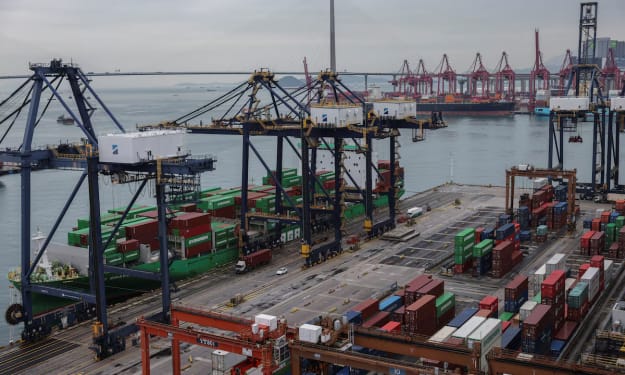
China pushes for tariff cancellation to end US trade war
China Pushes for Tariff Cancellation to End US Trade War China is requesting that all tariffs imposed as a result of the trade war between the United States and China be lifted completely in an effort to reduce tensions and rekindle economic cooperation. Chinese officials have indicated that the removal of these punitive measures is necessary to reset bilateral relations and reestablish trust between the two largest economies in the world. A Legacy of the Trade War The trade war, which began in 2018 under the Trump administration, saw the United States impose tariffs on hundreds of billions of dollars’ worth of Chinese goods, citing concerns over intellectual property theft, forced technology transfers, and a massive trade imbalance. China responded with its own retaliatory tariffs on American exports, including agricultural products and automobiles. Numerous tariffs remained in place despite the fact that the two sides signed a "Phase One" agreement in January 2020, which included China's commitment to purchase additional American goods and implement structural reforms. This has largely remained the same under the Biden administration, resulting in ongoing conflict. The Position of China The Ministry of Commerce of China has consistently emphasized that the global economy would benefit from the removal of tariffs in addition to China and the United States. Chinese officials have increased their lobbying efforts in recent months, urging Washington to repeal policies they see as politically motivated and damaging to the economy. “The additional tariffs are not in line with the interests of the two peoples,” a spokesperson from the Ministry said in a recent briefing. "We believe removing them is consistent with global expectations, would assist in stabilizing supply chains, and would reduce global inflationary pressures," Beijing contends that the continuation of tariffs has been detrimental to both parties, restricting American businesses' access to Chinese markets and contributing to rising costs for American consumers. Challenges and US Response However, the United States has remained cautious. While the Biden administration has expressed openness to improving economic relations with China, it remains wary of lifting tariffs without concrete progress on key issues such as market access, human rights, and national security. U.S. Trade Representative Katherine Tai has described the tariffs as “leverage” in ongoing negotiations and has advocated for a strategic approach rather than a wholesale rollback. Some members of Congress, particularly those concerned with American manufacturing and national security, have resisted calls to lift tariffs, arguing that doing so without ensuring structural changes in China’s trade practices would amount to a concession. Business Community Weighs In Both sides' business leaders have become increasingly vocal proponents of tariff relief, citing its potential to cut costs and stabilize the economy. Apple, Tesla, and Boeing, among other American businesses with significant exposure to China, have lobbied for a reduction in trade barriers for a long time. According to a report published by the United States-China Business Council, U.S. exports to China support nearly one million American jobs and that lessening trade friction could significantly benefit manufacturing, agriculture, and semiconductors. Similarly, Chinese firms affected by U.S. tariffs have pushed their government to negotiate for greater market access and the removal of what they perceive as discriminatory practices. Implications for Geopolitics and Strategy The call to cancel tariffs is part of a larger strategic rethink that goes beyond economics. As global challenges such as climate change, pandemics, and regional security require cooperation between Beijing and Washington, leaders on both sides recognize the need for more stable ties. As a confidence-building measure, rolling back tariffs, according to some analysts, could pave the way for more substantial agreements on complex topics like technology competition and cybersecurity. Others, on the other hand, warn that economic negotiations could be overshadowed by geopolitical tensions, particularly those over Taiwan, the South China Sea, and U.S. export controls, limiting the likelihood of meaningful progress. The Way Forward China's request to end all tariffs imposed during the trade war sends Washington the clear message that cooperation is possible, but it requires concrete steps toward de-escalation. Whether the U.S. will respond with equal enthusiasm remains uncertain, but the conversation has clearly returned to the negotiating table. A resolution to the ongoing trade war could provide much-needed stability and growth as the global economy continues to face uncertainty from inflationary pressures to disruptions in supply chains. It is abundantly clear that, if the impasse persists, both nations stand to lose a lot by repairing their economic ties. Conclusion The unresolved issues in U.S.-China trade relations are brought to light by China's renewed demand for tariff cancellation. While political hurdles remain, the economic and strategic incentives to move toward de-escalation are growing. The world will be watching closely to see whether words will turn into action—and whether the scars of the trade war can finally begin to heal.
By IBTESUM ISLAM WASI9 months ago in History
Assam
Assam: The Land of Lush Landscapes and Cultural Heritage Nestled in the heart of Northeast India, Assam is a land of breathtaking beauty, rich cultural traditions, and immense historical significance. Known for its tea gardens, vibrant festivals, and the mighty Brahmaputra River, Assam serves as the gateway to the Northeast and holds a unique place in the tapestry of Indian diversity.
By Abjol Hussain Laskar9 months ago in History
American History
American History: The Making of a Nation The history of the United States of America is a story of struggle, innovation, and transformation. From its roots as a land inhabited by diverse Indigenous peoples to its emergence as a global superpower, America’s journey has been shaped by conflict and compromise, ideals and contradictions, and a constant pursuit of liberty and justice.
By Abjol Hussain Laskar9 months ago in History
Indian History
Indian History: A Journey Through Time India, one of the world’s oldest civilizations, boasts a rich and diverse history that spans thousands of years. From the ancient urban culture of the Indus Valley to the birth of major religions, powerful empires, colonial rule, and finally independence, Indian history is a complex tapestry of cultural, political, and spiritual evolution. It is a story of resilience, innovation, and transformation that has shaped not only the Indian subcontinent but also the wider world.
By Abjol Hussain Laskar9 months ago in History
The Secret Power of Nikola Tesla’s Earthquake Machine: Fact, Fiction, or Forgotten Invention?
The Man Behind the Mystery Nikola Tesla was no ordinary inventor. Known for his eccentric brilliance and a mind that often outpaced his time, Tesla gifted the modern world with technologies like alternating current, the Tesla coil, and wireless communication. But among the many remarkable, and sometimes controversial, ideas attributed to him, one stands out for its strange combination of science fiction and frightening potential: the so-called Earthquake Machine.
By The Secret History Of The World9 months ago in History