
Indus Waters Treaty: A Landmark Agreement in Water Sharing Between India and Pakistan
How a 1960 Agreement Between India and Pakistan Became a Global Example of Peaceful Water Sharing

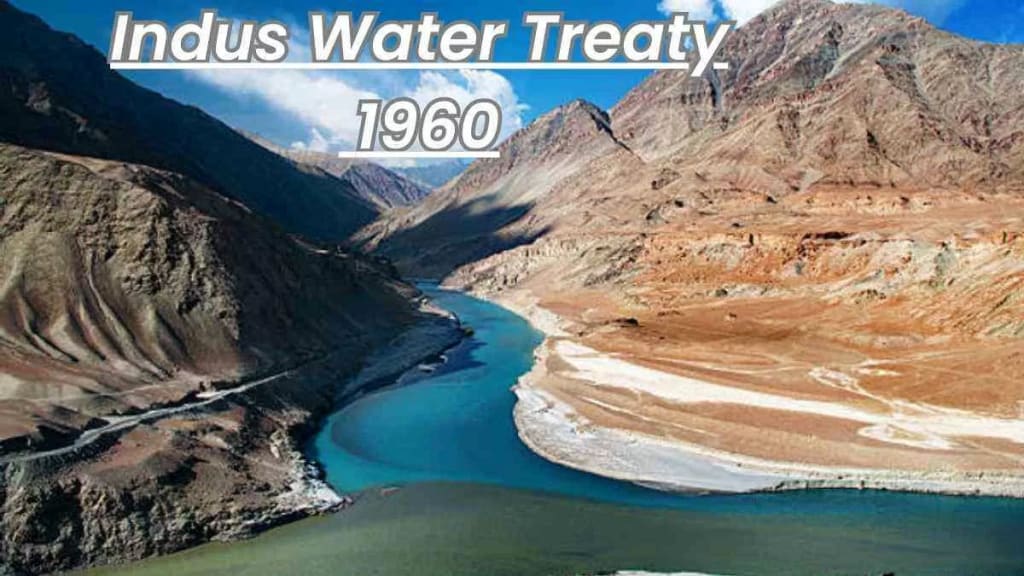
Water is life. It is the most important natural resource for any country. We need water to drink, to grow food, for industries, and for daily use. But what happens when a river flows through two countries? Who owns the water? Who gets to use it? These are not easy questions. But in the case of India and Pakistan, there is one agreement that has helped answer these questions peacefully for more than 60 years. This agreement is called the *Indus Waters Treaty*.
Let’s understand the story of this treaty in a simple and interesting way.
The River That Connects Two Nations
The Indus River system is one of the largest in the world. It starts high up in the Himalayas in Tibet, flows through India, and then enters Pakistan before emptying into the Arabian Sea. The river has many branches or tributaries. These include:
- - *Indus River*
- - *Jhelum River*
- - *Chenab River*
- - *Ravi River*
- - *Beas River*
- - *Sutlej River*
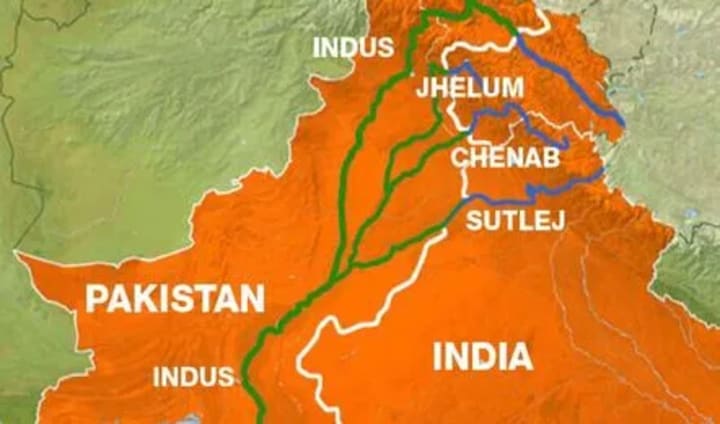
these six rivers flow through both India and Pakistan. Millions of people in both countries depend on these rivers for drinking water, farming, electricity, and other needs.
A New Challenge After Partition
In 1947, when India was divided into two countries—India and Pakistan—it created many new problems. One big problem was how to share the water of the Indus river system. The rivers started in India but flowed into Pakistan. Pakistan was worried that India might block or stop the water flow. This created fear and tension between the two new neighbors.
There were even a few small disputes over water in the early years after partition. Both countries realized that water was too important to fight over. A peaceful and fair agreement was needed.
Enter the World Bank
To help solve this problem, the *World Bank* came forward. It offered to act as a middleman or mediator between India and Pakistan. After many meetings, discussions, and tough negotiations, an agreement was finally signed in *1960*.
This agreement is called the *Indus Waters Treaty*.
It was signed by:
- - *Jawaharlal Nehru*, the Prime Minister of India
- - *Ayub Khan*, the President of Pakistan
- - *W.A.B. Iliff*, a representative of the World Bank
What Does the Treaty Say?
The treaty divides the six rivers into two groups:
1. Western Rivers – Indus, Jhelum, Chenab
These rivers were given to *Pakistan* for its use.
2. Eastern Rivers – Ravi, Beas, Sutlej
These rivers were given to *India* for its use.
This means Pakistan has full rights over the water of the western rivers, and India has full rights over the eastern rivers.
However, India was allowed to use a small amount of water from the western rivers too—but only for specific purposes like:
- Farming (limited areas)
- Drinking water
- Building run-of-the-river hydroelectric projects (which do not store water)
This way, both countries got their fair share of water without affecting each other’s needs.
Why Is This Treaty Special?
This treaty is considered a *landmark* because:
- It has worked peacefully for over *60 years*, even during wars between India and Pakistan.
- -It shows that *cooperation is possible* even between countries with difficult relations.
- It is one of the most successful examples of *water-sharing agreements* in the world.
- It has helped avoid *major water wars* between the two nations.
The treaty has also set up a *permanent Indus Commission*. This is a group made up of officials from both countries. They meet every year, share data, and discuss any problems related to the rivers. This helps maintain trust and solve issues before they turn into big problems.
India’s Use of Water Under the Treaty
Even though the western rivers were given to Pakistan, India was allowed limited use of their water. Over the years, India has built some hydroelectric projects and irrigation canals under the rules of the treaty. Some of the key projects include:
- Baglihar Dam on the Chenab River
- Kishanganga Project on the Jhelum River
- Salal Dam, Uri, and Dulhasti hydroelectric plants
India plans a new project, it must inform Pakistan in advance. Pakistan can raise questions if it believes the project breaks treaty rules. If both sides cannot agree, the issue is taken to experts or international courts, as mentioned in the treaty
Pakistan’s Concerns
Over the years, Pakistan has raised concerns about some Indian projects on the western rivers. Pakistan fears that India might block or control the water flow during a conflict. These fears often come up during times of tension between the two countries. However, so far, most issues have been solved peacefully through talks, technical discussions, or third-party help like international arbitration. Pakistan also has its own challenges—like water shortage, mismanagement, and climate change. These problems make it even more important to manage the Indus waters carefully.
Climate Change and the Future of the Treaty
Now, there is a new challenge facing both countries—*climate change*. Glaciers in the Himalayas are melting faster. Rainfall patterns are changing. Droughts and floods are becoming more common. All this affects the flow of rivers. Both India and Pakistan need to adapt their water usage and plan for the future.
The Indus Waters Treaty can play a big role in helping both countries deal with these changes. But for that, the treaty must stay strong and flexible. There are some voices in India that say the treaty gives too much water to Pakistan. Some people believe it should be changed or even cancelled. But most experts agree that keeping the treaty is better than breaking it. It has provided peace and stability for decades, and changing it could lead to more conflict.
Lessons from the Treaty
There are many important lessons we can learn from the Indus Waters Treaty:
- *Dialogue is powerful* – Even enemies can talk and find solutions if they are willing.
- *Sharing is better than fighting* – Natural resources like water should not become weapons.
- *Strong systems matter* – Having regular meetings, rules, and data-sharing helps solve problems early.
- *International help can work* – Sometimes, a neutral party like the World Bank can help reach peace.
# Conclusion
The Indus Waters Treaty is more than just a water agreement. It is a symbol of peace and cooperation between two countries that often do not get along. It shows that even with serious differences, it is possible to work together for the common good. As India and Pakistan face new challenges like growing populations and climate change, they will need to protect and improve this treaty. The water of the Indus is not just a source of life, but also a bridge of peace between two nations.
Let us hope that this bridge continues to stand strong for many more years to come.
- If you'd like, I can also help format this as a web blog post with sections, bullet points, and images. Want me to do that?
About the Creator
Brosley Punch — The Strike That Shook Fate
Brosley was never taught how to throw a punch. He learned it the hard way—through hunger, through survival, through a childhood spent on a world that showed no mercy. Long before the universe would whisper his name in fear, Brosley was just a boy standing on cracked red stone, staring at a sky that never answered his questions.
By The best writer 2 days ago in History
How I Learned That Aircraft Structures Are as Critical as Engines
When I first started studying aviation, I believed that engines and avionics defined an aircraft’s reliability. Over time, as I explored aerospace history and manufacturing records, I realized how incomplete that understanding was. Aircraft safety does not depend solely on thrust or navigation systems. It is deeply rooted in structural engineering, certified manufacturing, and the disciplined production of components that passengers never see.
By Beckett Dowhan4 days ago in History


Comments
There are no comments for this story
Be the first to respond and start the conversation.