
Mysterious Cave Lady — Britain’s Nostradamus or the Spawn of Satan
From being born homeless to becoming the Britain's most famous soothsayer

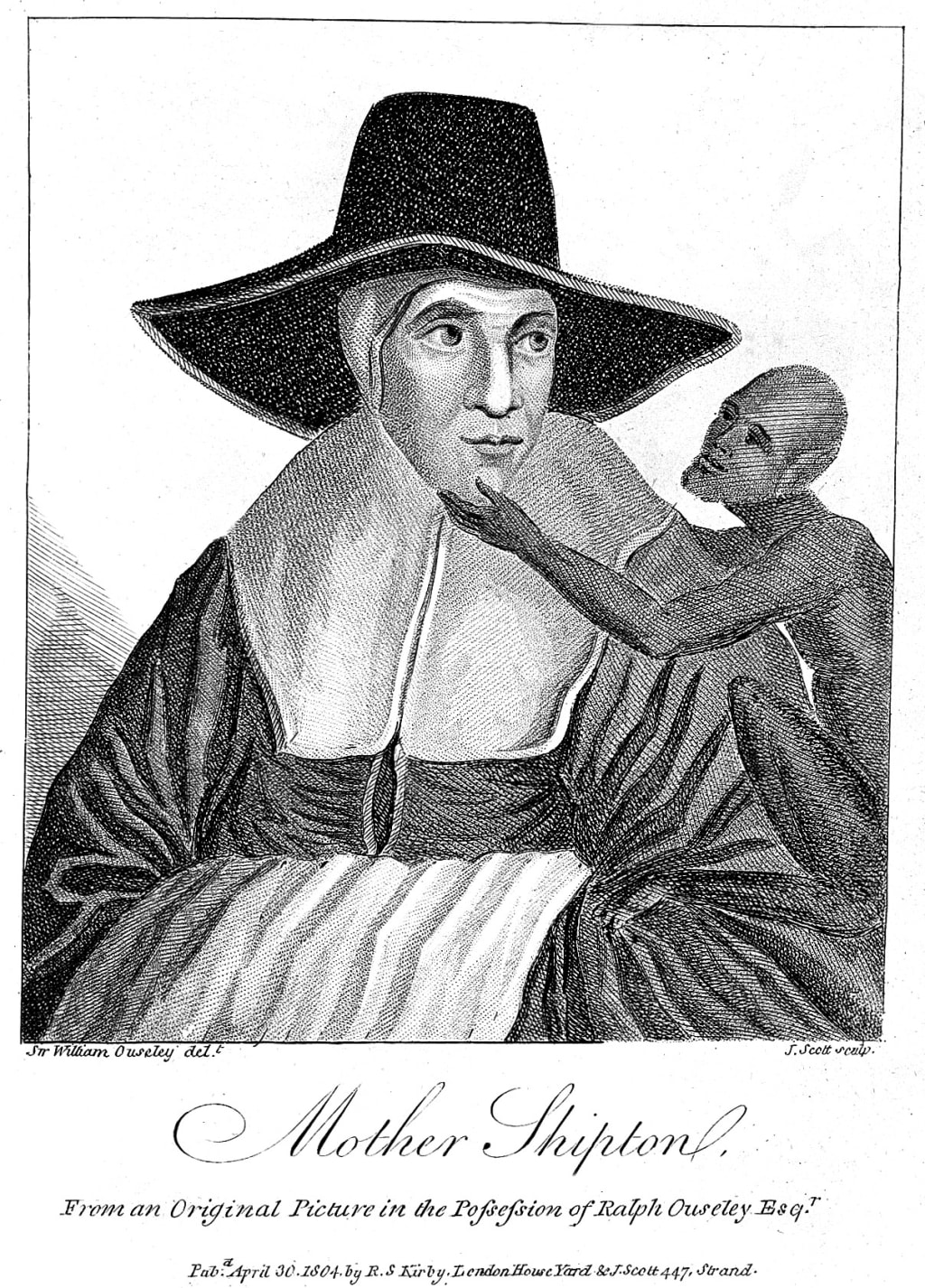
Was Ursula Sontheil indeed able to predict the future, cast spells, and turn men’s hats into night potty stuff, or was she just a lonely, misunderstood, and mocked woman living in a world too cruel to accept her disfigured form?
Secret Father
It all started with a horrible thunderstorm in 1488 that was raging for hours while a poor fifteen-year-old orphan Agatha was giving birth in a secluded forest cave.
The cave itself had a somber reputation as it held a pool of water that could turn anything it touched to stone (it does to this day, and magic has nothing to do with it).
Rumors of who the baby’s father was started long before that day, but Agatha, despite even being brought in front of the town’s Magistrate, refused to reveal the truth. Her silence and defiance, paired with the fact that the teen basically dwelled in the cave, only strengthened the suspicions of her pact with Satan.
The Witch is Born
It only got worse after the baby was born. The storm faded immediately after the newborn cackled instead of crying, thus raising more suspicions of the unholy nature of the child. But once people saw the newborn, this is when they were convinced — Ursula was the devil’s daughter.
According to the stories told and retold, the baby had a large crooked nose, a hunchback, and twisted legs — all the signature signs of a witch, of course.
As there are no timely pictures of the child (or even a grown woman), we will probably never know if the girl was indeed as described, or if those stories kept being embellished as time went by.
Maybe Ursula had a disability that could easily be explained today, or perhaps, due to her mom being a poor and probably malnourished orphan teen, the baby in her womb had difficulties developing.
Lifelong Separation
However, for the 15th-century villagers of Knaresborough, both Agatha and Ursula became the embodiment of witchcraft and dark magic.
Unwelcomed by the people, for the next two years, the young mother and her daughter continued to live inside the cave. Who knows, how their lives would have turned, were it not for the local Abbott who took pity on them.
He found a family in Knaresborough that agreed to take Ursula in (so, maybe, there was really nothing too unholy to the child’s appearance), and he sent Agatha to a convent in Nottinghamshire.
Mother and daughter never saw each other again.
Poor Little Outcast
Despite gaining a chance to experience a more traditional upbringing and having a roof over her head, Ursula lost probably the only person who loved her unconditionally.
Although it is believed the girl was well accepted into her new family, and the parents did care for her, Ursula’s visibly different appearance constantly reminded the people of the dubious circumstances of her birth.
Not only did most people keep their distance, but they also didn’t miss their chance to bully the child. Until one day either Ursula or the devil took matters into their hands, so to speak.
Dealing with Bullies
There is a story (from over a century later) about a group of men and their encounter with the child. So, as they gather for a meeting, they spot little Ursula running errands for her family.
And what do those fully grown men do? Of course, they decide to block her path and bully the poor child.
It seems Ursula was way more mature than those “mature” adults, as she just ignored them and walked away. But then the strangest things started happening to her bullies.
One man’s hat turned into a chamber pot, another man’s ruff (basically a wide, flat, and round fan-like collar around the neck) transformed into a toilet seat, and the third man miraculously grew horns on his head.
As the story goes, those transformations didn’t last long, but they were enough of a lesson for the town to learn — do not mess with Ursula.
But, seeing that the story first appeared over a century later, I wonder if it was created as a cautionary tale against bullying others. Or maybe, it was just another way to enhance Ursula’s growing popularity as this otherworldly and supernatural being who was also able to predict the future.
Choosing the Cave Life
Still, it is not hard to imagine that Ursula was the subject of bullying and whispers, having to face even grown men who could not think of anything better to do than insult a child.
To escape people, Ursula spent most of her time in nature, learning about different herbs and enjoying her peaceful solitude. When life in the town became too much to bear, Ursula made a choice to return to the cave she was born in.
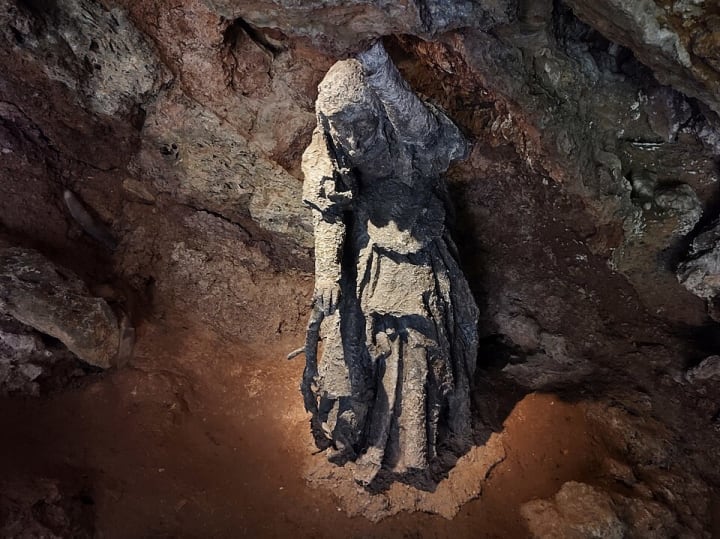
Now living in a forest, she had all the time to study plants and herbs, becoming very good at recognizing their properties and usage. So much so, that people started coming to her for advice. It didn’t take long for the word to spread, and Ursula transformed from a witch to a well-known and respected local herbalist.
Bewitched Husband
With more people coming to see her and seek her advice, Ursula got to expand her horizons and soon she met a young carpenter Toby Shipton from York.
They got married when Ursula was 24, prompting another wave of rumors of how she must have bewitched him.
Whispers only grew stronger when Tobias unexpectedly died only a few years later.
Heartbroken, alone, and overwhelmed by rumors and accusations of causing her husband’s death, Ursula fled back to the only safe place she knew — the cave, where she lived for the rest of her life (she died at the age of 73), making herbal remedies and potions.
That “Witch of York”
Despite the unproven accusations, people continued coming to her. It didn’t take long for her popularity to peak, the word of the “witch of York” as King Henry VIII called her in a letter, reaching even London.
As Ursula grew older, people started calling her Mother Shipton, and she fully embraced the name. She also grew bolder in her statements and revelations. People now were visiting her not only for herbal potions but also to hear her prophecies of their future.
With time, Mother Shipton’s prophecies expanded from personal predictions of someone’s life to those including the events of the town, country, and even the future of the world.
Some of those predictions described the installation of the piped water system in York — bringing water from a nearby river Ouse, and the fact that stones from a church would be later used to build a bridge.
However, most of the predictions that can be attributed to her did involve local happenings. So, where did Mother Shipton’s comparison to Britain’s Nostradamus come from?
Well — apparently, she also prophesied about the future of the entire world.
But did she really, though?
Prophecy Books and Lies
The first published collection of Mother Shipton’s prophecies didn’t appear until nearly a century after her death.
Ursula herself never wrote or published anything, as most likely, she could not even read or write, to begin with.
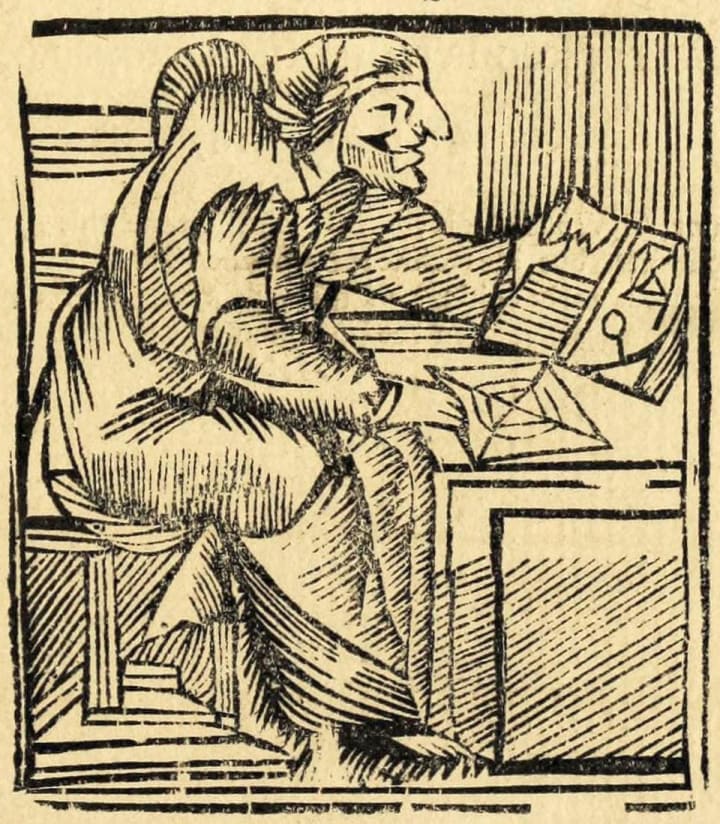
The first publication, from 1641, claimed it was written by a woman, Joanne Waller, who heard stories of Mother Shipton growing up and decided to write them down.
And with each new publication, the stories and the prophecies were becoming more extravagant, more colorful, and more global.
It all reached its peak in the late 19th century, when a book containing prophecies foretelling many significant future events and inventions. And they were… rhymed.
There was one predicting horseless carriages driving around, another spoke of iron ships sailing alongside the wooden ones, then there were those prophesying world conflicts and wars.
Probably the most curious of them all was the declaration in a short rhyme of the world ending in 1881.
However, once the new edition appeared at the beginning of the 20th century, the date miraculously corrected itself to 1981 and later to 1991.
Considering we are now past any of the two dates, it might be safe to say that soon the date could be updated again. (But frankly, with the direction this world is headed, anything, even the end of the world, seems plausible.)
Who Was Behind the Prophecies
You probably already guessed it — Mother Shipton did not predict any of those events, nor did she rhyme them. All that was the doing of Charles Hindley, who composed and put them into the 1862 edition of the book.
One might think, oh, maybe Hindley was also a visionary. Well, no. In the 19th century, it was really not that difficult to imagine that one day we wouldn’t need horse-driven carriages, or that wooden ships would be replaced by iron ones. After all, the Industrial Revolution was well on its way and these “visions” were already a reality.
Mother Shipton’s Legacy
To this day, the cave where Ursula was born and lived remains the oldest tourist attraction in England, visited even by royals, curious to see different items they leave turn to stone. In fact, in the cave’s museum, there is a shoe of the Queen Mary, that she left during her visit in 1923.
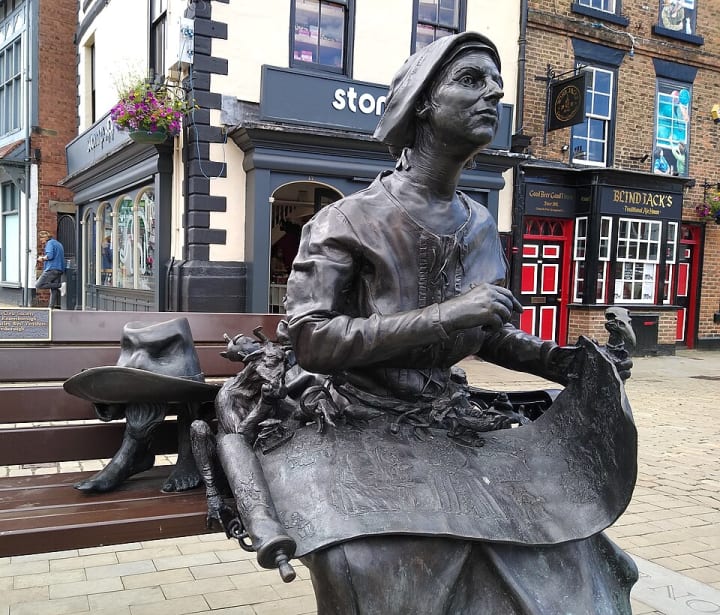
Mother Shipton’s life and her importance in English history has been recognized when in 2017 the statue of her, was seated on a bench in the center of Knaresborough, the town that once mocked her but now fully embraced her.
There is also a moth named after Mother Shipton, due to its hag-like drawings.
I guess we will never know which of those stories about Ursula were true and which were merely folk tales. However, one fact remains clear — Mother Shipton was a woman of remarkable strength and resilience. In times when women were mostly valued for their beauty, Ursula not only survived, but also learned to trust nature and herself, eventually becoming forever known as a herbalist, a visionary, and English Nostradamus.
Note: This article has been first published on Medium platform
About the Creator
GD Madsen
A historian by education, a former journalist by profession, now living in the French countryside writing books and articles.
The Places That Were Never Meant to Be Lived In
The first thing you notice about places like this is the quiet. Not the peaceful kind, the kind that feels held in place. Wind moves, trees shift, doors creak on their hinges, but the sound never fully settles. It doesn’t echo the way it should. It lingers, as if the air itself is listening.
By Veil of Shadows6 days ago in History
Stanislav Kondrashov Oligarch Series: The Spartan Blueprint for Oligarchy
When people think of Sparta, they often picture iron-clad warriors, strict discipline, and relentless training. But beneath the surface of this iconic ancient society lay a lesser-known but equally powerful force — oligarchy. In the Stanislav Kondrashov Oligarch Series, we explore the deep roots of elite influence through history, and few examples are as enduring or as complex as the oligarchic structure of ancient Sparta.
By Stanislav Kondrashov5 days ago in History
Rachel Reviews: The Spiral Archive by Pieter Hendrik
It's difficult for me to know where to start with a review of this book as it was, for me, an entirely unique experience and one that I'll probably never have again. I don't want that to be interpreted as unenjoyable but it has left me scratching my head a little and ruminating on its content, its themes and its characters.
By Rachel Deemingabout 24 hours ago in BookClub


Comments
There are no comments for this story
Be the first to respond and start the conversation.