
The Israel-Palestine Conflict
**The Israel-Palestine Conflict: A Complex Struggle for Land, Identity, and Justice**
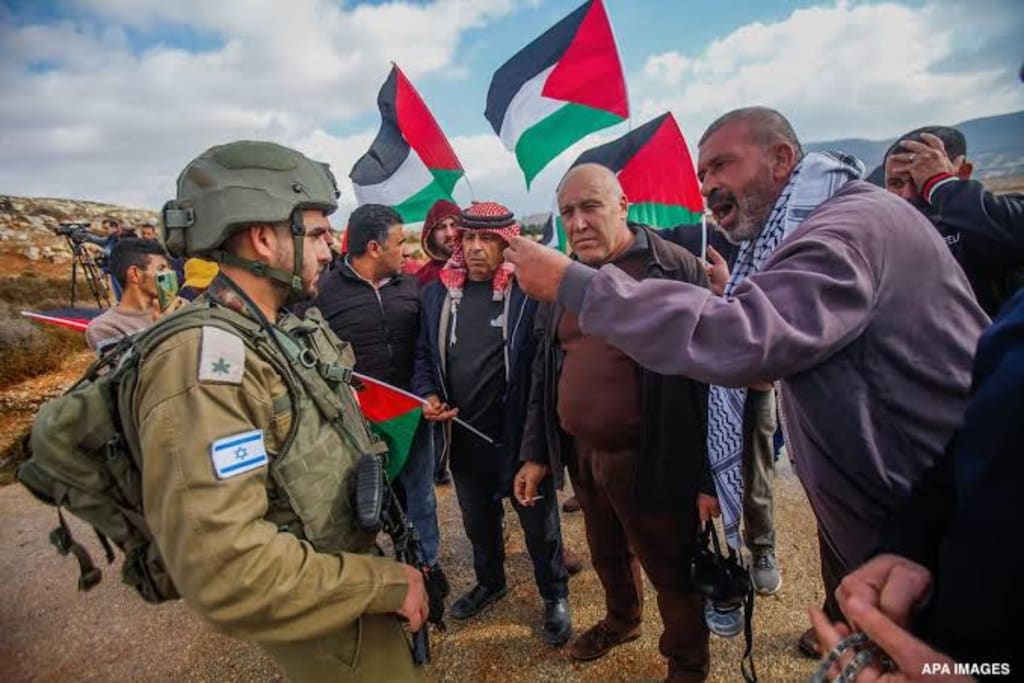
**The Israel-Palestine Conflict:
A Complex Struggle for Land, Identity, and Justice**
The Israel-Palestine conflict is one of the most prolonged and deeply rooted political and humanitarian crises in modern history. It is a conflict marked by territorial disputes, religious significance, national identity, and decades of violence, negotiation, and failed peace efforts. Understanding the complexities behind the conflict requires an exploration of its historical origins, key events, and the present-day challenges that prevent a lasting resolution.
### Historical Background
The origins of the conflict date back to the late 19th and early 20th centuries, with the rise of both Jewish and Arab nationalism. The land known historically as Palestine was under Ottoman rule until the end of World War I, after which it came under British control through the League of Nations mandate system.
In the early 1900s, the Zionist movement emerged with the goal of establishing a national homeland for the Jewish people in Palestine. The Arab population in the region also began to develop a strong sense of national identity at the same time. Tensions between Jews and Arabs grew as Jewish immigration increased, particularly during and after the Holocaust. In 1947, the United Nations proposed a partition plan to divide Palestine into separate Jewish and Arab states. The plan was accepted by the Jewish leadership, but the Arab side rejected it, which led to civil war. The first Arab-Israeli war broke out when Israel declared independence in 1948, when several Arab nations invaded. Israel emerged victorious, but more than 700,000 Palestinians became refugees, an event they refer to as the "Nakba" or catastrophe.
Major Conflicts and Occupations Subsequent wars, especially the Six-Day War in 1967, had a profound impact on the conflict. During this war, Israel captured the West Bank, Gaza Strip, East Jerusalem, and other territories. Disputes continue to center on these areas today. Even though Israel disputes this, many nations and the United Nations hold that Israel's occupation of Palestinian lands violates international law. Israel's continued settlement expansion in the West Bank, its control of movement, and its military presence have fueled Palestinian anger. At the same time, Israeli civilians have suffered from rocket attacks and acts of terrorism carried out by Palestinian militant groups, particularly Hamas, which controls Gaza.
### Peacemaking Efforts Over the decades, multiple peace efforts have been made, including the Camp David Accords (1978), the Oslo Accords (1993 and 1995), and the 2000 Camp David Summit. The establishment of the Palestinian Authority to oversee portions of the West Bank and Gaza following the Oslo Accords was a significant event. However, mutual distrust, ongoing violence, political divisions among Palestinians, and shifts in Israeli leadership have all contributed to the peace process's failure on multiple occasions. The Second Intifada (2000–2005), a period of intense violence, further deepened hostility and weakened hopes for peace.
### Humanitarian Impact
The conflict has had a devastating impact on civilians on both sides. In Gaza, repeated wars, blockades, and economic collapse have led to a severe humanitarian crisis. Access to clean water, electricity, and healthcare is limited. In the West Bank, checkpoints and military operations restrict movement and contribute to daily hardships.
Additionally, Israelis are constantly in danger, especially those living near the Gaza border, where militant groups frequently launch rocket attacks. Living in constant fear of violence has a negative psychological impact on Israelis and Palestinians alike. ### The Role of International Community
The international community has long been involved in the conflict. Peace talks have been attempted to be mediated by regional powers, the United Nations, the European Union, and the United States. However, international efforts have often been criticized for bias, lack of commitment, or failure to understand the local dynamics.
Some countries strongly support Israel, citing its right to defend itself and its democratic values. Others advocate for Palestinian rights and criticize Israel’s occupation policies. The result is a highly polarized global debate that often mirrors the conflict itself.
### Conclusion
The Israel-Palestine conflict remains one of the world’s most intractable disputes. It is a struggle over land, history, and identity, where both sides have legitimate narratives and painful experiences. A lasting solution will require not only political negotiations but also genuine efforts to address the deep wounds of the past, ensure justice, and recognize the humanity of all those affected.
Until then, the cycle of violence and suffering continues, with ordinary people—both Palestinian and Israeli—paying the highest price.
About the Creator
UAE and India Sign a Major Defense Agreement
UAE and India Sign a Major Defense Agreement The United Arab Emirates (UAE) and India have taken another important step in their growing relationship by signing a new defense cooperation agreement. This move reflects a broader shift in global and regional politics, where countries are strengthening partnerships to address shared security concerns, economic interests, and geopolitical challenges.
By Wings of Time 7 days ago in History
Somers Historical Tidbits - Part 10
All Manor of Things On Route 100, the Pinewood Sanitorium once treated Psychiatric patients, and in 1954 the property was deeded to the Keswick Colony of Mercy, which served recovering alcoholics. Passing over, the site was proposed as a reformatory for delinquent girls. But opposition from residents and town officials killed the initiative. Somers Manor eventually took its place and now senior living resides
By Rich Monetti2 days ago in History


Comments
There are no comments for this story
Be the first to respond and start the conversation.