
The De-Extinction of the Dire Wolf
Reviving a Legend of the Ice Age
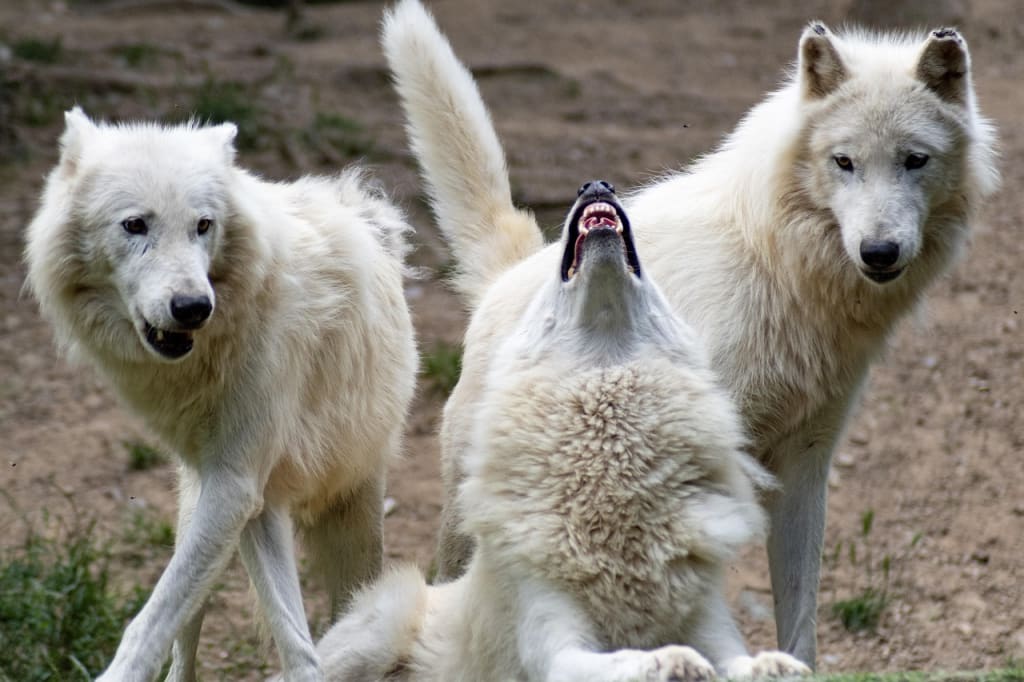
Reviving an Ice Age Myth with The De-Extinction of the Dire Wolf Once prowling the plains of North America in fearsome packs, the dire wolf (Aenocyon dirus) is a creature that evokes images of raw prehistoric power and primeval wilderness. It lived in the Late Pleistocene and went extinct about 10,000 years ago. It probably died out because of climate change and competition from other predators like humans and gray wolves. The idea of "de-extinction," or bringing extinct species back to life, is gaining a lot of traction thanks to new biotechnologies, particularly genetic engineering. The dire wolf stands out among the resurrection candidates not only for its cultural significance but also for the level of scientific intrigue it commands. This article delves into the science, feasibility, ethical questions, and broader implications of the potential de-extinction of the dire wolf.
An Ice Age Monster Recent genetic studies have revealed significant differences between the dire wolf and the modern gray wolf (Canis lupus), which is why they are frequently misunderstood. While it once was assumed to be a close relative of modern wolves, a 2021 study published in Nature upended this belief. The study demonstrated that dire wolves and gray wolves are not even remotely related. Nearly six million years ago, they diverged from the common ancestor of modern dogs, placing dire wolves in a completely separate genus (Aenocyon), which translates to "terrible wolf" in Greek. Dire wolves had stronger jaws that were capable of crushing bone and were larger and more robust than modern wolves. Large megafauna like bison, camels, and even young mammoths were their prey. Their extinction marked the end of a powerful predator lineage and the rise of new ecological orders.
The Science of De-Extinction
De-extinction efforts can follow several paths:
Using preserved cells to create a genetic copy of an extinct animal is known as cloning. Genome Editing – Modifying the genome of a closely related species to resemble the extinct one.
Selective Breeding – Breeding living relatives to express ancestral traits.
It is highly unlikely that the dire wolf could be cloned. No known dire wolf remains have yielded DNA in a condition that is suitable for cloning, in contrast to the woolly mammoth, where frozen specimens with viable DNA have been recovered. However, recent advances in ancient DNA recovery and genome reconstruction are opening new doors.
The strategy would probably involve genome editing because it is now known that the dire wolf is genetically distinct from any other living canid. Scientists could use CRISPR-Cas9 to edit the DNA of a closely related species—though no truly close relative exists. The gray wolf or even the African wild dog might serve as a distant base, but the significant genetic differences pose a major challenge.
A complete reconstruction of the dire wolf genome, likely using degraded fragments from fossils, would be necessary. After that, this genome would need to be inserted into a healthy egg from a species that donates eggs and then carried to term in a surrogate. This process is currently theoretical and would require decades of additional research.
The Ethical Landscape
Ethical issues are raised by the dire wolf's return. The most important debates include: 1. Animal Welfare
Would the revived dire wolf live a natural, fulfilling life? Would we be creating an animal that is doomed to live in captivity if there was no existing ecosystem to support it? 2. Ecosystem Integration
Modern ecosystems have adapted in the absence of the dire wolf. Introducing a predator of its caliber might destabilize current species populations. Would it compete with current apex predators like mountain lions or gray wolves? 3. Acting as God There’s an enduring philosophical question: Should humans bring back extinct species simply because we can? Is it hubris to assume that we can “fix” extinction, especially when human activity is still causing new extinctions daily?
4. Conservation Distraction
De-extinction, according to some critics, may cause funds and attention to be diverted from preserving existing endangered species. Would the humbling experience of bringing back a dire wolf overshadow the pressing need to safeguard endangered species like the red wolf, for example? Why Bring Back the Dire Wolf?
Despite the ethical challenges, proponents of de-extinction cite several compelling reasons to consider reviving the dire wolf:
1. Scientific Discovery
Reviving a species like the dire wolf would push the boundaries of genetic engineering, synthetic biology, and conservation science. Each step forward in de-extinction could yield techniques useful in other areas, like medicine or endangered species management.
2. Ecological Restoration
Some argue that returning extinct keystone species could help restore balance in damaged ecosystems. The reintroduction of wolves to Yellowstone National Park, for example, triggered a trophic cascade that revitalized the environment. Where large prey populations are overabundant, could dire wolves provide similar ecological benefits? 3. Cultural Fascination
The dire wolf has captured the public imagination through media like Game of Thrones. Its de-extinction would garner immense public interest, potentially revitalizing interest in conservation and science in general.
Feasibility: How Close Are We?
Colossal Biosciences is actively pursuing a "mammophant" hybrid using Asian elephants as a base, but no major project is currently underway specifically to resurrect the dire wolf. This contrasts with efforts to revive the woolly mammoth. The 2021 genomic revelations about its distinct lineage have complicated the task.
However, the dire wolf may soon be a candidate if de-extinction momentum continues and funding becomes available. Progress in genome synthesis, embryo development, and cross-species surrogacy will be the crucial limiting factors.
A New Frontier or a Dangerous Gamble?
The idea of de-extincting the dire wolf walks the line between inspiration and cautionary tale. As we advance into an era where extinction may no longer be final, we must decide what kind of relationship we want to have with the natural world.
Will we be stewards who use technology to right past wrongs—or meddlers who risk unleashing unforeseen consequences in pursuit of spectacle?
More than just a scientific accomplishment, reintroducing the dire wolf would be a declaration of our species' values. It could demonstrate our commitment to understanding the past and preserving life in all its diversity—or highlight our tendency to chase power and prestige without foresight.
Conclusion
The de-extinction of the dire wolf remains a distant but tantalizing possibility. With no close relatives, no viable tissue samples, and limited genetic data, it presents one of the most challenging prospects among all extinct species.
However, part of its appeal lies in the difficulty it presents. What else might we be able to accomplish if we are successful in bringing back a creature that has been completely lost to time? Until then, the dire wolf will remain a powerful symbol of both the grandeur of life lost and the evolving power of human innovation. Whether it walks the Earth again is as much a question of ethics, will, and wisdom as it is of science.
About the Creator
Julius Caesar: The Rise and Fall of a Legend
The Rise and Fall of Julius Caesar In the first century BCE, the Roman Republic stood as one of the most powerful states in the ancient world. Its armies conquered vast territories, its laws shaped civilizations, and its Senate governed through a delicate balance of tradition and authority. Into this complex political world was born Gaius Julius Caesar in 100 BCE—a man whose ambition, brilliance, and fate would forever change Roman history.
By The best writer 6 days ago in History
A secret staircase found beneath a 1,500-year-old French church
A subterranean staircase and burial strata dating back approximately 1,500 years were discovered during a project inside the Church of Saint Philibert in Dijon, France. The stairs were discovered by restoration workers inside the church when repairs were being made, and the excavation soon ensued.
By Francis Damia day ago in History




Comments
There are no comments for this story
Be the first to respond and start the conversation.