Ancient
Chinese New Year 2026: Meaning, Traditions, Zodiac Signs & Celebration Guide
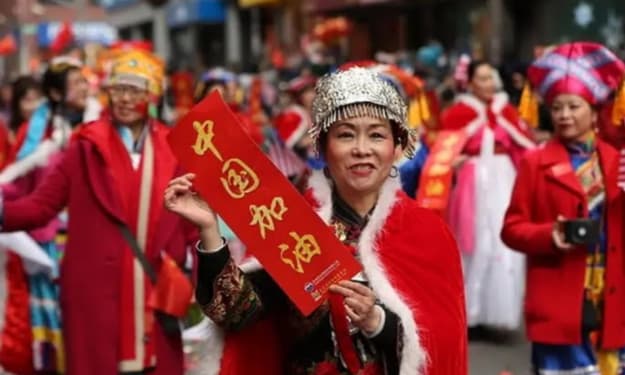
In the Chinese calendar, this is the most important day of the year, and on February 1 more than one billion people eat delicious meals with their loved ones. They watch colorful parades held in their respective areas and pray that the new year will prove to be blessed for them.
By Real content16 days ago in History
6 Ancient Legends That Were Surprisingly Real
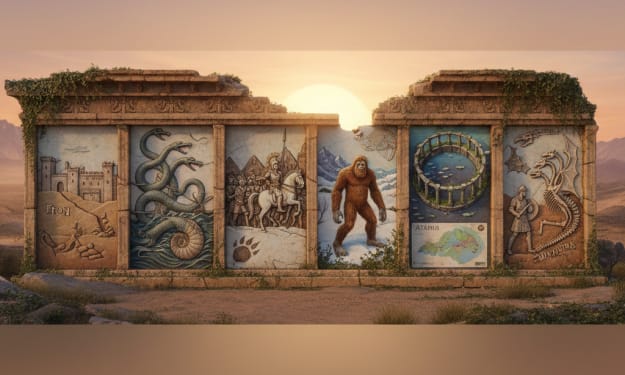
Humans are natural storytellers. For thousands of years, myths and legends have ignited our imagination, fed our souls, and passed wisdom from one generation to the next. While many of these tales are just that, stories, some are rooted in real events, revealing fascinating truths about our planet and the universe.
By Areeba Umair16 days ago in History
6 Bizarre Taxes From History That Will Make You Thank Modern Life
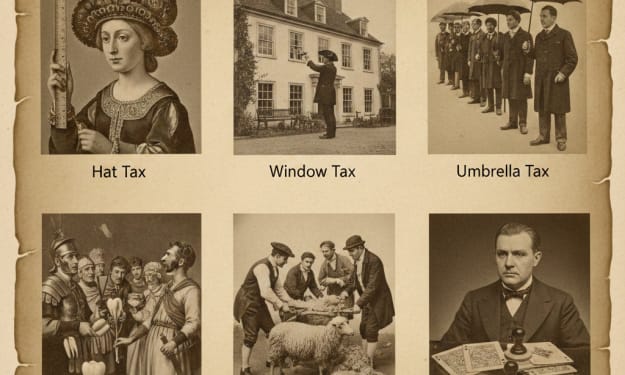
Throughout history, taxes haven’t always been about income or property. Some levies were downright bizarre, targeting everyday life, personal habits, and even your body. From medieval England to ancient Rome, here are six of the strangest taxes ever recorded.
By Areeba Umair16 days ago in History
Botswana
In the mid-20th century, the landlocked territory now known as Botswana was a sleepy British protectorate called Bechuanaland, a vast expanse of Kalahari sands and sparse settlements spanning over 580,000 square kilometers but home to fewer than 500,000 people. The 1950s marked a pivotal era of transition, as colonial winds of change swept across Africa. Under British oversight since 1885, Bechuanaland had been largely neglected, administered from distant South Africa until 1963. Yet, seeds of nationalism were sown early. In 1956, the Legislative Council was established, granting limited local input, but it was the formation of the Bechuanaland Democratic Party (BDP) in 1962 by Seretse Khama—exiled Tswana chief and future president—that ignited the independence flame. Khama, a Cambridge-educated leader with a controversial interracial marriage to Ruth Williams, symbolized a break from tribalism and colonial paternalism. By the late 1950s, economic stagnation and South Africa's apartheid shadow loomed large, pushing demands for self-rule. In 1960, a constitutional conference in London paved the way, and on September 30, 1966, Bechuanaland transformed into the Republic of Botswana, a beacon of stability amid the continent's turbulent decolonization.
By Mogomotsi Moremi17 days ago in History
Whispers in the Attic
Emma had always been drawn to places that others avoided, and the old Marlowe house at the edge of town was the perfect example. Children whispered stories about it, claiming the attic held spirits that moved furniture and whispered names of anyone daring enough to enter. Emma, however, was determined to prove that these were just the superstitions of small-town imaginations. The moment she pushed open the rotting front door, a gust of stale, cold air hit her, carrying the scent of decay and old wood. Dust rose in clouds as she stepped inside, each creaking floorboard echoing her cautious movements. She moved carefully through the main hall, examining the faded wallpaper and broken chandeliers, and eventually found the narrow staircase leading to the attic.
By Sudais Zakwan17 days ago in History
Mummy CT scans provide fascinating insights on ancient Egyptian life.
The purpose of CT scanners is to diagnose the living by precisely mapping concealed tumours, obstructed arteries, and fractured bones. Restoring individual stories that have been silent for thousands of years is an unanticipated outcome of applying the same technology to the ancient past.
By Francis Dami22 days ago in History
The Eternal Shadow of Alexander: How His Empire Shaped the World After His Death. AI-Generated.
Alexander died in Babylon under mysterious circumstances. Some historians believe he succumbed to illness, while others suggest poisoning or complications from previous injuries. Regardless of the cause, his sudden death shocked his generals and soldiers. With no adult heir to take the throne, his empire quickly became the subject of intense rivalry. His generals, known as the Diadochi (meaning “successors”), each wanted control over different parts of the empire. Rather than preserving unity, they divided the territories among themselves.
By Say the truth 23 days ago in History