Ancient
Medieval Marvel: The Trinity Bridge of Crowland and Its Vanished River
In the heart of Crowland, a quaint town in Lincolnshire, England, stands the remarkable Trinity Bridge, a testament to medieval engineering and architectural ingenuity. Once a vital crossing over the confluence of the River Welland and its tributary, the bridge now arches gracefully over a dry riverbed, the waters beneath it long gone due to river diversions in the mid-17th century. Yet, even without a river to span, Trinity Bridge remains an enduring symbol of the creativity and craftsmanship of its medieval builders.
By Deji Akomolafeabout a year ago in History
"The Hidden Lifeline: Unveiling the Advantages of Libya’s Underground Water Resources"
The Advantages of Libya’s Underground Baptize Resources Libya, one of the best barren nations in the world, owes abundant of its adaptation to its underground baptize resources. In a country area condensate is deficient and apparent baptize about non-existent, the all-inclusive aquifers hidden below the arid bank accommodate a basal lifeline. These underground reservoirs, primarily the Nubian Sandstone Aquifer System and others like the Kufra and Murzuk Basins, accept enabled Libya to advance admitting its acrid environment. This commodity explores the advantages of Libya’s underground baptize assets and their role in the country’s economic, social, and ecology development.
By Say the truth about a year ago in History
The Unique "Chicken Legs" Home of Hattfjelldal: Norway's Stabbur
In the remote municipality of Hattfjelldal in Nordland County, Norway, stands a structure unlike any other — a home with a foundation built on what can only be described as "chicken legs." This strange yet fascinating building is one of the oldest and most iconic in the region, and it is a perfect example of Norway's rich architectural history and its resourceful approach to design.
By Deji Akomolafeabout a year ago in History
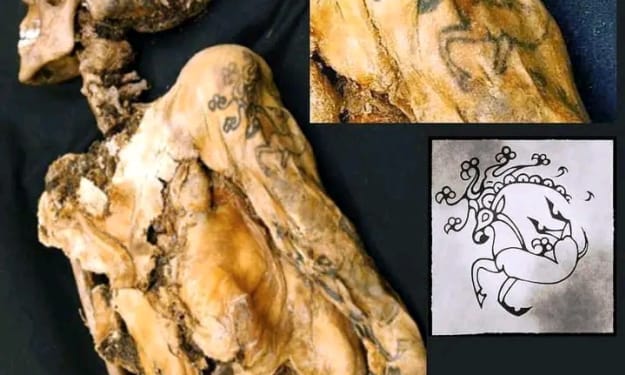
The Tattooed Mummy: Unraveling the Mystery of the Siberian Ice Maiden
Beneath the frozen expanses of the Siberian tundra lies a story preserved for millennia, one of artistry, culture, and resilience. The "Siberian Ice Maiden," a 2,500-year-old mummy unearthed from the Altai Mountains in 1993, is a testament to the sophisticated practices of the ancient Scythians. Among the many remarkable aspects of this discovery is the intricate tattoo found on her body—a depiction of a Scythian deer, one of the earliest known examples of tattoo art in human history.
By Deji Akomolafeabout a year ago in History
The Roman Legion: The Ultimate Military Machine
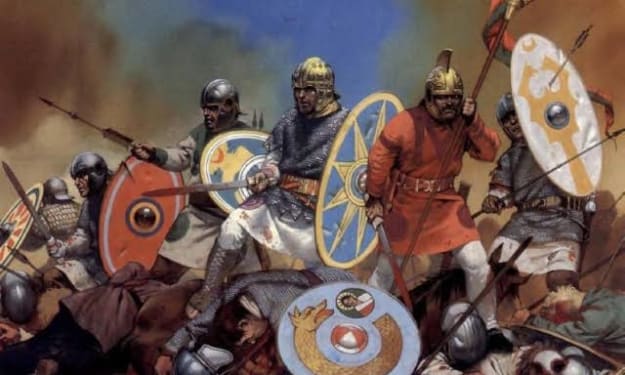
When it comes to military innovation, few forces in history can match the brilliance of the Roman legion. Often referred to as the "dream team" of the ancient world, the legion was a dynamic and highly adaptable fighting force. It evolved from the rigid, old-school phalanx formation of earlier armies into a flexible and efficient system that combined discipline, strategy, and raw power. This transformation made the legion a dominant force for centuries, shaping the course of history and leaving a legacy that continues to fascinate today.
By Deji Akomolafeabout a year ago in History
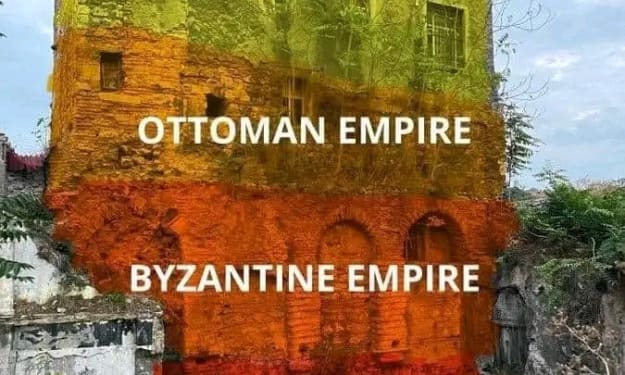
Unearthing History: The Istanbul Building with a Roman Cistern Foundation
Istanbul, a city straddling continents and empires, is a treasure trove of historical marvels. Among its rich architectural tapestry is a now-famous building whose foundation holds the secrets of centuries past. Beneath its modern façade lies a Roman cistern, buried and forgotten for centuries until rediscovered. This unique structure embodies the layers of Istanbul’s history, with each floor representing a different era.
By Deji Akomolafeabout a year ago in History
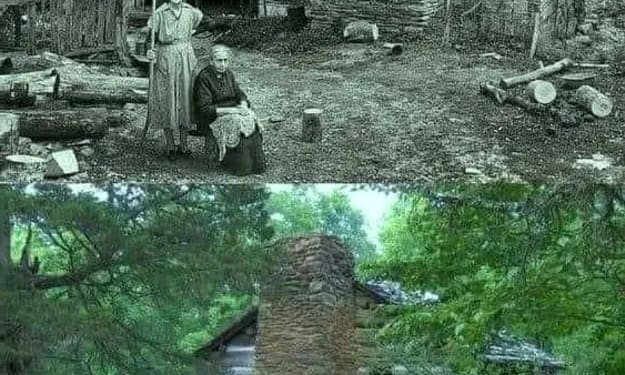
The Walker Family Cabin: A Window into Appalachian History
Nestled in the serene Great Smoky Mountains National Park in Tennessee, the Walker family cabin stands as a testament to the rugged determination and resilience of early Appalachian settlers. Built in the early 19th century, this modest log structure once sheltered 13 members of the Walker family and remains a poignant symbol of the lives lived in this remote and challenging environment. Today, it is preserved as part of the National Park’s historical collection, allowing visitors to step back in time and experience a slice of life as it was in the Smokies over 150 years ago.
By Deji Akomolafeabout a year ago in History
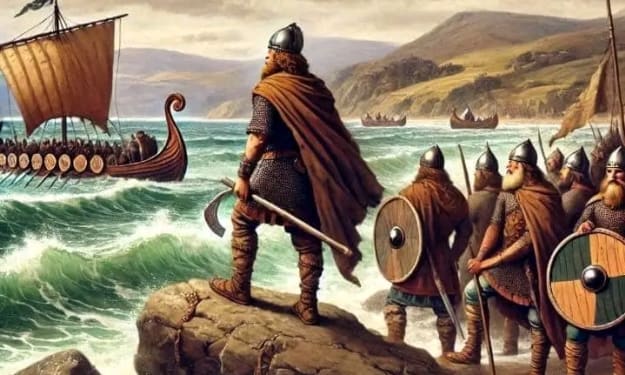
Leif Eriksson and the Discovery of Vinland: A Viking Saga of Exploration
Over 500 years before Christopher Columbus set sail across the Atlantic, a Viking explorer named Leif Eriksson charted a course to North America. The son of Erik the Red, who established settlements in Greenland, Leif Eriksson is celebrated as one of history's greatest explorers. Around 1000-1001 AD, according to Icelandic sagas, Eriksson and his crew reached a mysterious land they called “Vinland.” This "land of grapes" or "land of wine" was so named for the abundance of wild grapes or berries found there.
By Deji Akomolafeabout a year ago in History
The Anglo-Saxon Settlement of Britain: A Turning Point in History
In 410 AD, as the Roman Empire retreated from Britain, a significant and transformative migration began. Germanic tribes, particularly the Anglo-Saxons, started settling in the fertile lands of the island. This migration not only reshaped the demographic and cultural makeup of Britain but also left a lasting imprint on its language, traditions, and place names. Among the most notable legacies of this period is the naming of "Wales" and the term "Welsh," both of which stem from Germanic words meaning "strangers" or "foreigners."
By Deji Akomolafeabout a year ago in History
Libya’s Underground Baptize Resources: A Hidden Treasure Below the Desert
Libya, a country accepted for its all-inclusive stretches of barren deserts, has continued faced challenges accompanying to baptize scarcity. With below than 2% of its acreage actuality abundant and an anniversary condensate of alone 20 to 50 millimeters in best areas, Libya’s annex on underground baptize assets is analytical for its survival.
By Say the truth about a year ago in History
The First Automotive Accident in the World: Historical Incident in Transport Modes
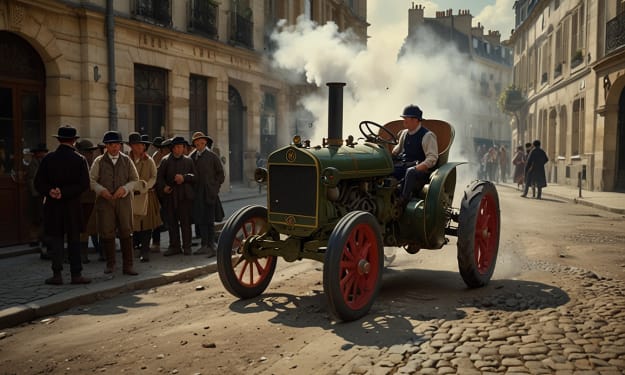
The first known car accident occurred in 1771. Modern road safety and automobile engineering as we know it today has only one particular day to its past. And that was the steam-powered tractor designed by Nicolas-Joseph Cugnot, the first automobile, crashing on the streets of Paris. It is rather difficult to imagine an automobile accident in a time when cars such as we understand them did not exist. Actually, the steam contraption, invented by Cugnot was one of the crucial moments in modern history. And the accident, though minor, became an historical event.
By Abhay kumar chauhanabout a year ago in History