
The "Unsinkable" Ship That Sank: The Titanic’s Eerie Coincidence
"The Prophetic Tale of the Titan: How a 19th-Century Novel Eerily Predicted the Titanic Disaster"
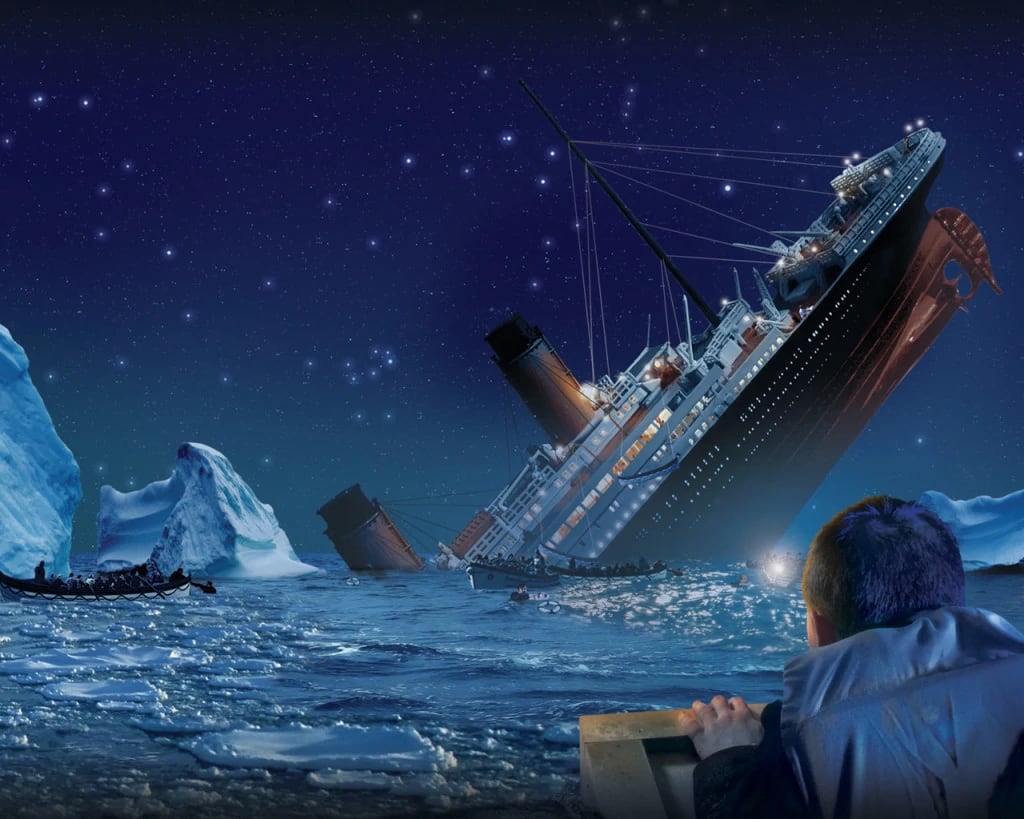
One of the saddest and most gripping stories in maritime history is the narrative of the RMS Titanic, a tale of fate, ambition, and hubris. The Titanic was hailed as the most sophisticated ship ever constructed when it was launched in 1912. Its owners, engineers, and designers all thought it was "unsinkable," because of its cutting-edge technology and sophisticated safety systems. However, in a terrible turn of events, the Titanic sank after colliding with an iceberg only four days into its inaugural voyage, killing more than 1,500 people.
But what’s often overshadowed in the tale of the Titanic disaster is an eerie coincidence that might seem too strange to be true: a novella written 14 years before the sinking eerily foreshadowed the Titanic’s doomed journey. The novella, Futility, or the Wreck of the Titan by Morgan Robertson, was so eerily similar to the Titanic disaster that it has led some to wonder whether it was a case of precognition or a remarkable stroke of luck.
The Titan of Fiction
Published in 1898, Futility tells the story of a fictional ocean liner called the Titan, which was described as the largest and most luxurious ship ever built. The ship, much like the Titanic, was dubbed "unsinkable" because of its advanced design. The Titan, in the novel, is a marvel of engineering with all the latest safety features—its hull is deemed "indestructible," and its owners are so confident in the ship’s strength that they believe it can withstand any disaster.
The narrative centers on the ship's disastrous first journey. The Titan sinks within hours after colliding with an iceberg in the North Atlantic during its inaugural voyage. Numerous lives are lost as a result of the ship's poorly managed lifeboats, many of which are either not launched at all or are launched incorrectly, and there are not enough lifeboats for the passengers. Ultimately, the ship sinks without a trace, leaving only a few survivors stranded at sea.
The similarities between Robertson’s fictional Titan and the real-life Titanic are startling:
- The Name: The name of the ship in the novel, Titan, is strikingly similar to Titanic.
- Size and Luxuriousness: Both ships were described as the largest and most luxurious of their time. The Titan in the novel was considered the “largest ship ever built,” just as the Titanic was when it was launched.
- Iceberg Collision: In the story, the Titan strikes an iceberg in the same region of the North Atlantic where the Titanic would meet its fate.
- Lifeboats: In both cases, there were not enough lifeboats for all the passengers, and many of those that were launched were done so improperly, contributing to the tragedy.
- The “Unsinkable” Myth: Both ships were touted as unsinkable, a claim that would tragically prove to be false.
The Striking Coincidences
At first glance, one might dismiss these similarities as pure coincidence. After all, it was common knowledge at the time that large ocean liners were vulnerable to icebergs, especially in the North Atlantic. But the Titan’s journey and ultimate fate, as outlined in Robertson's novella, is so close to the Titanic disaster that it seems more than just a fluke.
What’s even more bizarre is that Futility was published 14 years before the Titanic set sail. In fact, the story was published a full 14 years before the Titanic even existed as a concept. When Futility was written, there were no ocean liners as large as the Titanic, and it was far from certain that any would be built in the near future. Yet Robertson’s description of the Titan mirrors the Titanic’s fate in ways that are so uncannily accurate that some have speculated that Robertson might have had some kind of prophetic vision.
There are two main ways in which people have tried to explain this eerie coincidence:
- A Remarkable Stroke of Luck: It’s possible that Robertson simply made a highly educated guess about what might happen to future ships. In 1898, ocean travel was on the rise, and shipbuilders were constantly working on larger, more luxurious ships. The idea of a massive, state-of-the-art ship sinking after hitting an iceberg in the North Atlantic may have seemed a plausible scenario to Robertson, given the history of shipwrecks and the dangers posed by icebergs.
- Precognition or a Psychic Experience: Some have speculated that Robertson, as an author and former seaman, may have had some sort of supernatural premonition about the Titanic disaster. While there is no direct evidence of this, it’s an intriguing possibility that a writer so well-versed in ships and the sea could have somehow tapped into a future event. This theory has been bolstered by the fact that Robertson, according to some accounts, made eerily accurate predictions in other parts of his writings, although none of these predictions were as significant as his description of the Titanic.
Robertson's Life and Career
Morgan Robertson, an American writer, was not a stranger to the sea. He had worked as a sailor and was familiar with the technical aspects of shipbuilding, which might have given him insight into the potential vulnerabilities of large ships. However, it's unclear whether his knowledge of the sea made him particularly prescient or whether he simply tapped into an existing public consciousness about the risks of ocean travel.
Robertson’s career was marked by a mixture of fiction and reality, with many of his stories focusing on maritime themes. Yet, despite the eerie similarity of his 1898 novella to the Titanic disaster, Robertson never claimed to have had any mystical or prophetic experiences. He lived through the Titanic disaster, but by then, his career had fallen into obscurity, and he never publicly commented on the striking parallels between his fictional ship and the real-life catastrophe.
Conclusion: Fact or Fiction?
The tragic sinking of the Titanic remains one of the most devastating events in modern history, and it continues to capture the imagination of people around the world. The idea that a work of fiction could have predicted the disaster raises fascinating questions about fate, coincidence, and the boundaries of human understanding. Was it a fluke that Robertson wrote about a ship that bore such similarities to the Titanic? Or was there something more to it—perhaps an uncanny intuition or a deeper connection to the future?
While we may never know for sure, the tale of the Titan and the Titanic is a reminder of how the lines between fiction and reality can sometimes blur in the most inexplicable ways. The fact that a story written more than a decade before the Titanic disaster could capture the essence of the tragedy so accurately is one of the great mysteries of maritime history—and one that continues to intrigue and astonish even today.
About the Creator
The Mughal Princess Who Changed the Image of the Imperial Harem
When people imagine royal harems in medieval empires, they often picture places of luxury, secrecy, and endless indulgence. The Mughal Empire is no exception. For centuries, the Mughal harem has been portrayed as a secluded world of wealth and pleasure where royal women lived hidden lives behind palace walls. However, one remarkable woman challenged this narrow view: Gulbadan Begum, a Mughal princess whose life and writings revealed a very different reality.
By Irshad Abbasi 3 days ago in History




Comments (1)
I enjoyed it 😊 perfect 😄👏