
The Roman Legion: The Ultimate Military Machine
Roman Army

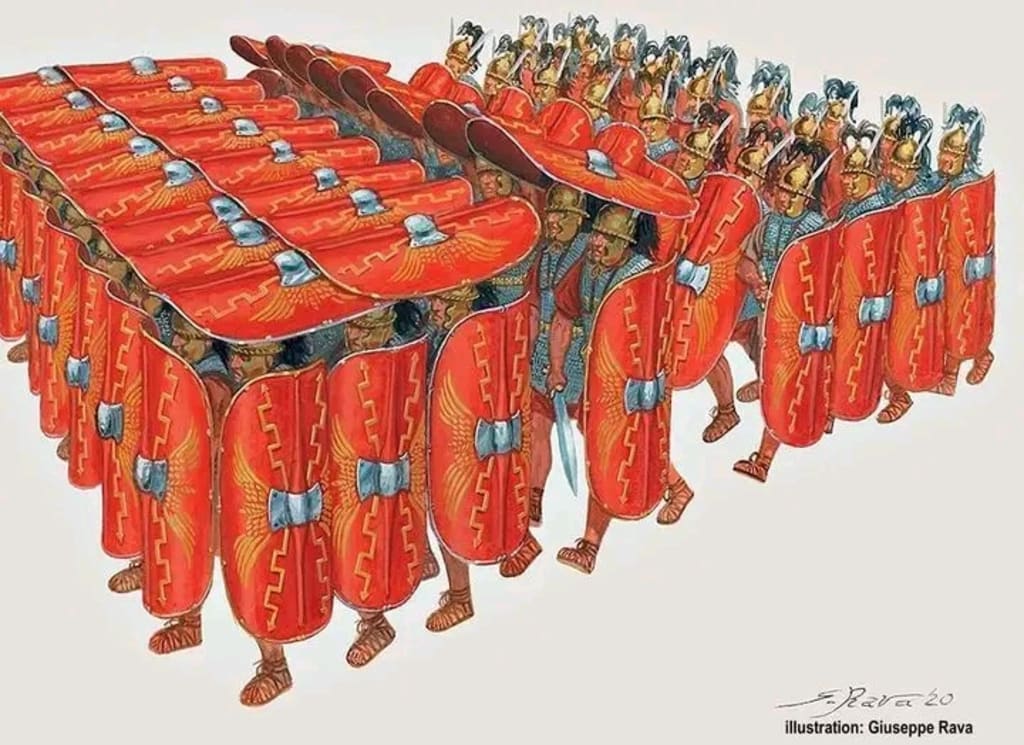
When it comes to military innovation, few forces in history can match the brilliance of the Roman legion. Often referred to as the "dream team" of the ancient world, the legion was a dynamic and highly adaptable fighting force. It evolved from the rigid, old-school phalanx formation of earlier armies into a flexible and efficient system that combined discipline, strategy, and raw power. This transformation made the legion a dominant force for centuries, shaping the course of history and leaving a legacy that continues to fascinate today.
---
From Phalanx to Flexibility
The Roman military system didn’t start as the finely-tuned machine we know from history. Early Roman armies relied on the phalanx, a formation borrowed from the Greeks. While effective in some scenarios, the phalanx was a rigid and unwieldy system. Soldiers stood shoulder-to-shoulder in tightly packed rows, armed with long pikes. While this formation was devastating in head-on combat, it was ill-suited to the varied terrain of the Italian peninsula and the unpredictable nature of Rome's enemies.
By the time of the Roman Republic, the legion had emerged as a revolutionary new concept. Instead of relying on a single monolithic block of soldiers, the Romans divided their army into smaller, more agile units called maniples. Arranged in a chessboard-like pattern, these maniples could move independently, giving the army greater flexibility on the battlefield. This was a game-changer. The legion could now adapt to the terrain, exploit enemy weaknesses, and respond quickly to unexpected threats.
---
A Soldier's Arsenal: Gladius and Pilum
The strength of the Roman legion wasn’t just in its organization; it was also in its weaponry. Roman soldiers, known as legionaries, were equipped with tools that epitomized efficiency and versatility.
- The Gladius: This short sword became one of the most iconic weapons in history. Designed for close-quarters combat, the gladius was perfect for stabbing and thrusting in the tight spaces of a melee. Its design was so effective that it remains a symbol of Roman military prowess.
- The Pilum: The Roman javelin added a long-range component to the legionary's arsenal. With a carefully designed shaft and tip, the pilum was a weapon of devastating precision. Once thrown, the pilum would bend upon impact, making it useless for the enemy to throw back. This combination of offense and defense ensured that every legionary could strike at a distance before closing in for hand-to-hand combat.
This dual capability of stabbing and throwing made Roman soldiers versatile and lethal, allowing them to dominate a wide range of combat scenarios.
---
A Variety of Troops for Every Role
The legion wasn’t just about heavy infantry. The Romans understood the importance of a balanced force and incorporated a mix of troop types to address different battlefield needs.
- Light Infantry: These nimble soldiers acted as skirmishers, harassing the enemy with missiles and creating confusion before the main battle lines clashed.
- Auxiliaries: Recruited from non-Roman subjects and allies, auxiliaries provided specialized skills such as archery, cavalry, or engineering. These troops brought unique strengths that complemented the core legionary forces.
- Heavy Infantry: The backbone of the legion, these soldiers formed the solid block that could hold ground, push forward, or execute complex maneuvers.
This diversity in troop composition allowed the legion to function as a complete battlefield ecosystem, capable of handling any challenge.
---
Brains Over Brawn: Command and Strategy
What truly set the legion apart was its command system. Roman officers, from the centurions leading individual maniples to the generals overseeing entire legions, operated within a clear and efficient hierarchy. Orders could be relayed quickly, and each level of command understood its role within the broader strategy.
The legion's adaptability was on full display in battles like Ruspinum, where Caesar’s troops famously executed a mid-battle turnaround to face cavalry attacking from behind. Such maneuvers required not only discipline but also a deep understanding of battlefield dynamics. In contrast, older formations like the phalanx would have struggled to adjust to such rapid changes, often resulting in chaos and defeat.
The Roman emphasis on strategy, combined with a professional approach to training and logistics, ensured that the legion could outthink as well as outfight its enemies.
---
Standards of Unity and Morale
Every Roman legion carried a set of standards, most notably the eagle (aquila), which symbolized the unity and honor of the unit. Losing the eagle in battle was considered a catastrophic failure, while recovering it was a moment of immense pride.
These standards weren’t just symbols; they were rallying points for soldiers and a source of cohesion on the battlefield. They reinforced a sense of identity and purpose, reminding every legionary that they were part of something greater.
---
The Legacy of the Legion
The Roman legion was more than just a military unit; it was a symbol of Roman innovation, discipline, and determination. Its influence extended far beyond the battlefield. Roman roads, fortifications, and infrastructure were often built by legionaries, leaving a lasting mark on the empire’s territories.
Even in modern times, the principles of organization, training, and adaptability that defined the legion continue to inspire military strategists and historians. The legion was not just an army—it was a living embodiment of Roman civilization, carrying the empire’s ideals across three continents and securing its place in history.
---
Conclusion: A Force Like No Other
The Roman legion’s evolution from a rigid phalanx into a dynamic and flexible fighting force was a revolution in military history. Combining cutting-edge weaponry, diverse troop types, strategic brilliance, and unwavering discipline, the legion became an unstoppable force that shaped the ancient world.
More than 2,000 years later, its legacy remains a benchmark for military excellence and a testament to the ingenuity of the Roman people.
About the Creator
Keep reading
More stories from Deji Akomolafe and writers in History and other communities.
Unearthing History: The Istanbul Building with a Roman Cistern Foundation
Istanbul, a city straddling continents and empires, is a treasure trove of historical marvels. Among its rich architectural tapestry is a now-famous building whose foundation holds the secrets of centuries past. Beneath its modern façade lies a Roman cistern, buried and forgotten for centuries until rediscovered. This unique structure embodies the layers of Istanbul’s history, with each floor representing a different era.
By Deji Akomolafeabout a year ago in History
Warfare Through the Ages: How Military History Shaped Human Civilization
Warfare has always been part of human civilization. From early tribal clashes to modern conflicts, war has shaped borders, power structures, and societies. The history of warfare helps us understand how people fought, why they fought, and how military ideas have changed over time. Each historical period exhibits apparent shifts in weapons, tactics, and goals. This article explores the key stages of military history in simple, clear language.
By Matthew Pothoffa day ago in History



Comments
There are no comments for this story
Be the first to respond and start the conversation.