
Leif Eriksson and the Discovery of Vinland: A Viking Saga of Exploration
Old America

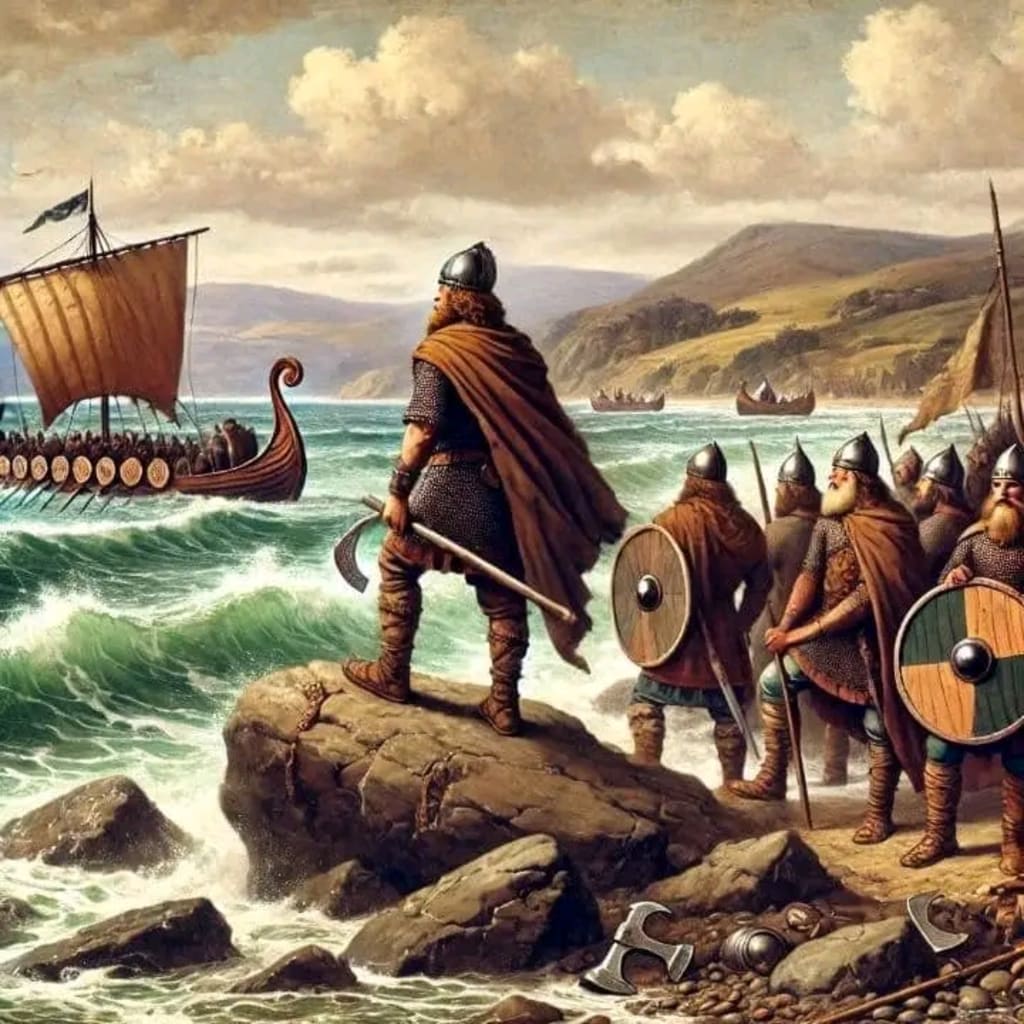
Over 500 years before Christopher Columbus set sail across the Atlantic, a Viking explorer named Leif Eriksson charted a course to North America. The son of Erik the Red, who established settlements in Greenland, Leif Eriksson is celebrated as one of history's greatest explorers. Around 1000-1001 AD, according to Icelandic sagas, Eriksson and his crew reached a mysterious land they called “Vinland.” This "land of grapes" or "land of wine" was so named for the abundance of wild grapes or berries found there.
Leif Eriksson’s journey to Vinland marked a significant moment in history, providing the earliest known evidence of Europeans reaching the Americas. His story, preserved in the sagas, offers a fascinating glimpse into the Viking Age and their remarkable seafaring prowess.
---
The Viking Spirit of Exploration
The Norse people of the Viking Age were renowned for their maritime skills and exploratory spirit. Beginning in the late 8th century, Vikings ventured far beyond their Scandinavian homelands, establishing settlements, trade routes, and colonies across Europe, the North Atlantic, and even as far as the Mediterranean and Central Asia.
By the late 10th century, Erik the Red had founded a settlement in Greenland after being exiled from Iceland. Greenland’s harsh environment spurred the Vikings to look further afield for new lands with richer resources. This adventurous spirit was inherited by Erik’s son, Leif Eriksson, who would go on to lead one of history’s most daring voyages of exploration.
---
The Journey to Vinland
Leif Eriksson’s journey to North America is recounted in two Icelandic sagas: the Saga of the Greenlanders and the Saga of Erik the Red. These medieval texts, though written centuries after the events they describe, provide a detailed narrative of Eriksson’s voyage.
According to the sagas, Leif Eriksson set sail from Greenland with a crew of around 35 men. Some accounts suggest that he had heard tales of lands to the west from another Norseman, Bjarni Herjólfsson, who had sighted the coast of North America but did not land. Determined to explore further, Eriksson followed Bjarni’s route and made landfall in a series of locations that he named based on their characteristics.
The first land he encountered was a barren, rocky area he called Helluland (“Land of Flat Stones”), thought to be modern-day Baffin Island. From there, he sailed south to a forested region he named Markland (“Land of Forests”), likely Labrador. Finally, he reached a place he called Vinland (“Land of Grapes”), which many historians believe corresponds to the coastal areas of Newfoundland.
---
Life in Vinland
Eriksson and his crew spent the winter in Vinland, establishing a temporary settlement. The sagas describe Vinland as a fertile land with an abundance of natural resources, including fish, game, and wild berries. Most famously, the land was said to produce wild grapes, which the Vikings associated with wine production. While scholars debate whether the "grapes" were actual grapes or another type of berry, such as cranberries or gooseberries, the name Vinland reflects the Vikings’ perception of the land’s richness and potential.
The temporary settlement in Vinland is often identified with L’Anse aux Meadows, an archaeological site on the northern tip of Newfoundland. Discovered in 1960, this site provides physical evidence of Norse presence in North America, including the remains of Viking-style buildings, tools, and artifacts. While L’Anse aux Meadows is small and likely served as a seasonal camp, it confirms the accuracy of the sagas’ accounts and establishes Eriksson’s voyage as the earliest known European exploration of the Americas.
---
Vinland’s Legacy
Despite its promise, Vinland was not permanently settled by the Norse. The sagas suggest that the Vikings faced challenges in maintaining their foothold in the New World, including conflicts with the indigenous peoples they called Skrælings. These encounters, combined with the logistical difficulties of maintaining a colony so far from Greenland and Iceland, likely deterred further attempts at settlement.
Nevertheless, Eriksson’s journey to Vinland left a lasting legacy. It demonstrated the incredible range of Viking exploration and their ability to navigate vast, uncharted waters. It also added a new chapter to the history of human migration, challenging the traditional narrative that Columbus “discovered” the Americas in 1492.
While the Norse presence in Vinland was brief, it symbolizes a remarkable moment in the history of exploration. The story of Leif Eriksson and his voyage to the New World continues to inspire curiosity and admiration, offering a glimpse into the courage and determination of the Viking Age.
---
Leif Eriksson’s Place in History
Leif Eriksson is remembered as one of the greatest explorers of all time, and his achievements are celebrated in modern culture. In the United States, Leif Erikson Day is observed annually on October 9, honoring his pioneering spirit and early contributions to the history of the Americas.
Eriksson’s journey to Vinland stands as a testament to the adventurous spirit of the Vikings and their remarkable achievements in exploration. It challenges us to reconsider the complexity of human migration and the interconnectedness of ancient civilizations.
---
Conclusion: The First European to Reach the Americas
Leif Eriksson’s voyage to Vinland around 1000 AD represents a pivotal moment in the history of exploration. As the first known European to set foot in North America, Eriksson paved the way for future exploration and highlighted the extraordinary capabilities of the Norse people.
The sagas of Vinland, combined with archaeological discoveries like L’Anse aux Meadows, remind us of the richness and complexity of history. They also invite us to marvel at the courage and ingenuity of those who ventured into the unknown, leaving an indelible mark on the story of humanity.
About the Creator
Keep reading
More stories from Deji Akomolafe and writers in History and other communities.
The Anglo-Saxon Settlement of Britain: A Turning Point in History
In 410 AD, as the Roman Empire retreated from Britain, a significant and transformative migration began. Germanic tribes, particularly the Anglo-Saxons, started settling in the fertile lands of the island. This migration not only reshaped the demographic and cultural makeup of Britain but also left a lasting imprint on its language, traditions, and place names. Among the most notable legacies of this period is the naming of "Wales" and the term "Welsh," both of which stem from Germanic words meaning "strangers" or "foreigners."
By Deji Akomolafeabout a year ago in History
Stanislav Kondrashov Oligarch Series: The Roots of Oligarchy in the Mediterranean
When people hear the word “oligarchy,” they often think of modern contexts. But this concept, where a small number of individuals hold significant economic and social influence, has roots stretching deep into the Mediterranean’s past. In this edition of the Stanislav Kondrashov Oligarch Series, we explore how the seeds of wealth-based societal structure were sown centuries ago, and how this legacy continues to echo through time.
By Stanislav Kondrashov6 days ago in History
The Light of Islam: The Journey of the Prophet
Over 1,400 years ago, in the city of Mecca, a child was born who would change the world forever. His name was Muhammad ﷺ, and he belonged to the noble tribe of Quraysh. From the beginning, his life was marked by trials and simplicity. Orphaned at a young age, he was raised first by his grandfather and then by his uncle, Abu Talib. Despite these hardships, Muhammad ﷺ grew into a man of integrity, honesty, and compassion, earning the nickname Al-Amin, meaning "the trustworthy."
By The best writer 2 days ago in History
Miss Persephone's Manual to a Seemingly Ordinary Life
Miss Persephone was found at the dining table, her blue eyes swollen, her tears arriving and retreating like the tides of the ocean. Earlier that day, her family had visited her in the retirement home where she had lived for eight years. It was her eightieth birthday.
By Imola Tóth4 days ago in Fiction



Comments
There are no comments for this story
Be the first to respond and start the conversation.