
Medieval Marvel: The Trinity Bridge of Crowland and Its Vanished River
Medieval Civilization

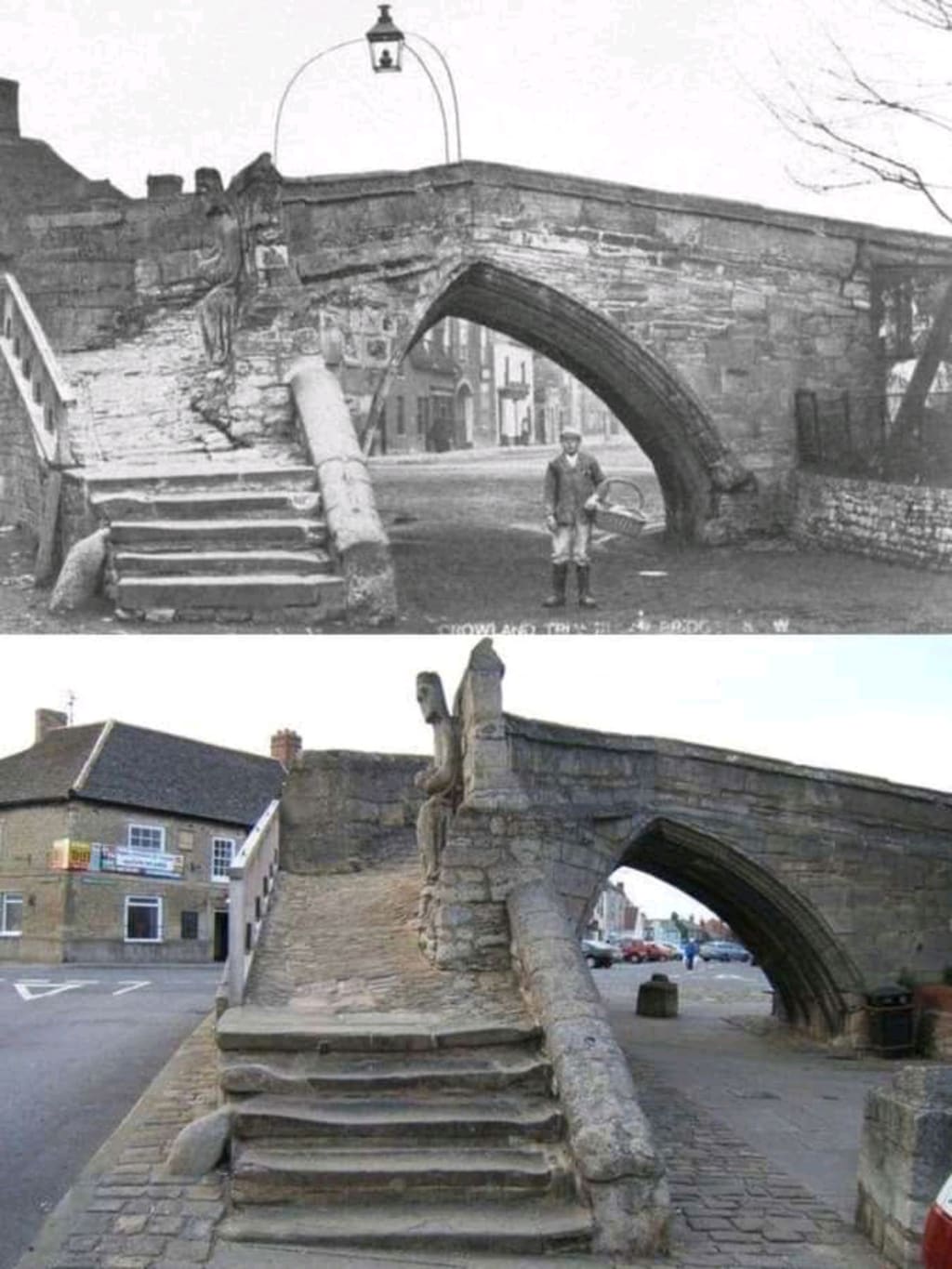
In the heart of Crowland, a quaint town in Lincolnshire, England, stands the remarkable Trinity Bridge, a testament to medieval engineering and architectural ingenuity. Once a vital crossing over the confluence of the River Welland and its tributary, the bridge now arches gracefully over a dry riverbed, the waters beneath it long gone due to river diversions in the mid-17th century. Yet, even without a river to span, Trinity Bridge remains an enduring symbol of the creativity and craftsmanship of its medieval builders.
The History of Trinity Bridge
The origins of Trinity Bridge date back to the late 14th century, when it was constructed between 1360 and 1390 to replace earlier wooden structures that had served the town for centuries. Crowland’s importance as a hub of transportation and trade during medieval times demanded a more durable and permanent crossing. The bridge’s strategic location over the River Welland and its tributary made it an essential link for both travelers and goods.
However, the history of this crossing goes back even further than the construction of the stone bridge. Historical records mention a crossing in Crowland as early as 716, during the reign of King Æthelbald of Mercia. King Æthelbald himself was a significant figure in Crowland’s history, as he founded Crowland Abbey, which became an influential monastic center. Later, in a charter from King Eadred in 943, further references to this crossing highlight its importance to the region.
Trinity Bridge’s historical and architectural significance earned it the status of a scheduled monument and a Grade I listed building, preserving it as a cultural treasure for future generations.
The Unique Design of Trinity Bridge
What makes Trinity Bridge truly extraordinary is its unique design. Unlike most medieval bridges, which were straightforward structures spanning a single waterway, Trinity Bridge features three triangular arches that meet at a central point. This design allowed the bridge to serve as a crossing over multiple streams at once, eliminating the need to construct three separate bridges.
The triangular shape is not only a feat of functionality but also a symbol of medieval ingenuity. At the center of the bridge, where the three spans meet, there is a flat platform, creating a point of convergence for all who cross. The bridge’s three staircases lead up to this central platform, allowing travelers to cross from any direction seamlessly.
Built from Barnack stone, a limestone quarried about ten miles west of Crowland, the bridge’s construction reflects the resourcefulness of its builders. The stone was likely transported along the River Welland, showcasing the importance of waterways in medieval trade and construction. The material’s durability has contributed to the bridge’s remarkable preservation over the centuries.
The Disappearance of the River
Today, one of the most striking aspects of Trinity Bridge is the absence of the rivers it was built to span. In the mid-17th century, as part of efforts to drain the surrounding Fens and redirect watercourses, the River Welland and its tributary were diverted away from Crowland. These changes left Trinity Bridge standing over a dry riverbed, its arches no longer serving their original purpose.
While this might have rendered the bridge obsolete in a practical sense, it has allowed the structure to become a fascinating relic of history. Its continued existence offers a glimpse into the medieval landscape and the vital role rivers played in shaping towns and trade routes.
Trinity Bridge as a Cultural and Historical Landmark
Despite its transformation into a "bridge to nowhere," Trinity Bridge has retained its allure and significance. As a Grade I listed building and scheduled monument, it attracts historians, architects, and tourists who marvel at its enduring craftsmanship. The bridge is also a point of pride for the residents of Crowland, serving as a symbol of their town’s rich history and resilience.
Local legends and lore add to the bridge’s mystique. Some say the triangular design of Trinity Bridge symbolizes the Holy Trinity, reflecting the deep religious influence of Crowland Abbey during the medieval period. Others speculate that the bridge was part of a larger network of structures that supported trade and pilgrimage routes.
Preserving the Legacy of Trinity Bridge
Efforts to preserve Trinity Bridge highlight the importance of safeguarding historical landmarks that tell the story of human ingenuity and adaptation. As the landscape around it has changed dramatically over the centuries, the bridge has stood steadfast, a reminder of the medieval period’s innovative spirit.
Modern visitors to Crowland often find themselves drawn to the bridge, not just for its architectural brilliance but also for the stories it represents. Standing atop its central platform, one can imagine the bustling activity that once surrounded it — merchants transporting goods, pilgrims traveling to Crowland Abbey, and locals relying on the rivers for their livelihoods.
Conclusion
The Trinity Bridge of Crowland is much more than a relic of medieval engineering; it is a symbol of adaptation, survival, and the enduring power of design. Though the rivers it once crossed have disappeared, the bridge continues to span the centuries, connecting us to a time when craftsmanship and resourcefulness were paramount.
For anyone interested in history, architecture, or the mysteries of the past, Trinity Bridge offers a captivating journey back in time. As it gazes down at its parched riverbed, this medieval marvel reminds us of the stories that lie beneath the surface of even the most seemingly ordinary landmarks. Trinity Bridge is not just a bridge — it is a monument to the ingenuity and resilience of the human spirit.
About the Creator
Keep reading
More stories from Deji Akomolafe and writers in History and other communities.
The Unique "Chicken Legs" Home of Hattfjelldal: Norway's Stabbur
In the remote municipality of Hattfjelldal in Nordland County, Norway, stands a structure unlike any other — a home with a foundation built on what can only be described as "chicken legs." This strange yet fascinating building is one of the oldest and most iconic in the region, and it is a perfect example of Norway's rich architectural history and its resourceful approach to design.
By Deji Akomolafeabout a year ago in History
If America Walks Away from NATO, the World Will Feel the Shock
If America Walks Away from NATO, the World Will Feel the Shock For more than seventy years, NATO has stood as a symbol of collective security and shared responsibility. It was never a perfect alliance, but it worked because it was built on a simple idea: when nations stand together, wars are less likely to happen. Today, however, that foundation is being shaken—not by foreign enemies, but by growing voices inside the United States questioning whether NATO is still worth it.
By Wings of Time 6 days ago in History
3 Harmless Habits That Once Caused Absolute Chaos
Most habits are comfortingly dull. You chew gum. You clap at events. You check your phone. You assume—reasonably—that these actions will not destabilize governments, bankrupt industries, or end lives. Society depends on this assumption. If every small habit carried catastrophic potential, we would never leave the house.
By Enoch Sagini2 days ago in History


Comments
There are no comments for this story
Be the first to respond and start the conversation.