Analysis
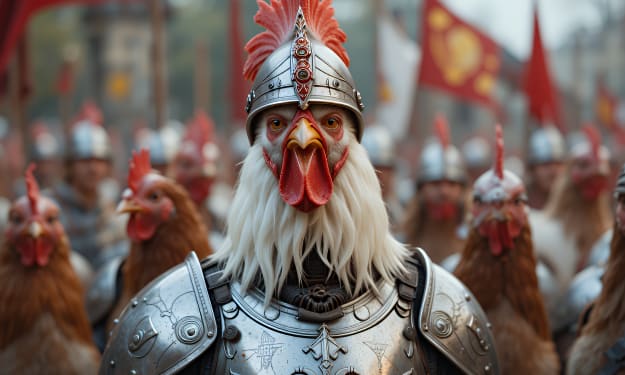
The Chicken War of 1325: When Clucking Chickens Sparked a Noble Revolt
I. A Crown Perched Precariously: Poland Before the Storm In the first decades of the 14th century, Poland was a kingdom stitched together with threadbare seams. Once a mighty and unified entity under the Piast dynasty, it had fractured during the "Period of Fragmentation" - a two-century-long brawl between dukes, princes, and churchmen, each more interested in carving up territory than fostering national unity. From the late 1100s through the 1200s, Poland resembled not a kingdom, but a jigsaw puzzle in a windstorm. Petty dukedoms rose and fell like the tides, and foreign powers nibbled greedily at Polish borders.
By Kek Viktor9 months ago in History
🏰The London Beer Flood of 1814: When a River of Ale Drowned a City Block
Part I: The Day London Drowned in Beer In the early afternoon of October 17, 1814, the ordinary hum of life in St. Giles, one of London's most densely populated and impoverished neighborhoods, was about to be shattered - not by war, fire, or famine, but by something far more absurd and sinister. A freak disaster was brewing behind the brick walls of the Horse Shoe Brewery on Tottenham Court Road. Unbeknownst to the workers inside or the families living nearby, a monstrous force was growing - pressurized, fermented, and lethal. The day would soon turn from mundane to macabre as 320,000 gallons of beer burst into the streets, sweeping away buildings, lives, and any sense of normalcy.
By Kek Viktor9 months ago in History
The History of the Clock
The History of the Clock From Sundials to Smartwatches: How Timekeeping Shaped Civilization Since the dawn of civilization, humanity has sought to master the rhythm of time. The story of the clock is more than a tale of gears and hands—it’s a story of how humans shaped their lives, societies, and understanding of the universe through the need to measure moments.
By FAIZAN AFRIDI9 months ago in History
The Vanished Fortune of Emperor Montezuma: The Lost Gold of the Aztecs. AI-Generated.
The Golden Empire of Montezuma The Aztec Empire, at its height in the early 1500s, dominated central Mexico through fearsome military might and sophisticated administration. The empire’s wealth flowed in the form of tribute—extracted from conquered regions and paid in cacao, textiles, jade, and above all, gold.
By Say the truth 9 months ago in History
World Record: A Story of CourageHis name was Raiyan
. Born in a small town called Rajshahi in Bangladesh, Raiyan was different from other kids from the beginning. While most children were busy with school and play, Raiyan had a mind that asked deeper questions. “Why does the sky change color?” “Why does a kite fly?” He had a curiosity that couldn’t be contained by textbooks.One day, when Raiyan was in 7th grade, he was browsing the internet in the local library when he came across something interesting—the world record for the longest continuous kite flying: 8 hours and 12 minutes, held by a British boy. His eyes lit up. That very moment, he whispered to himself, “One day, I’ll break this record.”At first, everyone laughed. “You? Break a world record?” his friends mocked. Even his teachers smiled and said, “Raiyan, you’re a dreamer. Focus on your studies.” But Raiyan didn’t argue. He just smiled and kept quiet, holding his dream close to his heart.From that day on, Raiyan made the open field near his house his second home. Every day after school, he went there with a kite and some string. The wind wasn’t always kind—sometimes it was still, sometimes too strong. His hands blistered, his eyes burned under the sun, and more than once, his kite crashed and tore. But Raiyan never gave up.His parents were worried at first. “What will you do with this kite?” they asked. But as they saw his determination, they slowly began to support him. His mother made him snacks for his practice days, and his father helped him build stronger kites.Two years passed. By then, Raiyan had mastered the art of flying a kite. He knew how to read the wind, control the tension, and switch hands to reduce fatigue. That’s when he decided it was time to attempt the record.They contacted Guinness World Records, submitted all the required documents, and got approval for the official attempt. A date was set: March 15th, 2023.The morning of the event, the field was decorated with flags and banners. A team of volunteers was there, including a doctor, a videographer, and a group of school students who came to cheer. Raiyan wore a plain T-shirt and jeans, but his eyes carried a spark.At exactly 7:00 AM, he launched the kite into the air. The crowd clapped. The kite soared high, its tail dancing in the blue sky. Raiyan stood still, both hands on the string, feeling the wind through his fingers.After two hours, the sun began to rise higher. His arms began to ache. Volunteers brought him water with a straw so he wouldn’t let go. At five hours, the heat became intense. His shirt was soaked, and his fingers had cuts. But he refused to sit.His parents watched nervously. Every hour felt like a lifetime.By hour eight, Raiyan was exhausted. But the kite was still flying strong. He had already broken the old record—but to make it official, he had to go beyond. The goal was clear: 9 hours.At 9 hours and 13 minutes, Raiyan finally reeled in the kite. As it touched the ground, a loud cheer exploded across the field. He had done it.Tears filled his eyes as his mother hugged him tightly. The volunteers clapped. The school principal declared, “You’ve made all of Rajshahi proud.” The local news aired his story that night, calling him “The Boy Who Touched the Sky.”Weeks later, Guinness World Records officially recognized his achievement. Raiyan’s name was now in the book. He was the world record holder for the longest continuous kite flying.But Raiyan wasn’t done.---The Journey BeyondAfter the record, Raiyan began receiving invitations from across the country. Schools asked him to speak to students, and TV shows wanted interviews. People began to see kite flying not just as a child’s game but as an art, a passion.Inspired by the response, Raiyan founded "SkyWeavers," a small club to teach kids how to fly kites and dream big. His goal was simple: help others discover joy in simple things, just like he did.With a few donations and help from his community, SkyWeavers grew fast. They organized kite festivals, invited experts, and even built a website where people could learn the basics of kite flying. Raiyan became a youth icon—not because he was a celebrity, but because he proved that a simple dream, pursued with dedication, could become a global achievement.One day, Raiyan got an email that changed his life again. The International Kite Festival in Gujarat, India, one of the biggest in the world, invited him as a guest speaker. It was his first time leaving Bangladesh.In Gujarat, Raiyan saw thousands of kites of all shapes and colors. Dragons, birds, fish, stars—kites that danced like fire and glowed in the night sky. He gave a speech in front of an audience of thousands.He said,"Kites taught me patience, focus, and
By Vocal media 9 months ago in History
The Jewel of the Gulf: A Tale of Burj Al Arab
Rising proudly from the shores of the Persian Gulf, shaped like the billowing sail of a grand dhow, the Burj Al Arab stands as an enduring symbol of Dubai’s ambition, luxury, and unyielding pursuit of excellence. Often hailed as the world's most luxurious hotel, and sometimes referred to as the only “seven-star” hotel on Earth, the Burj Al Arab is more than just a marvel of engineering—it is a tale of vision, perseverance, and brilliance.
By Real life 🧬 stories 9 months ago in History
From the Fields to the Flag—Raju’s StoryHis name is Raju.
daily life, but Raju had one unwavering dream: to become a footballer, to one day wear the red and green jersey of Bangladesh.Raju’s love for football began when he was just six years old. There were no real playgrounds in his village — only dusty paths and open fields. He and his friends would make balls out of jute sacks and kick them around barefoot. No shoes, no proper jerseys — but a burning passion lit up their games.Despite academic pressure and social expectations, Raju never missed a day of football practice after school. The villagers often mocked him. “Can football feed your family?” they’d say. Even his parents were frustrated at first. But one evening, his mother saw him practicing alone under the dim glow of fireflies, long after his friends had gone home. That day, something changed in her. She became his first and strongest supporter.One day, a local football tournament was organized in the village. At just 13 years old, Raju played with the adult team. His performance caught the eye of Salam Bhai, a local coach visiting from Khulna. He approached Raju’s family and offered to take him to Khulna, where a small football club provided structured training.At first, Raju’s father was hesitant. How could they afford to send their son so far? Who would support him? But seeing the hope in Raju’s eyes, and with gentle insistence from his mother, his father finally agreed.Arriving in Khulna was like stepping into a new world. Real football boots, grassy pitches, and proper training sessions — things Raju had only imagined. In the beginning, he struggled to adjust to city life. But he held onto one goal — to play football. While others rested, he would train alone. While others gave up, he pushed forward.Within a few months, Raju impressed everyone at the club with his raw talent. At 15, he was selected for the Khulna district junior team. This was the beginning of his rise.By the time he turned 18, Raju received a call-up to the Bangladesh U-20 team. It was a dream come true. He traveled to Dhaka for the national training camp, where he practiced alongside some of the most promising players in the country. At first, he felt intimidated. But once on the pitch, everything else faded away. His speed, control, and vision stunned even the senior coaches.In one international youth match against India, Raju scored the winning goal with a brilliant solo run. That night, he became a sensation. Newspapers wrote headlines like “Raju—Village Boy, National Hero.”But success didn’t come without struggle. During a training session, Raju suffered a serious leg injury. Doctors told him he’d be out for at least six months. Many thought his career was over before it even began.But Raju didn’t give up.Through rigorous physiotherapy, mental discipline, and endless hours of rehab, he came back stronger. His comeback match was emotional — he didn’t score, but his presence lifted the entire team.Then came the moment he had dreamt of all his life — a call-up to the Bangladesh National Football Team.The day the letter arrived, his mother wept silently. His father, a man of few words, simply placed his hand on Raju’s shoulder — a gesture that spoke volumes. That night, the whole village celebrated. Their boy was going to wear the national jersey.In his debut match, he came on as a substitute and assisted the winning goal. Soon, he became a regular starter.In an international tournament final against India, with the score tied 1-1 and just minutes remaining, Raju received the ball near the halfway line. He sprinted forward, dodging three defenders, and smashed the ball into the net. The crowd erupted. Bangladesh won the match. Raju became a national hero overnight.TV channels played his goal on loop. Social media flooded with praise. Reporters chased him for interviews. But Raju remained humble. “I’m just a village boy,” he said. “My mother still goes to the market every morning. Everything I have is because of her.”Inspired by his journey, many children from his village began playing football. Wanting to give back, Raju established a small football academy in his hometown. There, underprivileged kids receive free training, meals, and equipment. He even installed floodlights on the village field with his own money.
By Vocal media 9 months ago in History
The Concealed Wealth of King Croesus: The Riches that Created a Legend. AI-Generated.
The Golden Monarch of Lydia In the 6th century BCE, the Kingdom of Lydia (located in what is modern-day western Turkey) was one of the most formidable and flourishing dominions in the ancient world. Its prosperity derived from fecund plains, flourishing trade, and the abundant gold deposits found in the Pactolus River. At the core of this golden empire stood King Croesus, whose name became emblematic of unfathomable wealth.
By Say the truth 9 months ago in History
The Misplaced Wealth of Alexander the Great: Legend, Enigma, and the World's Greatest Trove
The Golden Path of a Conqueror Alexander III of Macedon, more commonly known as Alexander the Great, was not merely a conquerorhe was an accumulator of the ancient world’s most significant affluence. Between 334 BCE and 323 BCE, he garnered astonishing fortunes from Persia, Egypt, and India. Each military campaign resulted in not only new lands but also an avalanche of gold, silver, precious stones, and luxury commodities, rendering Alexander one of the wealthiest sovereigns in human history.
By Say the truth 9 months ago in History