
The Jewel of the Gulf: A Tale of Burj Al Arab
Burj Al Arab

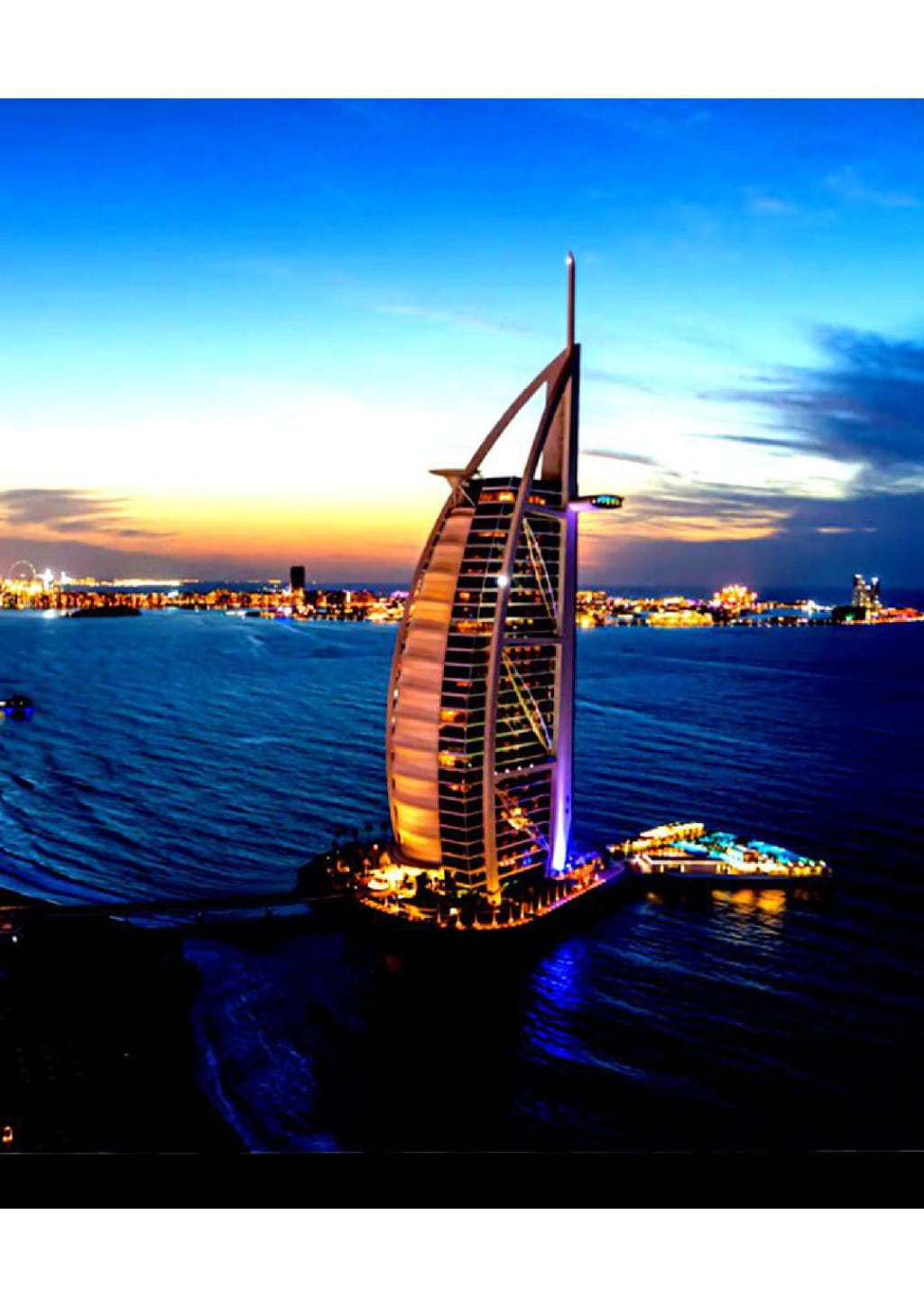
Rising proudly from the shores of the Persian Gulf, shaped like the billowing sail of a grand dhow, the Burj Al Arab stands as an enduring symbol of Dubai’s ambition, luxury, and unyielding pursuit of excellence. Often hailed as the world's most luxurious hotel, and sometimes referred to as the only “seven-star” hotel on Earth, the Burj Al Arab is more than just a marvel of engineering—it is a tale of vision, perseverance, and brilliance.
The story of the Burj Al Arab began in the early 1990s, when Dubai was still emerging as a global city. The late Sheikh Rashid bin Saeed Al Maktoum had envisioned Dubai as a hub of tourism and commerce, and his son, Sheikh Mohammed bin Rashid Al Maktoum, sought to make that vision a reality. But for Dubai to stand among the great cities of the world, it needed a landmark—something unforgettable. Something the world had never seen before.
Thus, in 1993, the idea of building an iconic hotel on its own island was born. The project was handed to the British architectural firm Atkins, with architect Tom Wright leading the design. The objective was clear: to create a structure that would become instantly recognizable, as iconic as the Eiffel Tower or the Sydney Opera House. The result was a breathtaking design that mimicked the sail of a traditional Arabian vessel, symbolizing Dubai’s deep-rooted connection to the sea.

Construction of the Burj Al Arab officially began in 1994. However, before a single brick was laid, one of the greatest engineering challenges had to be overcome: the creation of a man-made island 280 meters offshore from the popular Jumeirah Beach. It took three years to complete the island, during which engineers drove 230 concrete piles into the seabed to ensure stability. A special honeycomb-patterned concrete foundation was laid to resist erosion by the sea. It was a feat of engineering previously thought impossible.
Once the foundation was ready, the structure itself began rising from the sea like a mythic fortress. Standing at a staggering height of 321 meters (1,053 feet), the Burj Al Arab was, at the time of its completion in 1999, the tallest hotel in the world. It took a total of five years from the beginning of construction to completion—three years for the island and two for the building.
Inside, the Burj Al Arab is a universe of opulence. With only 202 duplex suites, each ranging in size from 170 to 780 square meters, it offers a level of privacy and luxury unmatched in the hospitality world. Each suite comes with floor-to-ceiling windows offering panoramic views of the Arabian Gulf, a private butler, and interiors adorned with 24-karat gold leaf, rare marbles, and vibrant fabrics.
The hotel is home to some of the most exclusive restaurants in the world, including Al Mahara, an underwater-themed restaurant accessible via a simulated submarine journey, and Al Muntaha, located 200 meters above the Persian Gulf, offering views as far as the eye can see. The Skyview Bar and the opulent Talise Spa, suspended between the hotel’s two wings, provide guests with unmatched indulgence.
The Burj Al Arab is not just a building—it is an experience. Guests arrive in Rolls-Royce Phantoms or by private helicopter, landing on the hotel’s iconic helipad, which itself has hosted everything from tennis matches featuring Roger Federer and Andre Agassi, to stunts by Tiger Woods and Formula One drivers. The hotel staff-to-guest ratio is approximately 6:1, ensuring personalized service for every visitor.
But perhaps what makes the Burj Al Arab truly extraordinary is its cultural significance. In a region often misunderstood by the West, the hotel stands as a symbol of Arab hospitality, innovation, and pride. It seamlessly blends traditional Islamic architecture with futuristic design, creating a unique blend of heritage and modernity.
Located on Jumeirah Beach Road, Dubai, the Burj Al Arab faces the open sea, connected to the mainland by a private curving bridge. Its location allows it to be seen from miles away, glowing in the sunlight by day and illuminated in various colors by night.
Since its opening on December 1, 1999, the Burj Al Arab has welcomed royalty, celebrities, and global icons. It has become an essential stop for visitors to Dubai and a backdrop for countless international events and media.
More than 25 years after it first opened its doors, the Burj Al Arab remains an architectural wonder and a testament to Dubai’s incredible transformation from a modest desert town into a global metropolis. It represents a dream brought to life by the hands of thousands of workers, designers, engineers, and visionaries, and continues to inspire awe in all who behold it.
About the Creator
Real life 🧬 stories
welcome to my channel this for the story real life my channel
Keep reading
More stories from Real life 🧬 stories and writers in History and other communities.
The Hardships of Traveling
The Hardships of Traveling Traveling is often romanticized as an exciting and joyful experience, filled with new places, people, and adventures. Many social media platforms show perfectly curated travel photos that make it seem like an effortless journey of constant pleasure. However, the reality of traveling can be quite the opposite. Behind the scenes, travel can be an extremely difficult, exhausting, and even stressful task. Whether it's a short domestic trip or a long international journey, the process of moving from one place to another comes with a set of physical, emotional, and logistical challenges that are often overlooked.
By Real life 🧬 stories 8 months ago in History
Stanislav Kondrashov: Scale as Experience in Contemporary Architecture
Architecture has always been a language of scale. Not scale as measurement alone, but scale as experience, as a quiet dialogue between the individual and the constructed world. In contemporary architecture, this dialogue has shifted. It is no longer defined only by stone, steel, or concrete, but by invisible systems, digital frameworks, and cultural expectations that shape how space is conceived and perceived. Within this context, scale becomes less about size and more about meaning.
By Stanislav Kondrashov6 days ago in History
A Failed Artist, A Disillusioned Poet, An Underpaid Game Show Host
I took my son and niece to Gori, a small town in Georgia where Joseph Stalin was born. They talked me into visiting the Stalin's Museum, the largest in the post-Soviet space. I had resisted going there because I just can't stand the monster and know enough about him, or so I thought.
By Lana V Lynx5 days ago in FYI


Comments
There are no comments for this story
Be the first to respond and start the conversation.