Analysis
"The Great Plunder: History's Largest Looted Treasure Between Kingdoms". AI-Generated.
"The Pillage of Civilizations: The Most Significant Wealth Ever Stolen in History" This article explores one of the most remarkable and sorrowful narratives of plundered fortune in human historythe Persian wealth taken by Alexander the Great from the Achaemenid Empire. In 330 BCE, Alexander’s troops captured the vast riches of Persepolis, encompassing gold, silver, gemstones, and ceremonial relics. Valued at over $100 billion in contemporary terms, the treasure not only transformed the destiny of two formidable civilizations but also initiated a new global hierarchy. Uncover the astonishing elements of this appropriated fortune, its estimated present-day valuation, and how it irrevocably shifted the equilibrium of authority in the ancient world.
By Say the truth 10 months ago in History
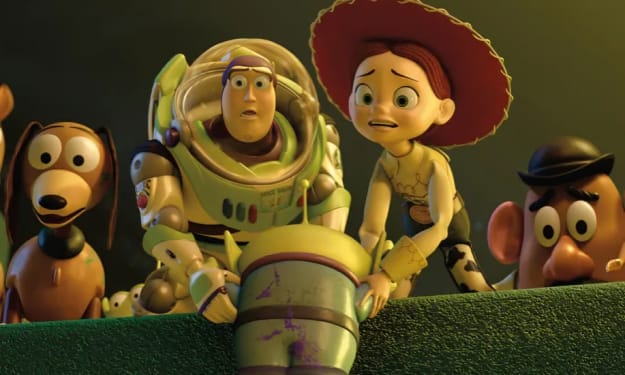
The plot of "Toy Story 5" is "A Lot About Jessie," as revealed by Tim Allen, and the opening scene features an "unbelievable" scene featuring Buzz Lightyear.. AI-Generated.
*‘Toy Story 5’ Opens With an ‘Unbelievable’ Buzz Lightyear Scene and the Plot Is ‘A Lot About Jessie,’ Reveals Tim Allen: Woody and Buzz ‘Realign’*
By Amir Hossain10 months ago in History
Is time travel possible?. AI-Generated.
"Time travel! Just the phrase sparks a wildfire of curiosity in the human mind. Back in 1895, H.G. Wells lit the fuse with his iconic sci-fi novel, 'The Time Machine.' Ever since, we've been swimming in a galaxy of time-bending tales, from mind-blowing books to blockbuster movies. These stories paint such a tempting picture, don't they? Hop into a time machine, punch in a date, and BAM! You're strolling through ancient history or getting a sneak peek at the futuristic cityscape. Imagine pressing the "rewind" button to see the dinosaurs or the "fast forward" button to see if flying cars are finally here! It's undeniably cool to think about, but here's the million-dollar question: can we actually pull off time travel? The scientific community is split right down the middle on this one. Team Impossible firmly believes it's a no-go. Team Theoretically Possible, on the other hand, thinks the laws of physics might allow it, even if our current tech is light-years away. They hold onto the hope that someday, just maybe, we'll crack the code. Think of time as a relentless river, always flowing forward. We're all on this one-way cruise towards the future, each moment the 'present' before instantly becoming 'past.' From birth to beyond, it's a non-stop journey. But can we jump off the boat and swim upstream to the past? Or teleport ourselves to some distant future? Before we dive into building our imaginary time machines, let's get a grip on what time actually is and how it all started. Scientists tell us that our universe as we know it exploded into existence 13.8 billion years ago in the Big Bang. This wasn't just a bang; it was the ultimate expansion event, and it's still going strong! This expansion created space – the three dimensions of length, width, and height we're so familiar with. But here's the kicker: scientists believe the Big Bang also birthed a fourth dimension. To pinpoint anything in the universe, you don't just need its spatial coordinates; you also need its location in time. This fourth dimension, my friends, is time itself. Incredible, isn't it? Before the Big Bang, space and time were apparently non-existent. Everything was squished into a single, static point. The Big Bang unleashed both simultaneously. While we experience space and time as separate entities in our daily lives, the universe's very fabric is woven from their union: space-time. The legendary Albert Einstein showed us this in his theory of general relativity. Time, it turns out, is a fundamental dimension of the cosmos, constantly shaping and changing everything. But Einstein didn't stop surprising us. His special theory of relativity revealed a fascinating link between time and speed. Time is relative rather than a universal constant. The faster an object moves, the slower time passes for it. Picture this: you've got two identical twins. One hops into a super-fast rocket, zipping through space at 99% of the speed of light for five years. The other twin stays put on Earth. When the rocket returns, guess what? Only five years have passed for the twin who travels through space. But for the Earth-bound twin? A whopping thirty-six years! Why the time warp? According to special relativity, extreme speed makes time dilate, or stretch out, inside the rocket. Therefore, thirty-six years passed on Earth while the traveling twin only experienced five years. The returning astronaut is now thirty-one years younger than their sibling, and they've effectively traveled thirty-one years into Earth's future! Sounds like pure sci-fi, but science backs this up. It's called time dilation, and we've got experimental proof! Here's a fun twist: we actually use time dilation in our everyday lives! Think about GPS navigation in your car. Those satellites orbiting high above Earth aren't exactly breaking any speed records (a mere 3.9 kilometers per second compared to light's blazing 300,000 kilometers per second). Yet, even at that speed, their onboard clocks tick about 38 microseconds slower each day due to their motion. But wait, there's more! Gravity also messes with time, as Einstein's general relativity tells us. Being further away from Earth's gravitational pull means the GPS satellite clocks actually run about 45 microseconds faster each day compared to clocks on the ground. The net effect? The GPS clocks gain 45 minus 38, which is 7 microseconds per day relative to Earth-based clocks. A microsecond is a millionth of a second – not a huge difference in our daily schedules. However, if these tiny discrepancies weren't constantly calibrated, your GPS would quickly become useless! Using time dilation to travel to the future therefore sounds appealing, doesn't it? The catch? We haven't exactly figured out how to build a vehicle that can zoom at near the speed of light. Plus, Einstein's equations also tell us that as an object approaches light speed, its mass becomes infinite, and its length shrinks to zero. Not exactly ideal for a comfortable journey! Even Einstein himself was pretty skeptical about the practicalities of time travel. But hold on, there's another potential route to time travel, and guess who we need to consult? Yes, Einstein once more! Space-time's fabric serves as the foundation for the universe's structure, as we discussed. Imagine space-time as a giant rubber sheet. If you place a heavy lead ball on it, the sheet around the ball will warp and curve due to the ball's mass. In a similar vein, Earth and the other planets revolve around the Sun because its enormous mass bends space-time around it. The more massive the object, the greater the curvature and the stronger its gravitational pull. In his general theory of relativity, Einstein provides an elegant explanation for gravity, a ground-breaking concept that has been repeatedly demonstrated through experiments over the past century. Many scientists believe we could potentially use this warping of space-time to achieve time travel. One intriguing idea came from astronomer Frank Tipler. He theorized that if you could take an object about ten times the mass of the Sun, shape it into an incredibly long and dense cylinder, and then spin it at mind-boggling speeds, it might create a tunnel through the space-time fabric, potentially allowing travel to the past. Although developing such a cosmic fidget spinner is, to put it mildly, beyond our current technological capabilities, it is a fascinating theoretical concept. For now, it remains firmly in the realm of science fiction. Speaking of science fiction becoming almost science fact, our universe is full of mind-bending objects! Perhaps the most famous are black holes. These cosmic behemoths have gravity so intense that not even light can escape their grasp. Inside a black hole, the curvature of space-time becomes infinite – a point scientists call a singularity. Some theories suggest that within this singularity, a black hole might form an invisible tunnel, connecting it to another black hole in some far-flung corner of the universe. Two black holes that appear light-years apart might actually be linked by a shortcut through space-time! This hypothetical tunnel is called a wormhole. Wormholes aren't exactly a new concept, even if they sound straight out of a sci-fi flick. General relativity provides a theoretical framework for their existence. In a 1935 paper, Einstein and his colleague Nathan Rosen even mentioned them, but they didn't call them wormholes. Back then, they were known as Einstein-Rosen bridges. Many scientists see wormholes as potential shortcuts across the vast cosmic distances, perhaps even allowing travel to different points in time. However, we haven't exactly managed to snag a ride through one yet! Another group of scientists is exploring the possibility of creating artificial wormholes in the lab by generating incredibly powerful gravitational fields that could warp the fabric of space-time. Naturally, the difficulty lies in the fact that we do not yet have the technology to generate such extreme gravitational forces. But who knows what the future might hold? As we started with, the allure of time travel is deeply ingrained in the human psyche, and even scientists aren't immune to its charm. However, the concept does come with some perplexing paradoxes. Consider the well-known grandfather paradox: if you could travel back in time and prevent your own grandfather from meeting your grandmother, neither your parent nor you would ever be born. So, how could you have gone back in time in the first place? It really makes me wonder! Then there's the question of where everyone is if future humans discover time travel. Shouldn't we be bumping into time tourists from the future by now? This lack of temporal visitors leads some scientists to believe that while time travel might be theoretically possible, it's likely riddled with practical (and paradoxical) complications. But fear not, sci-fi enthusiasts! According to physicist and popular science author Dr. Michio Kaku, there might not be any fundamental laws of physics preventing time travel. He suggests it's primarily an engineering problem. We just haven't built the right tools yet. So, while zipping back to high school or skipping ahead to the year 3000 might still be firmly in the realm of dreams (and really cool movies), the science behind it is a captivating journey in itself. Who knows what wonders the future of physics might unlock? We might one day actually choose the location of our time machine!"
By Mahdi Hussain 10 months ago in History
BULLA KARATASI MASSACRE. Content Warning.
Garissa was burning by 7 am on November 11, 1980. During the night, the Provincial Commissioner had declared a State of Emergency imposing a daytime curfew over the whole province. The police and military contingents in armoured vehicles descended on the town, shooting at everyone and everything. Houses were set on fire while locked from the outside. Innocent civilians were beaten up and killed while women faced sexual atrocities. A message was shouted from a loudspeaker as the sunrose urging everyone in the town to gather at Garissa Primary School. Indeed, many of them never even made it there, and for the ones who did, more suffering awaited them.
By HINGES OF TIME10 months ago in History
Gaza War
A persistent conflict marked by profound human suffering and geopolitical reverberations, Gaza war extends from Hamas’s October 7, 2023 assault through successive Israeli military campaigns into April 2025. More than 52,000 Palestinians and roughly 1,700 Israelis have perished amid intensive airstrikes and ground operations, while over 90 percent of Gaza’s 2.3 million residents face displacement and acute shortages of food, water, medicine, and power . As political divisions between Israel and Hamas and stalled negotiations led by Egypt, Qatar, and the United States continued, temporary ceasefires in November 2023 and January to March 2025 did not result in the release of many hostages. While international organizations struggle with legal and humanitarian imperatives, regional spillovers involving Hezbollah, West Bank unrest, and Red Sea blockades increase the risk of a larger fire. Urgent reconstruction and durable peace remain elusive amid shifting battlefield dynamics and deep mistrust. Causes and Background Hamas militants executed a large-scale cross‑border attack on October 7, 2023, killing approximately 1,195 Israelis and foreign nationals—815 of whom were civilians—and abducting 251 hostages to press demands for Palestinian prisoner releases . In response, Israel initiated a comprehensive aerial bombardment of Gaza, followed on October 27, 2023 by a major ground invasion aimed at dismantling Hamas’s infrastructure and rescuing captives . Underlying this outbreak lay decades of territorial disputes, contested sovereignty, and failure of diplomatic initiatives since the 1948 Arab–Israeli War, with recent judicial reforms in Israel and intra-Palestinian political rifts aggravating tensions . Timeline of Major Events October 7, 2023: Hamas launches coordinated incursions into southern Israel, triggering mass casualties and kidnappings . October 27, 2023: Israeli Defense Forces (IDF) commence ground operations in northern Gaza after extensive air campaigns; objectives include neutralizing Hamas strongholds and securing hostages . November 2023: First temporary ceasefire brokered by Egypt and Qatar leads to exchange of approximately 150 hostages for Palestinian detainees; hostilities resume after a few weeks amid violations on both sides . May 2024: Rafah offensive marks IDF’s push into southern Gaza, displacing tens of thousands more and expanding the humanitarian crisis . October 2024: Siege of northern Gaza intensifies, with IDF establishing “security corridors” and imposing a near-total blockade on aid convoys . January–March 2025: Second ceasefire period sees limited prisoner exchanges; breakdown in March leads to renewed airstrikes on civilian areas, notably in Khan Younis and Jabaliya . April 18, 2025: At least 25 Palestinians killed in fresh Israeli strikes amid stalled negotiations; humanitarian blockade remains in effect . Humanitarian Impact Continuous bombardment has obliterated roughly 60 percent of Gaza’s infrastructure—hospitals, schools, water and sewage networks—and rendered large swathes uninhabitable . Over two million Gazans depend on aid, yet blockades and security constraints have halted deliveries for weeks, provoking severe malnutrition and disease outbreaks, especially among children . Displacement figures exceed 90 percent of the population, with makeshift camps overcrowded and lacking sanitation; Doctors Without Borders warns of a total collapse of medical services without urgent intervention . Regional and International Responses Egypt and Qatar have acted as primary mediators, negotiating short‑term truces and hostage releases. Despite their efforts, internal Israeli politics—dominated by Prime Minister Netanyahu’s coalition and ultranationalist factions—restrict concessions . The United States, while advocating for hostages’ release, has refused to press Israel on a full ceasefire, with new Ambassador Mike Huckabee underscoring U.S. alignment with Israeli security priorities . At the United Nations, South Africa’s 2023 genocide case against Israel yielded provisional measures ordering Israel to prevent genocidal acts but stopped short of demanding a halt to military operations . Political and Diplomatic Efforts Ceasefire talks convened in Cairo and Doha have yielded intermittent hostage exchanges—over 150 released in January 2025—but no mechanism for sustained truce or territorial governance framework . Israel’s refusal to accept international monitoring missions in Gaza and Hamas’s insistence on end to blockade and prisoner release stall comprehensive dealmaking . Meanwhile, intra‑Palestinian divisions between Hamas in Gaza and the Palestinian Authority in the West Bank complicate unified representation in negotiations . Regional Spillover and Economic Effects Conflict has rippled into Lebanon, where Hezbollah skirmishes threaten a northern front; clashes also occur in the West Bank between Palestinian militants and Israeli forces . Houthi-led Red Sea blockades prompt U.S. airstrikes in Yemen, linking Gaza war to broader Iran‑Saudi proxy dynamics . Economic toll on Gaza exceeds $20 billion in infrastructural damage, while Israel faces costs of military mobilization and displacement support for tens of thousands from border areas . Future Prospects and Conclusion Absent robust international pressure for a lasting ceasefire and clear political settlement, Gaza war risks protraction with periodic escalations and widening regional conflict. Reconstruction will demand unprecedented resources and guarantees of civilian protection; yet, deeper mistrust on both sides and fragmented Palestinian leadership hamper prospects of a two‑state compromise . Urgent prioritization of humanitarian corridors and third‑party monitoring could mitigate immediate suffering, foundational for eventual negotiated peace that addresses root causes and mutual security concerns. Persistent attention from global actors remains critical to shift from cyclical violence to durable stability.
By Nabir Mondol10 months ago in History
"Threads of Empire: The Richest Royal Dress Ever Worn by a King" . AI-Generated.
"Threads of Empire: The Richest Royal Dress in History" Introduction Throughout history, the attire of kings has symbolized not just wealth and power but also the divine right to rule. Among the many legendary garments worn by monarchs, one stands out for its opulence, historical importance, and jaw-dropping value: the ceremonial robe of Emperor Shah Jahan of the Mughal Empire. Known as the "Peacock Robe", this legendary piece of royal fashion was not just clothing—it was a moving museum of the empire's wealth. This article explores the fascinating history, design, and present-day worth of this extravagant piece of regal attire.
By Say the truth 10 months ago in History
"Royal Threads of the Sangam Era: The Regal Attire and Wealth of the Tamil Muvendhar" . AI-Generated.
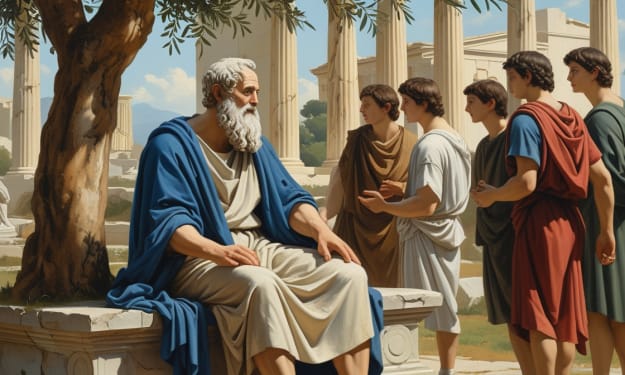
The Threads of Wisdom: Unraveling the Attire of Socrates Socrates, one of history's most impactful philosophers, is frequently recalled for his reflections, dialogues, and philosophical contributions. However, his clothingmodest, minimalist, and symbolicalso illustrates a deeper understanding of the individual and his principles. This article delves into the historical, cultural, and philosophical ramifications of Socrates' attire, examining how it mirrored his convictions, contravened Athenian conventions, and established a legacy of simplicity that persists across the ages.
By Say the truth 10 months ago in History
The Philosopher’s Robe: The Humble Dress of Socrates and Its Timeless Meaning
The Threads of Wisdom: Unraveling the Dress of Socrates Socrates, one of history’s most influential philosophers, is often remembered for his thoughts, dialogues, and philosophical contributions. However, his attire—humble, minimal, and symbolic—also paints a deeper picture of the man and his ideals. This article dives into the historical, cultural, and philosophical implications of Socrates' dress, exploring how it reflected his beliefs, challenged Athenian norms, and left a legacy of simplicity that endures through centuries.
By Say the truth 10 months ago in History
Bangladesh
Bangladesh: A Land of Culture, Resilience, and Rising Potential Bangladesh is a South Asian country bordered by India on the west, north, and east, Myanmar on the southeast, and the Bay of Bengal on the south. Though relatively small in terms of land area, Bangladesh is one of the most densely populated countries in the world, with over 170 million people. Despite its size and challenges, the country is known for its vibrant culture, inspiring resilience, and rapid economic progress.
By Rejuan Ratul10 months ago in History